
At a Glance
Furnishing a living room on a budget usually means the rug gets whatever is left over after the sofa. That approach backfires: a cheap rug bought in the wrong size or material often needs replacing far sooner than expected, which ends up costing more than a slightly better choice made once.
This guide to the best budget rugs for a UK living room breaks down what “budget” actually buys at each price point, how polypropylene and wool really compare once wear enters the picture, and how to size a rug correctly so it doesn’t need replacing the moment you notice it’s too small.
How much does a budget rug really cost in a UK living room?
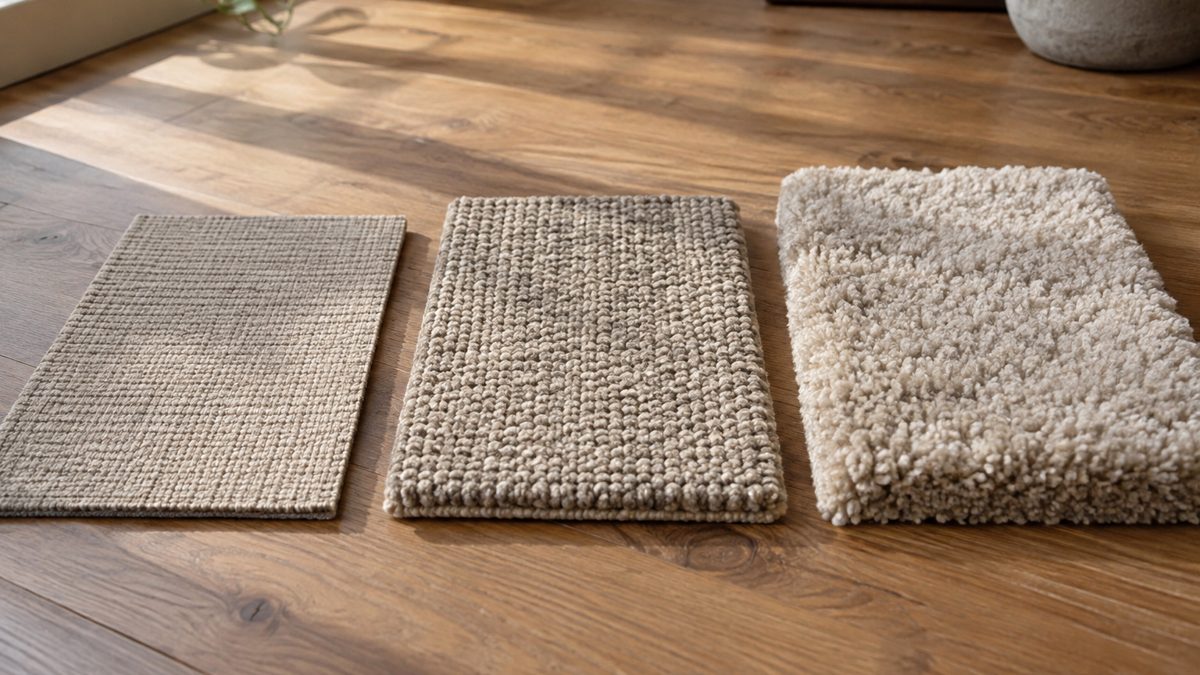
“Budget” covers a wide range once you start comparing retailers, so it helps to split it into three rough bands rather than treat every inexpensive rug as the same product.
- Under £50: almost always polypropylene or a recycled synthetic, usually flatweave or low-pile, in a fixed set of standard sizes.
- £50 to £100: still mostly synthetic, but with more size options, denser pile, and washable or stain-resistant finishes starting to appear.
- £100 to £150: the point where wool blends and thicker shaggy piles become realistic, alongside larger synthetic rugs sized for bigger rooms.
Add delivery and underlay to the total before comparing prices across retailers. A rug that looks like the cheapest option on the page can end up costlier once a non-slip pad and delivery are included, especially for the larger sizes.
Polypropylene or wool: which one actually lasts longer?
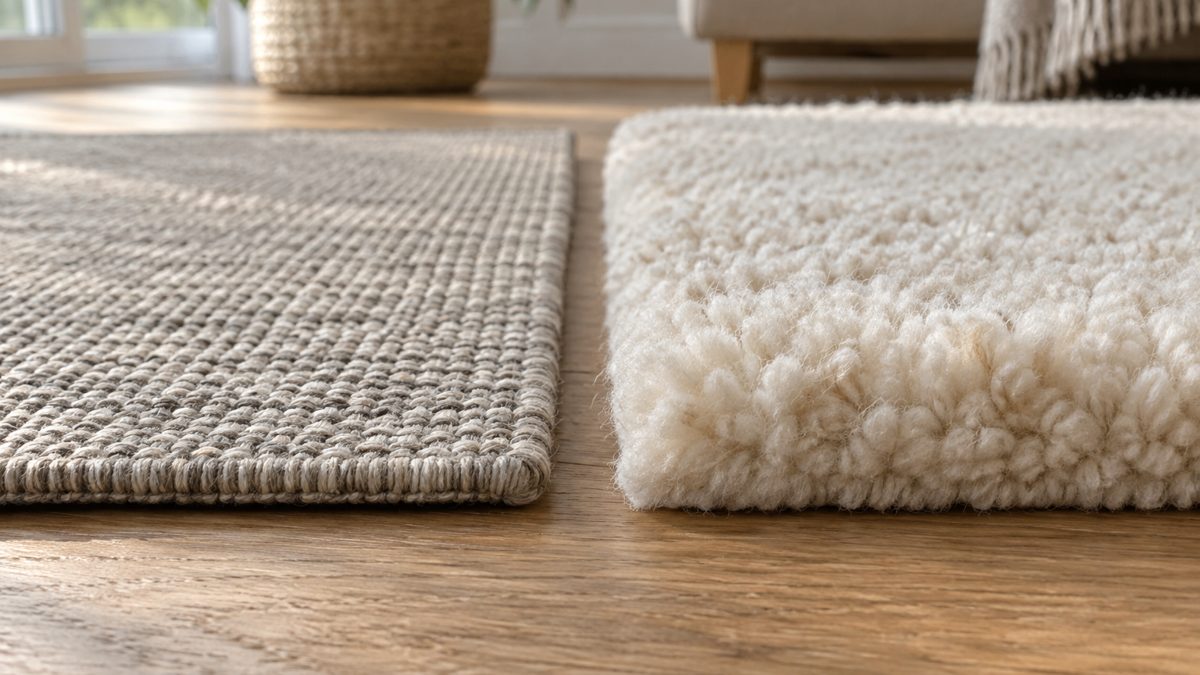
Retailers rarely explain this trade-off clearly, so it’s worth stating plainly: polypropylene and wool fail in different ways, and “which lasts longer” depends on what you mean by lasting.
Polypropylene resists everyday wear and tear well. It holds its shape under foot traffic, doesn’t stain easily, and is often machine washable in smaller sizes, which makes it a practical choice for a household with pets or young children. Its weak point is fibre fatigue: the strands flatten and lose their texture with sustained use, and once that happens the rug tends to look tired rather than dirty.
Wool behaves almost the opposite way. It resists matting less well in high-traffic zones and costs more upfront, but the fibre itself is far more resilient over time, as this polypropylene versus wool comparison also sets out. A well-made wool rug can remain in good condition for well over a decade with reasonable care, while a polypropylene rug in the same spot more commonly shows visible wear within three to five years of daily use.
The practical takeaway isn’t that one material is better. It’s that polypropylene suits a rug you expect to replace every few years anyway, while wool only pays off if you’re prepared to spend more once for something that should outlast several polypropylene rugs bought over the same period.
Neither material is inherently “premium” or “cheap” in performance terms, only in price. A £40 polypropylene rug in a low-traffic reading corner can easily outlast a £120 wool rug placed directly in front of a well-used sofa.
What size rug does a UK living room actually need?
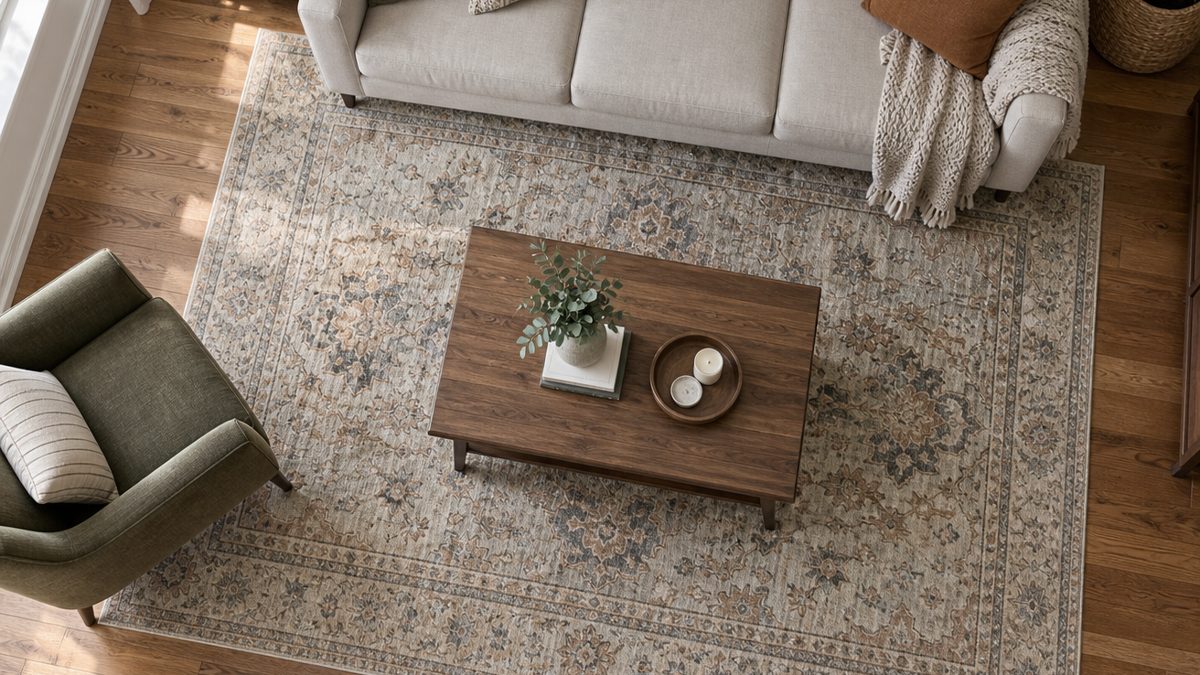
Undersizing is the single most common mistake on a budget rug purchase, because the smallest size is usually also the cheapest.
For a typical three-seater sofa plus an armchair, 160cm by 230cm is the size most commonly recommended for a UK living room, a rule detailed in this UK rug sizing guide. It’s large enough to let the front legs of the seating rest on the rug, which visually anchors the furniture as one grouping rather than leaving the rug looking like an isolated mat in the middle of the floor.
Larger rooms with a corner sofa, or two sofas facing each other, generally need 200cm by 290cm or bigger for the same effect. As a rough guide, aim to leave 20 to 40cm of bare floor visible between the rug’s edge and the skirting board on at least the open sides of the room.
Rug size calculator
Enter your seating layout to get a suggested rug size.
Which budget rug suits pets, kids, or hard floors?
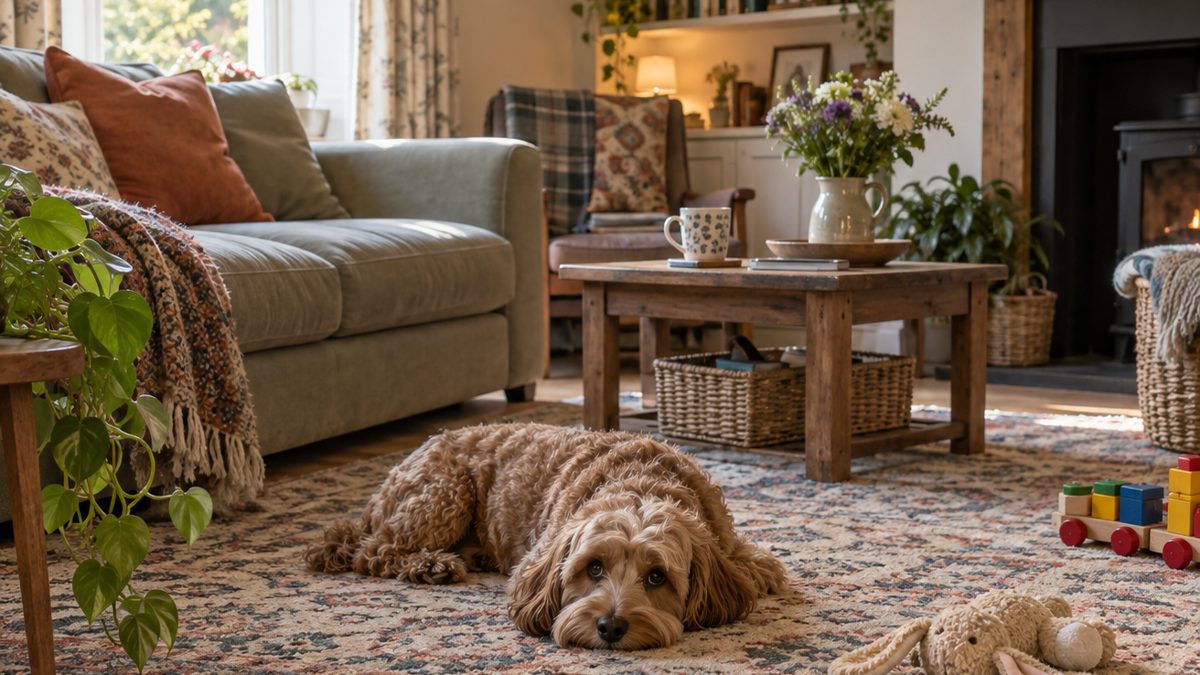
The right budget rug depends more on the room’s actual use than on style preferences, so it’s worth matching the material and finish to the specific problem you’re solving.
- Low-pile polypropylene for pet hair and easy vacuuming
- Washable flatweave for a household with young children
- A patterned design to hide everyday marks between cleans
- Deep shaggy pile where pet claws or crumbs can get trapped
- Pale plain wool in a room used daily by children
- Loose-weave jute-look rugs near a robot vacuum or frequently moved furniture
For hard floors specifically, a washable or wipeable finish matters more than pile height, since spills sit on the surface rather than soaking into the fibres the way they would on carpet.
How do you stop a budget rug slipping on hard flooring?
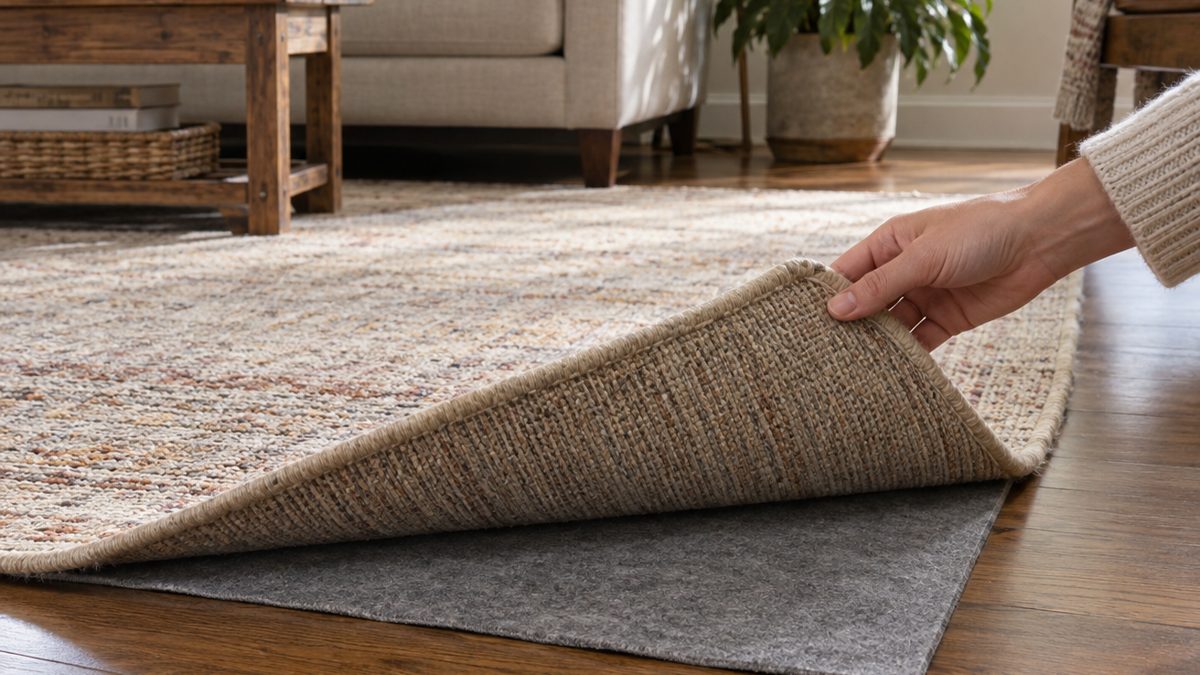
A textured or fabric backing is not the same thing as a non-slip backing. Treating the two as interchangeable is one of the most common mistakes when buying a first budget rug for laminate, wood, tile or vinyl floors.
Most budget rugs under £100 are sold with a flat woven or latex-dot backing designed to reduce fraying, not to grip a hard floor, a distinction this rug buying guide also flags for hard-floor households. On these surfaces, a separate anti-slip rug pad matters a great deal rather than being optional, particularly in a living room where the rug sits in a walked-through area rather than tucked entirely under furniture.
Buy the rug pad in the same order as the rug itself, cut slightly smaller than the rug’s dimensions so it stays hidden underneath. It typically adds a modest amount to the total cost but removes the main safety complaint about budget rugs on hard floors.
How can a cheap rug look more expensive than its price?
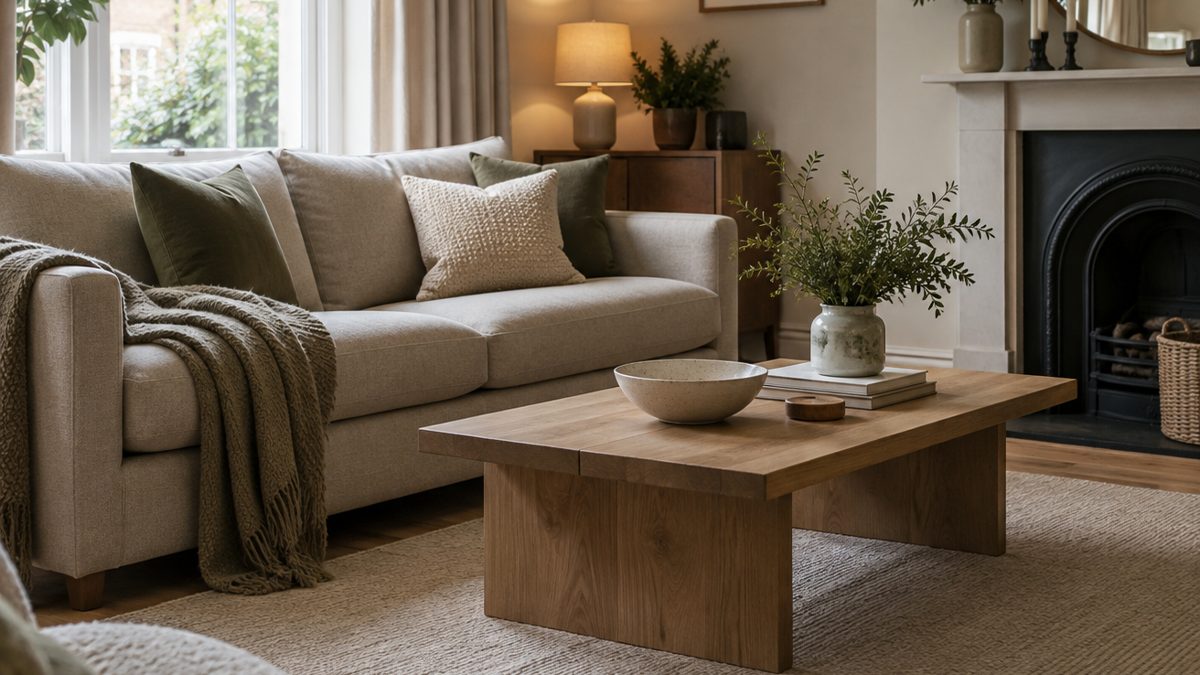
Presentation affects how a rug reads far more than most buyers expect, and the biggest levers cost nothing extra once the right size has already been chosen.
| Change | Why it works |
|---|---|
| Size up rather than down | A rug that’s slightly too big reads as intentional; one that’s too small reads as an afterthought |
| Keep the pattern simple in a small room | A busy print can visually shrink the floor space it’s meant to open up |
| Centre it on the seating, not the room | Aligning the rug with the sofa and chairs matters more than centring it on the walls |
| Vacuum in alternating directions | Prevents the flattened, matted look that makes a budget pile show its age fastest |
None of these require spending more than the rug itself costs, but they make the difference between a rug that looks chosen and one that looks like a placeholder.
In Summary
A budget rug is only good value if the size and material match how the room is actually used. Polypropylene suits a rug expected to be replaced every few years, while wool only earns its higher price if it’s given the years to outlast several cheaper alternatives.
Getting the size right, using an anti-slip pad on hard floors, and centring the rug on the seating rather than the room does more for the finished look than upgrading the price band alone.
What is the best affordable rug for a living room?
There isn’t one single best option: a low-pile polypropylene flatweave around 160cm by 230cm suits most UK living rooms on a tight budget, since it’s durable, easy to clean and widely available in the size most rooms actually need.
Should a rug be lighter or darker than a sofa?
Either works, but a rug a shade or two lighter than the sofa tends to make a small room feel more open, while a darker rug can help ground a room with pale walls and flooring. Matching tones exactly often makes a budget rug look flatter than a deliberate contrast.
Are budget rugs from high street retailers good quality?
Quality varies more by construction than by retailer name. A denser, tightly woven flatweave at a mid-budget price generally holds up better than a thicker, loosely tufted rug at the same price, regardless of where it’s bought.
Do budget rugs need an underlay on carpet?
It’s optional on carpet, unlike on hard flooring. An underlay mainly adds cushioning and helps a thinner rug avoid wrinkling over time, so it’s more of a comfort upgrade than a safety requirement on a carpeted floor.
Can a budget rug be machine washed?
Many smaller polypropylene and flatweave rugs are machine washable, but always check the specific rug’s care label first, since backing type and size limits vary between models even within the same material.