
At a Glance
A small flat rules out a squat rack, but not a proper workout routine. Most of what stops people training at home is not floor space, it is buying equipment that was designed for a garage.
Once you work out how many square metres a piece of kit actually needs, both stored and in use, the picture changes fast. A corner behind a sofa or a strip of hallway is often enough.
This guide walks through the footprint math, the equipment that earns its place in a small UK flat, two real layout examples and what to budget at each stage.
How much space does a home workout actually need?
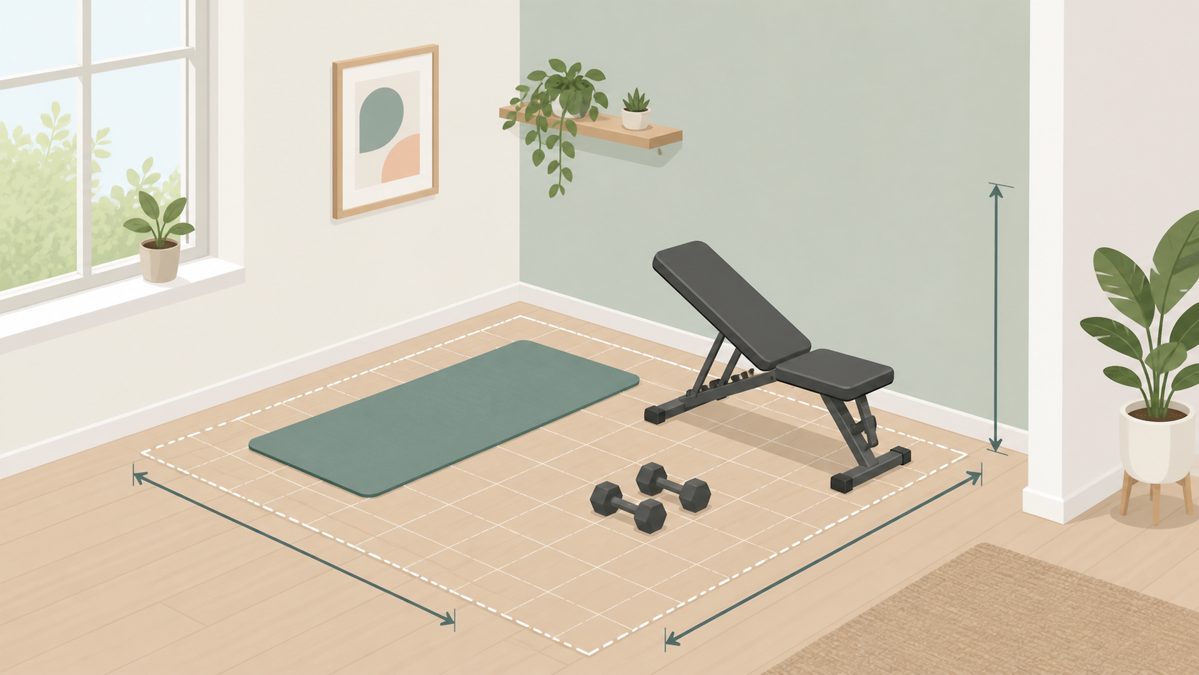
Fitness bloggers often say you need “a bit of space” without ever putting a number on it. In practice, a single person doing bodyweight or dumbbell training can work with a zone of about 1.5m by 1.5m, which is 2.25m².
That is the minimum for extending your arms overhead and stepping out into a lunge without hitting furniture. Cardio equipment and anything you swing, like a kettlebell, needs more clearance around it, not just under it.
| Equipment | Stored footprint | Space needed in use |
|---|---|---|
| Yoga or exercise mat | Rolled, about 0.1m² | Around 0.7m² (0.6m x 1.2m) |
| Resistance bands | Negligible, fits in a drawer | 1.5m x 1.5m (2.25m²) |
| Adjustable dumbbells on a stand | About 0.1m² | 1.5m x 1.5m (2.25m²) |
| Foldable bench | Leans flat against a wall, about 0.24m² | 1m x 2m (2m²) |
| Walking pad, folded | Roughly 0.7m x 0.7m, slides under a bed | 1.4m x 0.7m (about 1m²) |
| Mini trampoline | Upright against a wall, about 15cm deep | Diameter of roughly 1m (0.8m²) |
| Suspension trainer | Fits in a small bag when not anchored | 2m x 2m (4m²) for full extension |
Measure your actual free floor space with a tape measure before buying anything. A corner that looks tight on paper is often wider than the 1.5m minimum once you move the coffee table.
Strength training equipment that fits in a corner
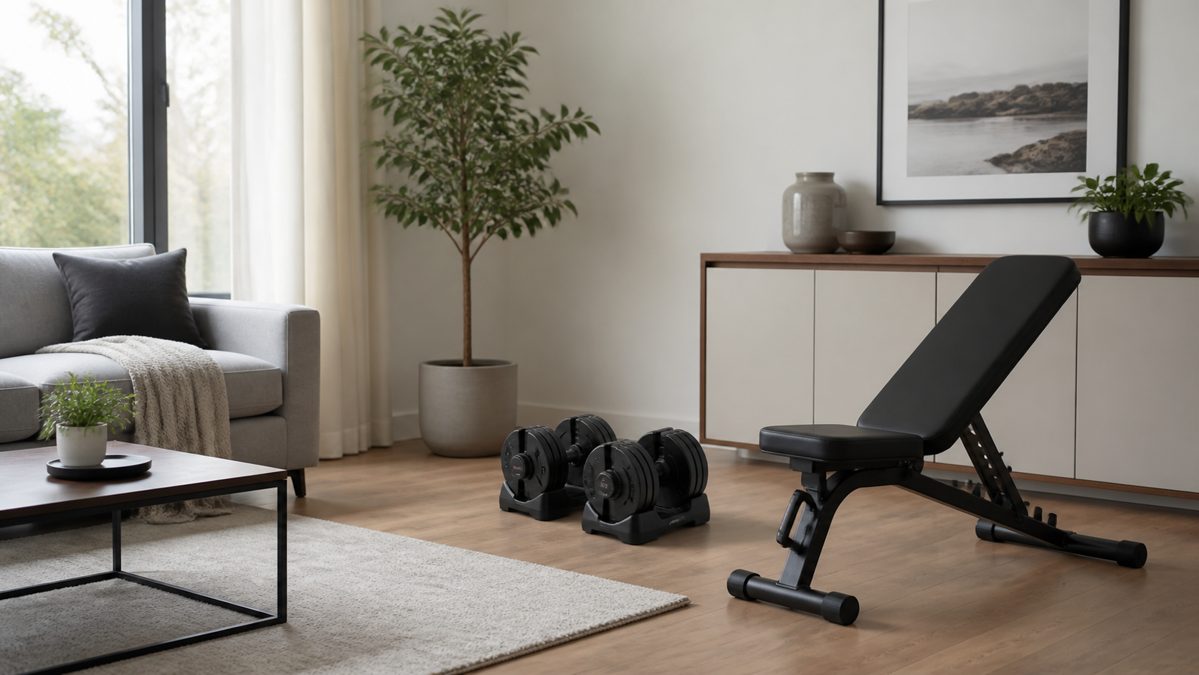
Adjustable dumbbells are the single most space-efficient strength option. One pair with a dial mechanism replaces a rack that would otherwise run to six or eight sets of fixed weights, and most models store standing upright in under 0.1m².
Resistance bands add pulling and rotational movements that dumbbells cannot easily replicate, and they roll up small enough to sit in a kitchen drawer. A set of three to five bands with different resistance levels covers most muscle groups.
A foldable bench is the one item worth the extra footprint. It turns a pair of dumbbells into presses, rows and step-ups, and a decent hinge design collapses to a slim profile that slides behind a door or under a bed.
A pair of adjustable dumbbells and a folding bench cover roughly the same strength range as a small home gym, in a fraction of the storage space.
Cardio equipment that folds away when you are done
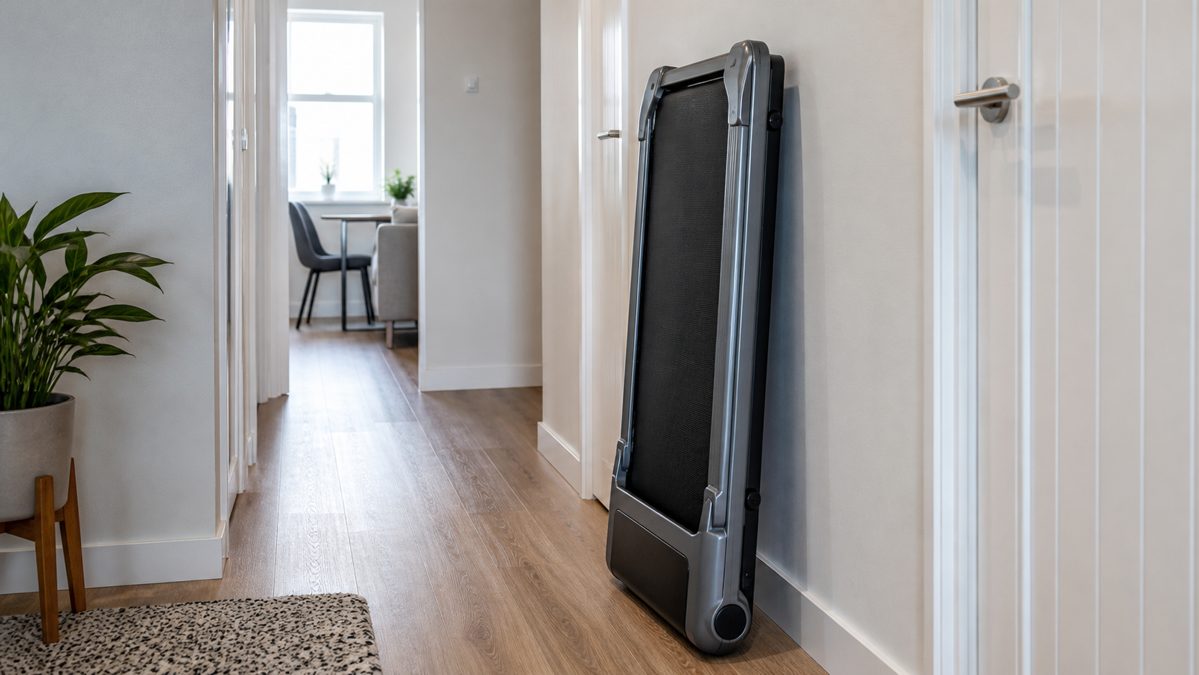
Walking pads have become the standard cardio pick for small UK flats. They run quieter than a full treadmill, sit low to the ground, and most models fold to a flat unit that slides under a bed or sofa in seconds.
A foldable under-desk treadmill covers a similar footprint but usually supports faster running speeds, which means a heavier motor and more vibration through the floor, a real concern if you live above a neighbour.
Mini trampolines suit anyone who wants a higher-intensity cardio option without running at all. They store upright against a wall and take up barely more depth than a folded ironing board.
- Quietest option, suited to upstairs flats
- Folds flat and slides under furniture
- Good for walking while on calls or watching TV
- Heavier, harder to move and fold daily
- More motor noise and vibration at running speed
- Needs a firmer, more stable base surface
Keeping floors and neighbours happy in an upstairs flat
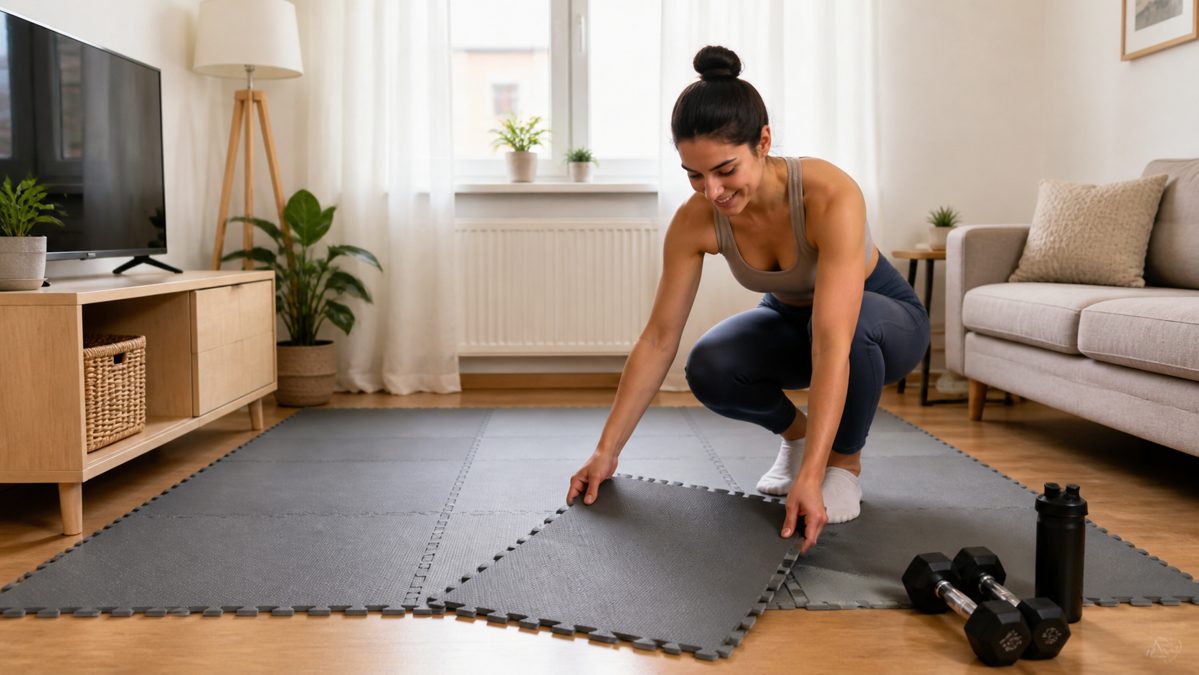
Impact noise, rather than equipment noise, is usually the biggest complaint from downstairs neighbours in UK blocks. Dropping dumbbells or jumping on a hard floor travels through the building structure far more than most people expect.
Interlocking EVA foam mats laid under the entire workout zone absorb most of that impact. They also protect laminate or engineered wood flooring from dumbbell dents, which matters in a rented flat where you want the deposit back.
Lowering weights under control rather than dropping them cuts impact noise dramatically, and it is better for your joints too. Treat the last few centimetres of every rep as part of the exercise, not the end of it.
Two small-flat layouts that actually work
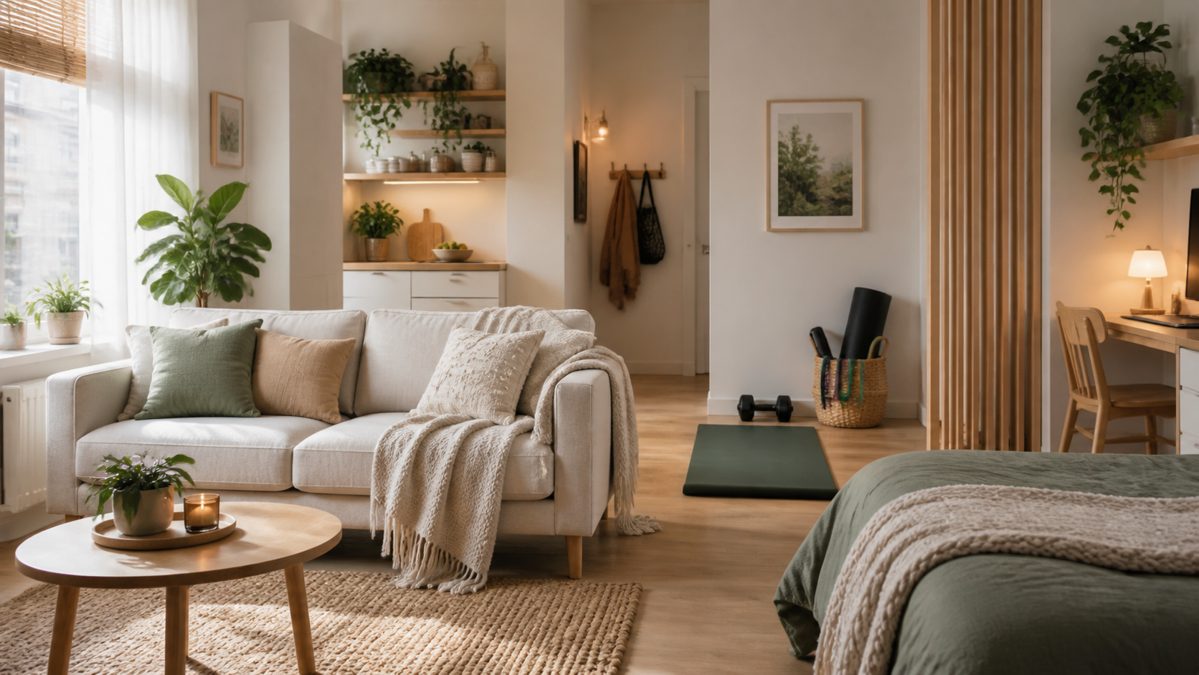
Priya lives in a 28m² studio in Manchester with one main room. Her workout corner sits directly behind the sofa: a folded yoga mat and a set of resistance bands live in a basket that doubles as a side table, and the sofa gets pushed 40cm forward for 20 minutes, three times a week.
Tom rents a third-floor one-bed flat in Leeds with thin partition walls. He keeps a walking pad in the hallway, using it during work calls, and folds it flat under his bed at night. Interlocking mats under the pad keep footstep noise from carrying down to the flat below.
Both setups share the same principle: the equipment lives somewhere else in the flat when it is not in use, and the workout zone only exists for the twenty or thirty minutes it is needed.
What to budget at each stage?
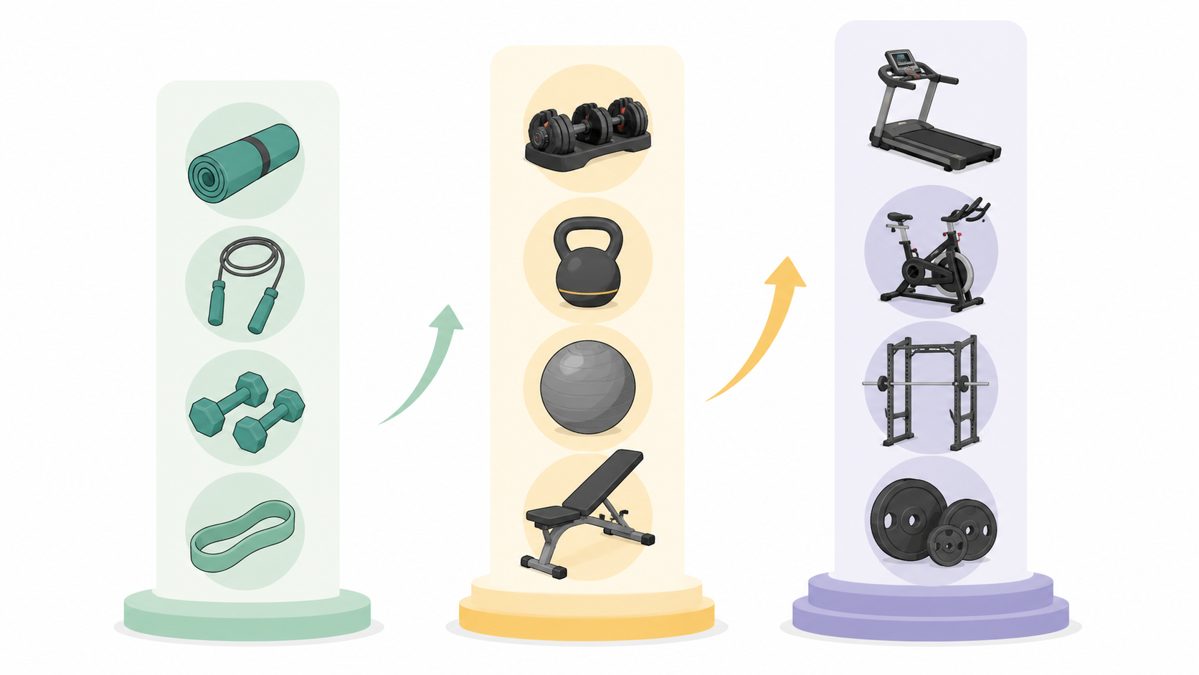
An entry-level small-space setup (a mat, resistance bands and a pair of light adjustable dumbbells) typically costs £300 to £500. That covers most bodyweight and light strength training for months before anything wears out.
A mid-range setup in the £500 to £1,000 bracket usually adds a foldable bench and either a walking pad or a heavier dumbbell range, enough to progress strength training for a year or more without replacing kit.
For comparison, the average UK gym membership costs around £48 a month at a private club, rising to nearly £75 a month in London, according to the 2025 State of the UK Fitness Industry Report. Against that figure, a mid-range home setup can pay for itself within a year to eighteen months, faster still if you are comparing against London prices.
Before buying, list the three exercises you actually do most often, then check the table above for the smallest footprint equipment that covers all three. Buying for a routine you do not have is the most common way small-space setups end up unused.
Work out what fits your space and budget
In Summary
A small flat is not a barrier to a proper home workout routine once you match equipment to the footprint you actually have, both stored and in use. The 1.5m by 1.5m minimum, adjustable dumbbells, resistance bands and a walking pad cover the vast majority of what most people need.
Start with the entry-level £300 to £500 setup, protect your floor with interlocking mats, and only add a bench or heavier kit once you know which exercises you keep coming back to. For general guidance on how much activity to aim for each week, the NHS physical activity guidelines are a solid starting reference.
Common Questions
How much floor space do I need for a home workout?
Around 1.5m by 1.5m, or 2.25m², is enough for most bodyweight and dumbbell training. Cardio equipment like a walking pad needs a similar footprint while in use, though it folds away to a fraction of that afterwards.
What is the quietest cardio equipment for a flat?
A walking pad is generally the quietest option, since it runs at lower speeds with a lighter motor than a full treadmill. Interlocking foam mats underneath reduce impact noise further, which matters most in upstairs flats.
Are adjustable dumbbells worth it for a small space?
Yes, a single pair with a dial mechanism replaces a full rack of fixed weights while storing in under 0.1m². They cover most strength exercises when paired with a foldable bench.
How do I stop my home workout from disturbing neighbours?
Lay interlocking EVA foam mats under your entire workout zone to absorb impact noise, and lower weights under control instead of dropping them. Choosing a walking pad over a running treadmill also cuts vibration through the floor.
How much does a small-space home gym cost to set up?
An entry-level setup with a mat, resistance bands and light adjustable dumbbells runs £300 to £500. A mid-range setup adding a folding bench or walking pad sits between £500 and £1,000.
It’s interesting to see how a small 1.5m x 1.5m space can be transformed into a functional workout area. I appreciate the emphasis on equipment that doesn’t require much storage space.
I appreciate the suggestion of using adjustable dumbbells and resistance bands for compact strength training; it’s perfect for my limited space!