
At a Glance
If your skin reacts to new make-up, the best budget foundation for sensitive skin in the UK is the one whose label you have actually read, not the one with the gentlest name.
Most roundups list affordable foundations by finish and shade range, then add a line saying a product “suits sensitive skin”.
This guide takes the opposite route: it reads the real ingredient lists of five low-cost foundations sold in the UK, flags what reactive skin tends to dislike, and compares the cost per ml.
On the labels checked, The Ordinary Serum Foundation and L’Oréal True Match come out as the most reassuring liquids, with Lily Lolo as the shortest-list mineral option.
It also covers how to patch test a new base so a reaction costs you a swatch, not a full bottle.
What does sensitive skin change when you shop on a budget?
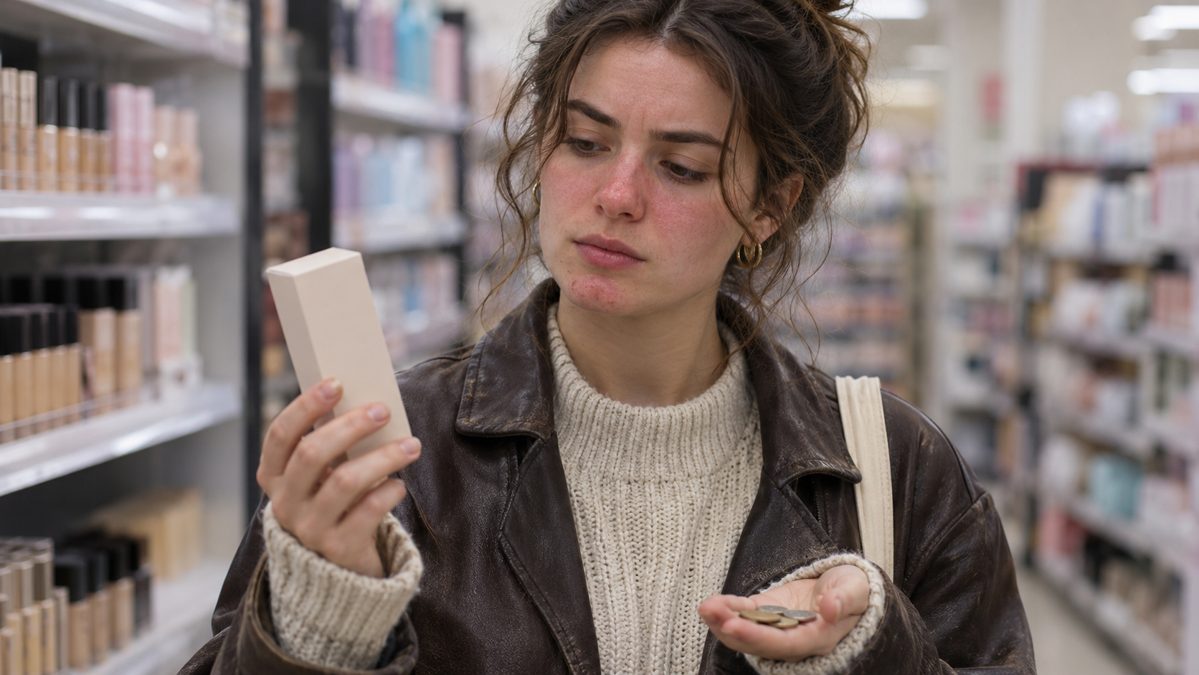
On a tight budget, the real risk is not buying a foundation that looks wrong. It is buying one your skin cannot wear at all, then having nothing left to spend on a replacement.
In this guide, “budget” means a liquid foundation at around £15 or less for a full-size bottle.
One mineral powder slightly above that line is included, because its very short ingredient list makes it a useful comparison.
Sensitive skin is not a single condition, so the skincare underneath the foundation counts too, whether a plain moisturiser or one of the probiotic skincare products sold for reactive skin.
Dr Sophie Shotter, quoted in the Boots guide to foundations for sensitive skin (updated May 2026), describes it as skin that is “reactive and easily irritated by environmental factors or things we apply to it”.
The same guide makes a distinction that matters at the till: it advises choosing fragrance-free formulas rather than “unscented” ones, because unscented can mean a fragrance is masked rather than absent.
A “hypoallergenic” or “natural” claim is not a promise that a product cannot trigger a reaction. The Allergy UK factsheet on cosmetic allergy (published online September 2021) warns readers not to be misled by these descriptions, since such products “can contain a variety of common allergens”.
Reformulations add another layer of risk. On Mumsnet (31 March 2025), a user with rosacea who had always worn a heavy-coverage foundation described stinging, burning and dryness after the brand changed its formula, adding: “They all claim to be hypoallergenic!”
That is why the label, read again each time you rebuy, is a better guide than the product name.
How do you read a foundation label in two minutes?

The ingredient list (often headed “Ingredients” or “INCI”) is printed on the box or the bottle, and most UK retailers repeat it online.
Ingredients appear in descending order of weight down to 1%, so the first five usually make up the bulk of the formula.
Here is a quick order of checks that works in a shop aisle as well as on a product page.
- Look for “parfum” or “fragrance”. The NHS lists fragrances and preservatives among the cosmetic ingredients that can cause allergic contact dermatitis (NHS, page reviewed May 2023).
- Scan for named fragrance allergens such as linalool, limonene, citronellol, geraniol or citral. They can appear even when “parfum” is absent, for example when they come from a plant extract.
- Check where “alcohol denat.” sits. In the first five ingredients, it is a sign the formula may feel drying on dry or flaky patches.
- Spot aromatic plant oils and extracts such as lavender, citrus or tea tree. Allergy UK names these as plant extracts that may cause reactions.
- Note the UV filters if a chemical sunscreen has bothered you before. Mineral filters are listed as zinc oxide or titanium dioxide.
- Find the open-jar symbol with a number such as “12M”. It tells you how long the product stays fit to use once opened.
Under the cosmetics rules that apply in Great Britain, each listed fragrance allergen must be named in the ingredient list once it exceeds 0.001% in a leave-on product such as foundation, against 0.01% in a rinse-off product (Regulation (EC) No 1223/2009, Annex III, as retained in UK law). A label without these names is therefore a meaningful signal, not a blank.
The open-jar rule comes from the same regulation: products that keep for more than 30 months must show a period after opening instead of a best-before date.
Five budget foundations, label checked
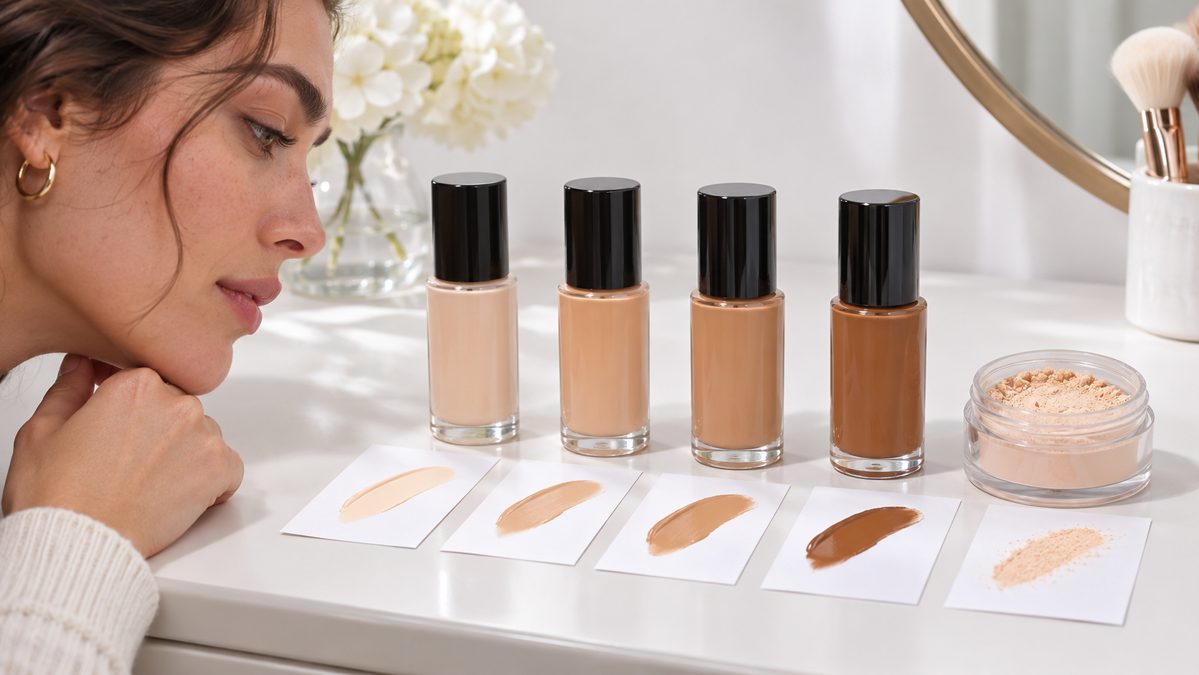
The five products below were chosen because they are widely sold in the UK, cost around £15 or less for a liquid (or just above for the powder), and have a published ingredient list.
Prices were checked in November 2026 unless stated otherwise, and they vary by shade and retailer.
None of the five ingredient lists checked names linalool, limonene or another listed fragrance allergen either.
| Foundation | UK price and size | Cost per ml or g | Parfum on the label? | What to know | Shades |
|---|---|---|---|---|---|
| The Ordinary Serum Foundation | £6.40 for 30ml (brand site) | about 21p/ml | No | Silicone-based, alcohol-free and oil-free per the brand | 36 |
| Maybelline Fit Me Matte + Poreless | about £9 to £10 for 30ml (Boots) | about 30p to 33p/ml | No | Alcohol denat. is the fifth ingredient; contains parabens | 38 |
| L’Oréal Paris True Match | £9.59 for 30ml (Guardian, March 2026) | about 32p/ml | No (shade 1N listing) | Glycerin and panthenol; some shades may contain colour lakes | 49 |
| Rimmel Kind & Free Skin Tint | £9.99 for 30ml (Lookfantastic, sold out) | about 33p/ml | No, sold as fragrance-free | Contains a chemical UV filter and nano zinc oxide | 12 |
| Lily Lolo Mineral Foundation SPF 15 | £18.47 for 10g (Ecco Verde) | about £1.85/g | No | Mica and zinc oxide plus pigments only | 20 |
The Ordinary Serum Foundation
At £6.40 for 30ml on the brand’s UK site (accessed November 2026), this is the cheapest option per ml here, with moderate coverage and 36 shades.
Its ingredient list contains no parfum and no alcohol denat., and the brand describes it as alcohol-free and oil-free. It is built on silicones, starting with cyclopentasiloxane, which some readers prefer to avoid.
Maybelline Fit Me Matte + Poreless
The UK ingredient list on Maybelline’s site (accessed November 2026) shows no parfum, and the brand lists it as non-comedogenic and dermatologist tested, aimed at normal to oily skin.
The caveat sits in fifth position: alcohol denat. It helps the matte finish on oily skin, but dry sensitive skin that feels tight or flaky may find it less comfortable.
L’Oréal Paris True Match
The Guardian Filter test of 19 foundations named True Match its best budget pick (March 2026), at £9.59 for 30ml in 49 shades.
A McGrocer listing for shade 1N (accessed November 2026) shows no parfum and no drying alcohol, with glycerin among the first five ingredients and panthenol further down. The colour pigments vary between shades, so it is worth checking the list for your exact shade.
Rimmel Kind & Free Skin Tint
This is sold as fragrance-free and vegan, with 77% natural ingredients, and its list contains aloe and panthenol.
It pairs ethylhexyl methoxycinnamate, a chemical UV filter, with nano zinc oxide.
Availability is also patchy: it was sold out at Lookfantastic at the time of writing, and its Boots product page is no longer live. If it stays unavailable, The Ordinary or True Match meet the same no-parfum brief.
Lily Lolo Mineral Foundation SPF 15
At £18.47 for 10g, this loose mineral powder sits just above the budget line.
Its list is about as short as foundation gets: mica, zinc oxide and, depending on the shade, titanium dioxide and iron oxide pigments, with no fragrance and no preservative on the list.
The trade-off is mica. Readers who already know mica bothers them would get little benefit from switching to this format.
Liquid or mineral powder: which suits reactive skin better?
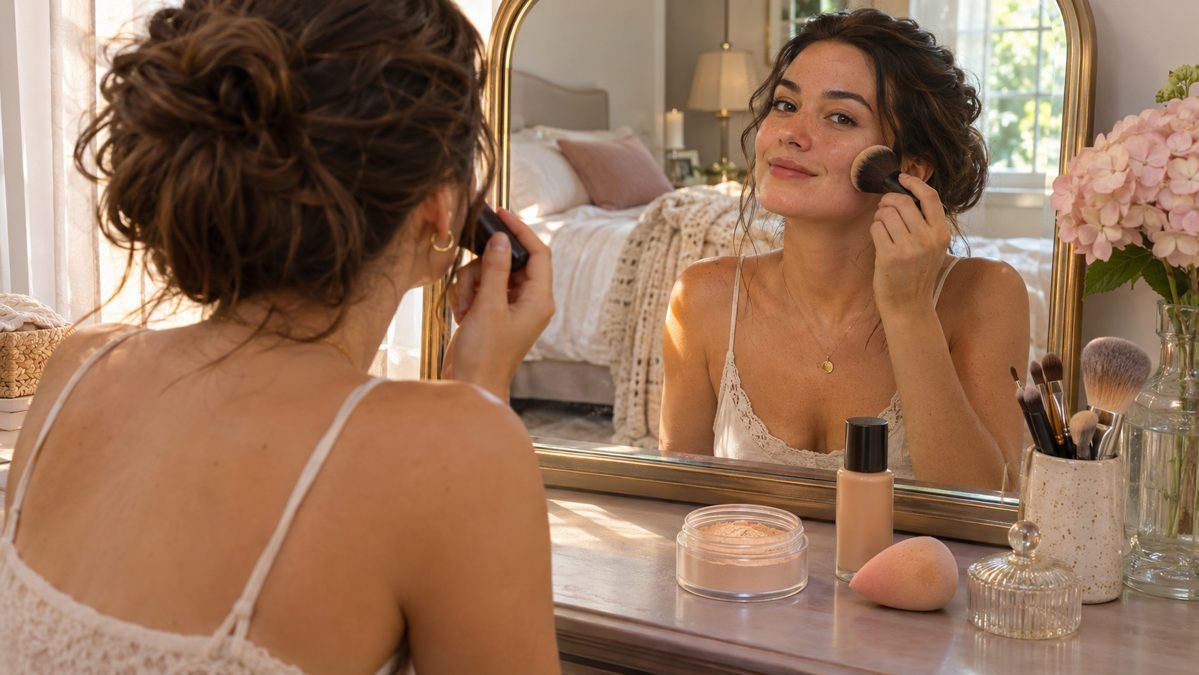
Make-up artist Aimee Connolly, also quoted in the Boots guide, sees mineral foundation as a sensible starting point: “A mineral foundation formula is a safer choice as it’s less likely to contain harmful ingredients that may cause irritation or a flare-up”.
She adds the nuance that matters most: “Some ingredients that may cause a flare-up on one type of sensitive skin may work effectively for another.” In practice, the format to favour depends on what your skin already tells you.
- Mineral powder: very short ingredient list, usually no preservatives
- Mineral powder: easy to sheer out over red patches
- Budget liquid: lower upfront price and easier shade matching in store
- Budget liquid: more comfortable on dry skin in winter
- Mineral powder: can cling to flaky areas and look dry
- Mineral powder: higher upfront cost, and mica sits at the top of the list
- Budget liquid: longer lists with preservatives and silicones
- Budget liquid: some matte formulas rely on drying alcohol
Oily, breakout-prone skin tends to suit a matte liquid labelled non-comedogenic, or a mineral powder.
Dry or flaky sensitive skin usually looks and feels better in a hydrating liquid with glycerin, applied in thin layers with a clean, regularly washed brush.
What does each bottle really cost you per ml?

Shelf prices hide the real comparison, because bottles and pots are not the same size. Dividing the price by the volume gives the real cost per ml: The Ordinary works out at about 21p, while the other three liquids land between 30p and 33p.
Powders need a different reading. A 10g pot of mineral foundation looks expensive per gram, but a light dusting goes a long way, so the honest comparison is how many weeks a pot or bottle lasts you.
Write the date you open a new foundation on the box. When it runs out, you will know your own weeks-per-bottle figure, which is far more useful for budgeting than any shelf price.
Check a foundation label and its cost per ml
This checker works out the cost per ml (or per gram for a powder) from the price and size you enter, then lists the label points worth a closer look for reactive skin. Tick only what you actually see on the ingredient list.
What do you see on the ingredient list?
How do you patch test a new foundation without wasting the bottle?
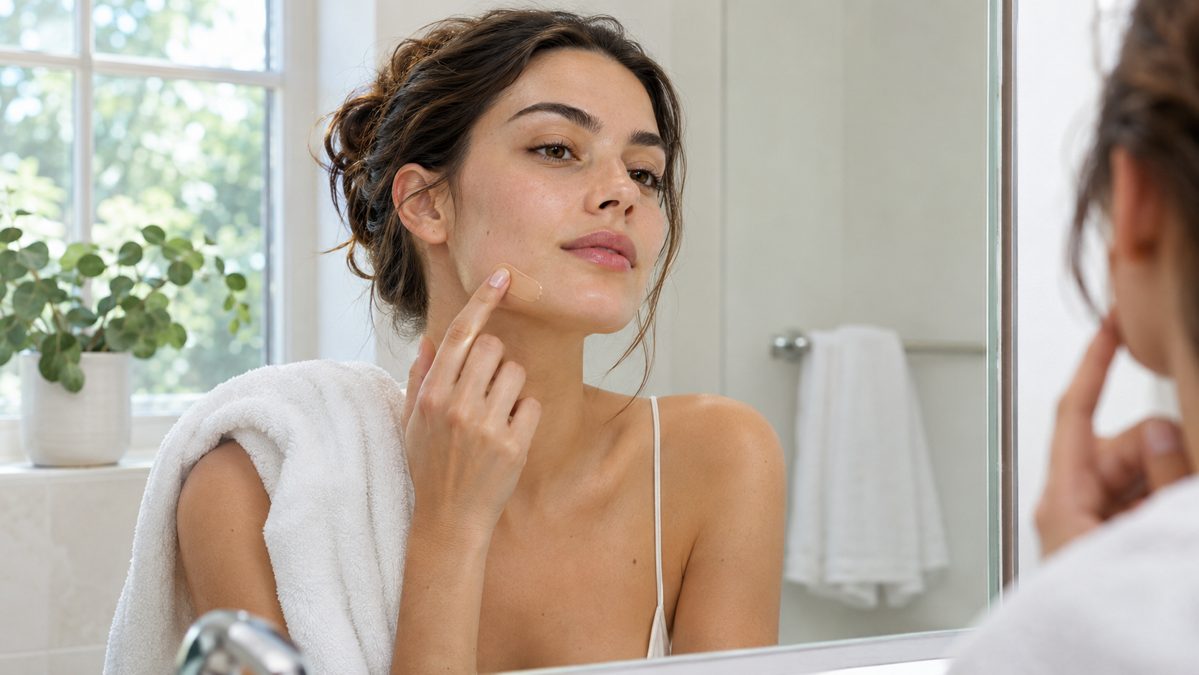
A home patch test will not guarantee that a foundation suits you, but it can catch a problem before it reaches your whole face.
Clean the skin, then swatch a small amount of the foundation along the jawline, as the Boots guide recommends. Leave it for 24 hours before deciding, and keep the receipt and the box in the meantime.
- Test one new product at a time, so you know what caused a reaction if one appears.
- Ask for a sample or tester at a counter before buying a full size, where one is available.
- Repeat the test after a reformulation, even with a product you have worn for years.
- Stop at the first sting or burn rather than waiting to see if it settles.
Two illustrative examples show how this plays out.
Typical case: oily, breakout-prone skin with occasional redness. The matte finish of Fit Me suits the shine, but a jawline test runs for a full day first, because the alcohol in the formula can sting any patch that is already irritated.
Typical case: dry, rosacea-prone skin in a cold, centrally heated UK winter. A hydrating liquid without parfum on its label, such as True Match in a checked shade, applied in a thin layer over moisturiser, tends to sit better than a powder that would catch on dry areas.
A home swatch is not a medical patch test. If a reaction keeps coming back, Allergy UK advises stopping all cosmetics on the affected area and asking a skin specialist about patch testing, which identifies the specific allergen.
In Summary
A good budget foundation for sensitive skin is mostly a matter of reading the label: no parfum, no named fragrance allergens, and drying alcohol well down the list if your skin is dry.
On those terms, The Ordinary Serum Foundation and L’Oréal True Match have the most reassuring labels among the liquids checked, Fit Me suits oilier skin that tolerates alcohol, and Lily Lolo gives the shortest list for a few pounds more.
Whatever you choose, a 24-hour jawline test and a fresh look at the label after each repurchase will protect both your skin and your budget.
Common Questions
What is the best foundation for older skin in the UK?
For mature skin that is also sensitive, a hydrating liquid usually flatters more than a powder, which can settle into fine lines. The Guardian’s tester noted that the budget True Match never clung to dry patches or settled into fine lines during testing (March 2026).
Are cheaper foundations worse for sensitive skin than expensive ones?
Not necessarily. In the same Guardian test, a £39 foundation was flagged for containing alcohol, and a £36 complexion balm was described as fragranced. Price says little about how gentle a formula is; the ingredient list says much more.
Does the SPF in a budget foundation replace sunscreen?
No. Bupa’s guidance on SPF (May 2026) explains that most make-up containing SPF does not give enough protection on its own, because people do not apply enough of it. A separate sunscreen under the foundation remains the safer routine, with the make-up SPF as a top-up.