
At a Glance
Picking a first yoga mat sounds simple until you are standing in front of a wall of options at Decathlon or scrolling through dozens of near-identical listings online.
Thickness, material, grip pattern, size, they all sound like small details, but a mismatched mat is one of the more common reasons a beginner’s first few weeks feel unsteady rather than relaxing.
This guide breaks down what actually matters for someone starting out, with real UK prices and the trade-offs that most product roundups skip over.
What makes a yoga mat good for a beginner?
A beginner mat needs to do three things well: keep your hands and feet from sliding, cushion your knees and wrists on hard floors, and stay flat enough underfoot that you are not fighting the mat itself while learning a pose.
Everything else, colour, alignment lines, carry straps, is secondary. Get grip, thickness and size right first.
Standard mats run 173 to 183cm long and about 61cm wide, which fits most adults. If you are above roughly 178cm tall, a longer mat (183cm or more) avoids your hands or feet hanging off the edge during longer poses like downward dog.
How thick should a beginner’s yoga mat be?
This is where most buying guides oversimplify. A thicker mat feels softer under the knees, so it is tempting to assume thicker always means better for a newcomer.
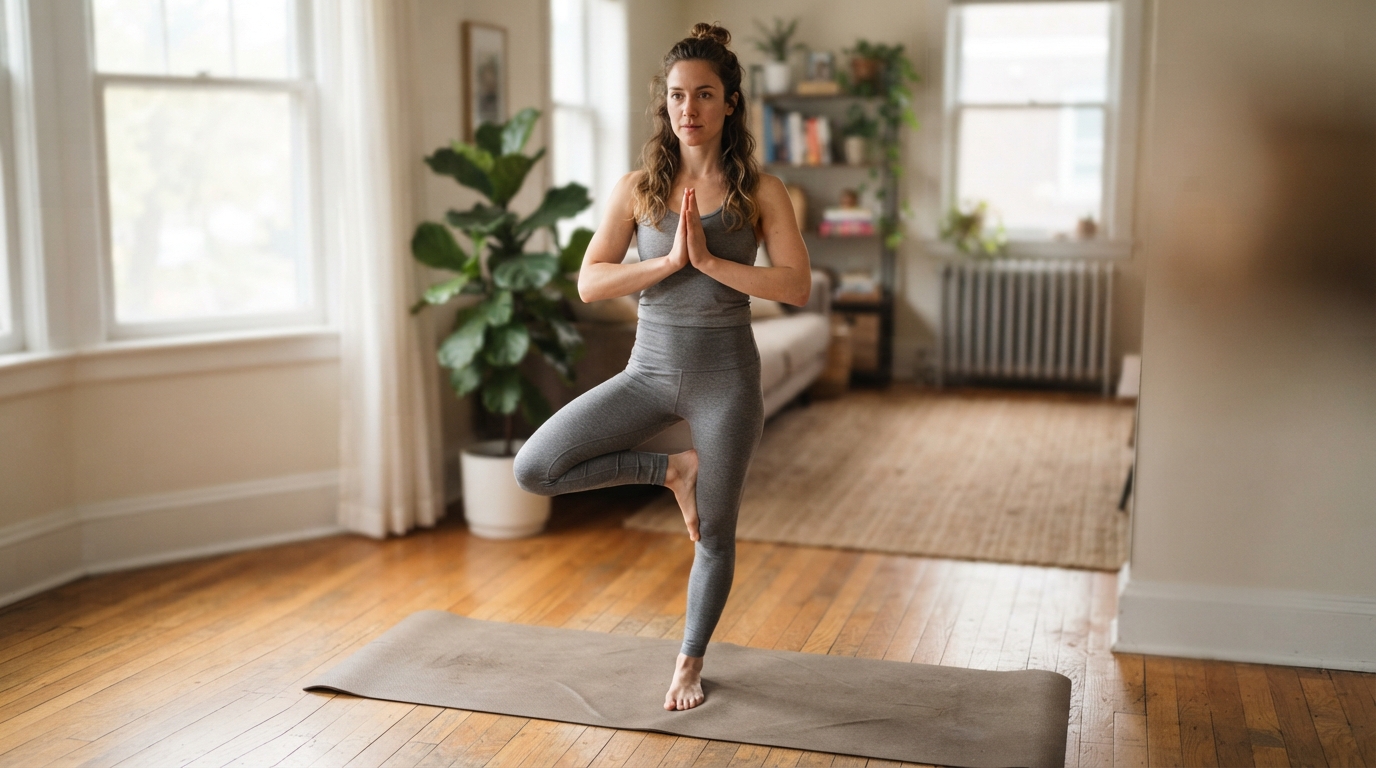
In practice, thickness is a trade-off between cushioning and stability. The thicker the mat, the more it compresses under your feet during standing poses like tree pose or warrior, which makes balance genuinely harder to hold, not easier.
A mat much thicker than 10mm is built for floor exercises and general workouts, not for standing yoga poses that need a firm, stable base underfoot.
As a working guide for beginners:
- 4 to 5mm: closer to the floor, better stability for standing poses, easiest to roll and carry to a class
- 6mm: the most common beginner choice, a workable balance between cushioning and stability
- 8mm and above: noticeably softer on the knees, better suited to floor-based or restorative practice, or anyone with sensitive joints who is prioritising comfort over standing-pose stability
If your knees or wrists already feel sore on a hard floor, lean towards 6 to 8mm and accept a slightly less stable base in exchange. If you have no joint concerns, 4 to 6mm on most home floors is the more forgiving starting point.
What yoga mat thickness suits you?
Answer three quick questions to get a starting thickness range.
PVC, TPE, rubber or cork: which material suits a beginner?
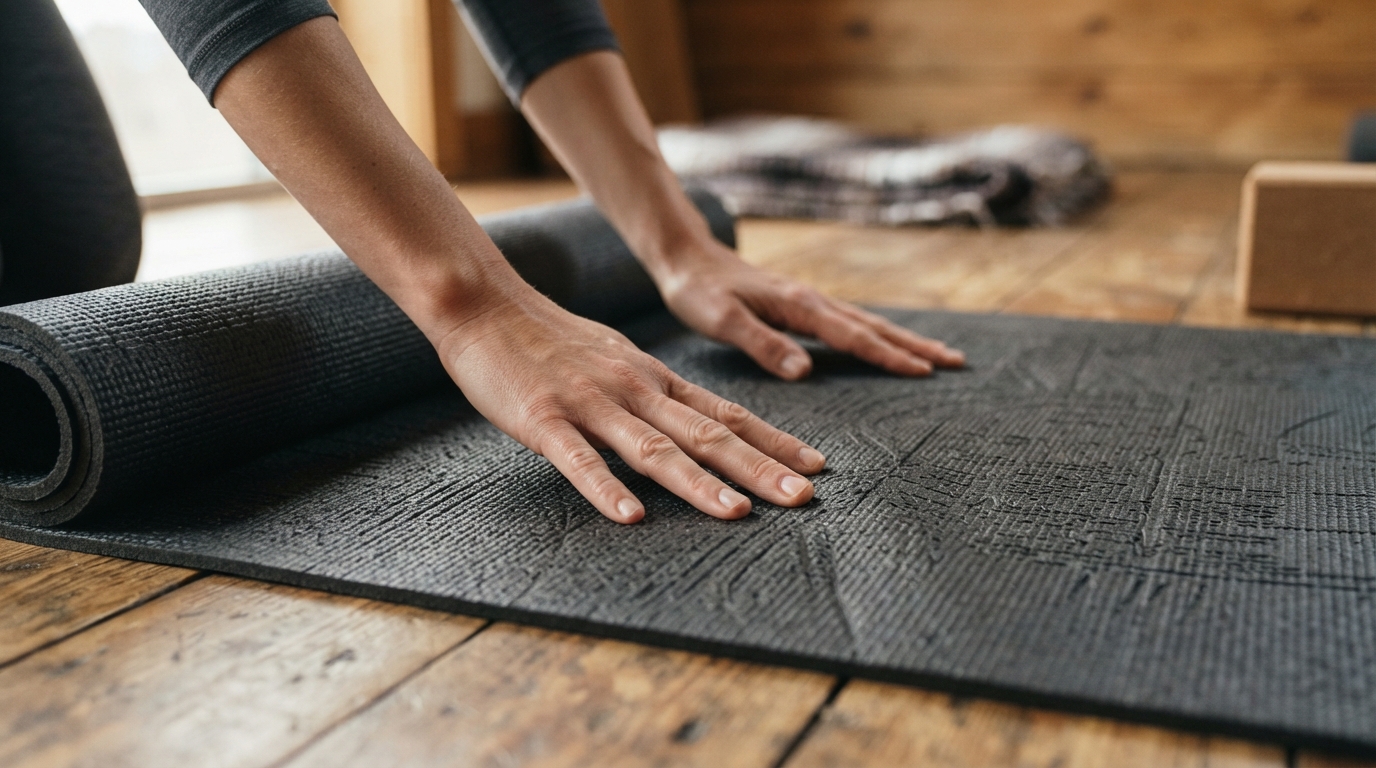
Material affects grip, smell, price and how eco-friendly the mat is, and beginners often assume the differences are marginal. They are not.
- Cheapest option, widely available in the UK
- Grippy and durable once broken in
- Not biodegradable, some contain phthalates
- Latex-free and lighter than PVC
- Good mid-range grip and cushioning
- Wears out faster than rubber or PVC with heavy use
Natural rubber and cork sit at the premium end. Rubber grips well when damp, which matters if you sweat during practice, but it carries a noticeable smell for the first few weeks and is heavier to carry. Cork improves its grip the more it is used and sweated on, the opposite of most mats, though it is usually the most expensive material and less cushioned underfoot.
Unroll a new PVC or rubber mat somewhere ventilated for a day or two before your first session, the initial smell fades and the surface flattens out.
Why grip matters more than anything else at the start
Manduka’s president, James Appleby, is direct about what to prioritise: “If I’m personally asked which yoga mat someone should choose if they are new to yoga, my answer is consistent: Grip is going to be your priority.”
Grip allows a newcomer to focus on instruction and alignment rather than struggling to stay in place during practice.
That lines up with why so many beginners quietly give up on a mat within weeks: not because they dislike yoga, but because a slippery surface makes every pose feel unstable, which is discouraging regardless of how flexible or fit you are.
A textured, closed-cell surface resists sweat better than a smooth one. If you tend to sweat during practice, prioritise a textured or rubber-based grip over a smooth PVC finish, even if it costs a little more.
Is a yoga mat the same as a Pilates or exercise mat?
Not quite, even though they look similar in a shop. A general exercise or Pilates mat is usually thicker (10mm or more) and softer, built for lying and floor work rather than standing balance.
If you plan to mix yoga with Pilates or general floor workouts, a 6 to 8mm TPE mat is usually the more versatile middle ground, rather than buying two separate mats early on.
A dedicated yoga mat, thinner and denser, gives you a firmer, more stable base for standing poses, which is the part beginners tend to struggle with most.
Best yoga mats for UK beginners by budget
Price in the UK splits fairly cleanly into three tiers, and paying more mostly buys you durability and material quality rather than a fundamentally different beginner experience.
| Price band | Typical thickness | What you get |
|---|---|---|
| Under £20 | 4 to 6mm PVC or basic foam | Fine for a first try, grip and durability are the first things cut |
| £20 to £40 | 5 to 6mm PVC or TPE | The best-value tier for most beginners, noticeably better grip and less wear |
| £40 to £70 | 4 to 6mm natural rubber | Better wet grip, more durable, worth it if you already know you will stick with yoga |
| £70 and above | 3 to 5mm premium rubber or cork | Studio-grade mats, sensible once you have a settled practice rather than as a first purchase |
For someone genuinely unsure whether yoga will stick, the £20 to £40 tier is the sensible starting point. It avoids the grip and durability compromises of the cheapest mats without committing serious money before you know your own habits.
How to look after your first yoga mat?
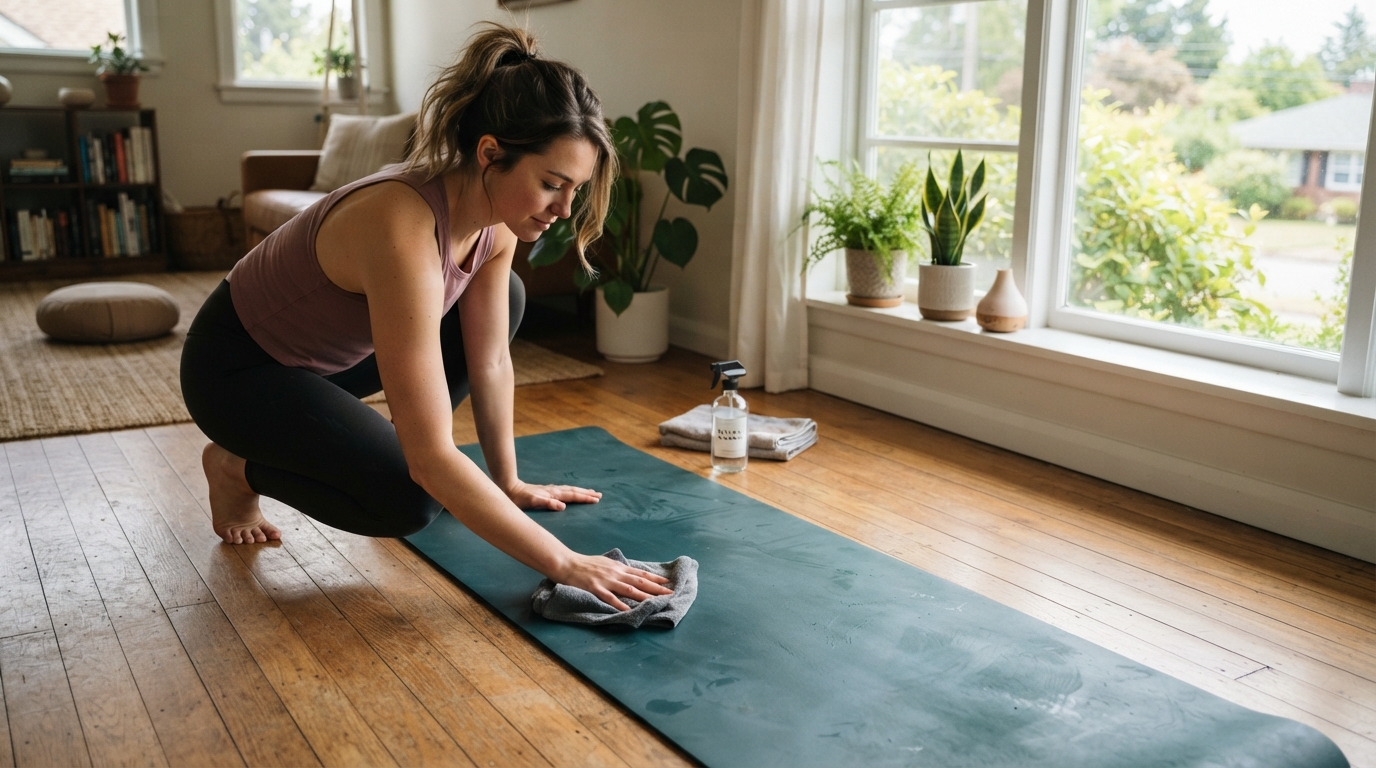
A well-kept mat can comfortably last a few years of regular use, a poorly kept one can start peeling or smelling within months.
- Wipe it down with a damp cloth and mild soap after sweaty sessions, harsh cleaners break down PVC and rubber faster
- Let it air dry flat or hung up, never rolled up while still damp
- Store it away from direct sunlight and radiators, both dry out and crack the surface over time
Regular yoga also counts towards the NHS’s recommendation of two muscle-strengthening sessions a week for adults, alongside the separate 150 minutes of weekly moderate activity. A mat that lasts is a genuinely practical investment, then, not just a comfort purchase.
In Summary
Grip and a sensible thickness for your floor and joints matter far more than brand or colour when buying a first yoga mat. A thicker mat is not automatically the safer or more comfortable choice, it can work against you in standing poses.
For most UK beginners, a 5 to 6mm PVC or TPE mat in the £20 to £40 range covers what actually matters without over-committing before you know how often you will actually use it.
Common Questions
Do I need a yoga mat with alignment lines as a beginner?
They can help with foot and hand placement in the first few weeks, but plenty of experienced practitioners prefer a plain mat, so treat alignment lines as a helpful extra rather than a must-have.
Is it worth buying my own mat if my studio already provides one?
Studio mats are shared and often thinner or more worn than you would choose yourself, and hygiene is a fair concern if you attend regularly. A £20 to £30 mat of your own is a reasonable early purchase even if you are still deciding whether to continue.
How long should a beginner’s yoga mat last?
With regular use and proper drying, a decent PVC or TPE mat typically lasts 6 to 12 months before grip noticeably declines, while natural rubber mats can last several years with the same care.
Do I need a different mat for hot or sweaty yoga sessions?
Not a different mat necessarily, but a different priority: a natural rubber or textured surface holds grip when wet far better than smooth PVC, which becomes noticeably slippery once you start sweating.
Why does a new yoga mat smell and does it go away?
PVC and rubber mats often carry a chemical or rubbery smell fresh out of the packaging. Airing the mat out somewhere ventilated for a day or two before first use usually clears most of it, and it fades further with regular use.