
At a Glance
Buying your first bike is the easy part. The moment you search for what else you need, you land on lists of twenty or thirty items, some costing more than the bike itself.
Bike shops and gear brands have an obvious reason to show you everything at once.
This is a beginner cycling gear checklist UK riders can actually use: real prices, a realistic budget by riding type, and a weather layering system that most checklists skip entirely. It builds on the same practical approach as Cycling UK’s own beginner guidance, but focused specifically on what to buy rather than what to pack for a single ride.
The only two things you legally need before you ride
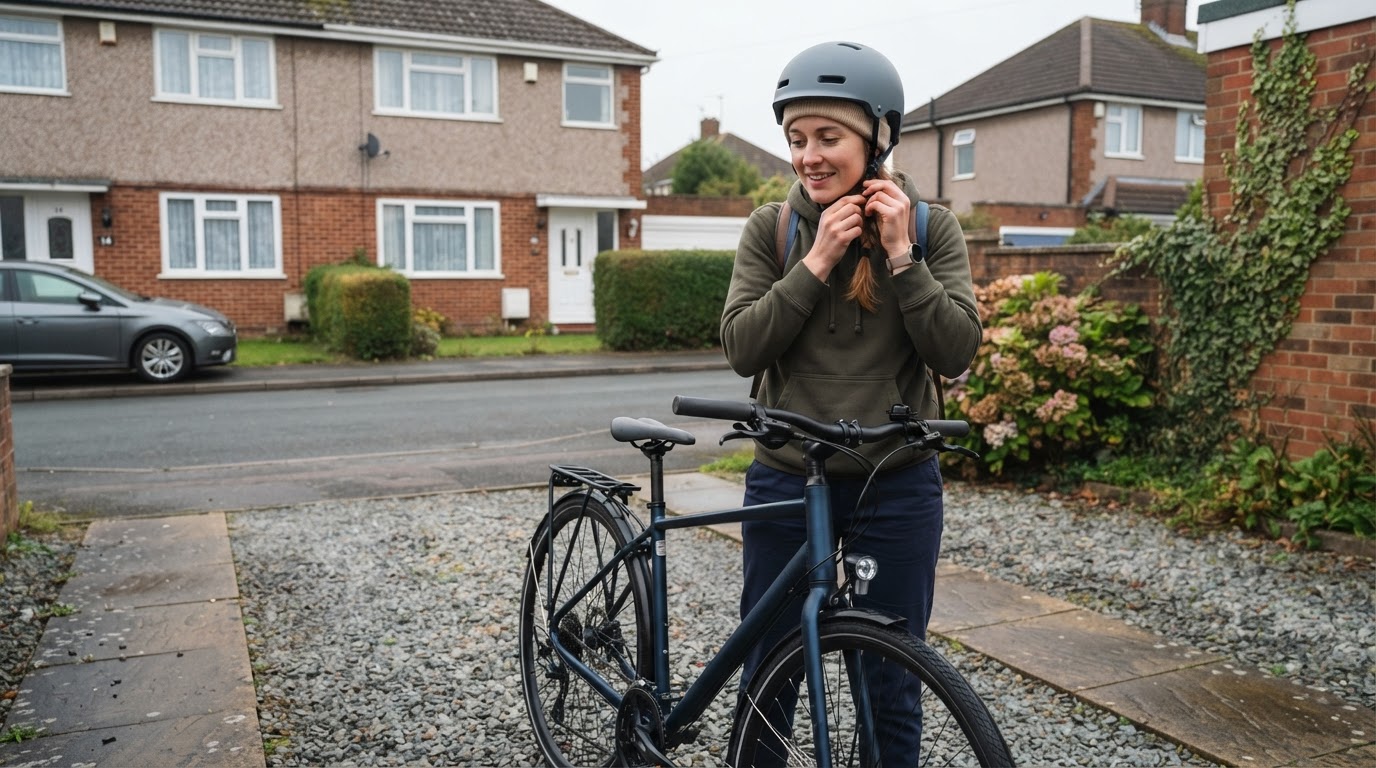
A cycling helmet is not a legal requirement anywhere in the UK, for adults or children. It is still a strong safety choice: a fall at low speed onto a kerb is enough to cause a head injury a helmet would have softened.
Lights are a different matter. Under Highway Code Rule 60, a cycle ridden between sunset and sunrise must have a white front light and a red rear light lit, plus a red rear reflector, and amber pedal reflectors on bikes made after October 1985. This is a legal requirement, not a suggestion, and it applies even for a short ride home after work in winter.
Flashing lights are legally permitted in the UK, but if you regularly ride on unlit roads, a steady front lamp is recommended so drivers can judge your distance and speed more accurately than a flashing beam allows.
Budget helmets start at around £20 to £30, and a legal front and rear light set can be found from about £20, rising to £50 for a set bright enough for unlit country roads.
Once these two boxes are ticked, everything else on a typical checklist is about comfort, convenience or weather, not the law.
The strict-essentials checklist beyond that
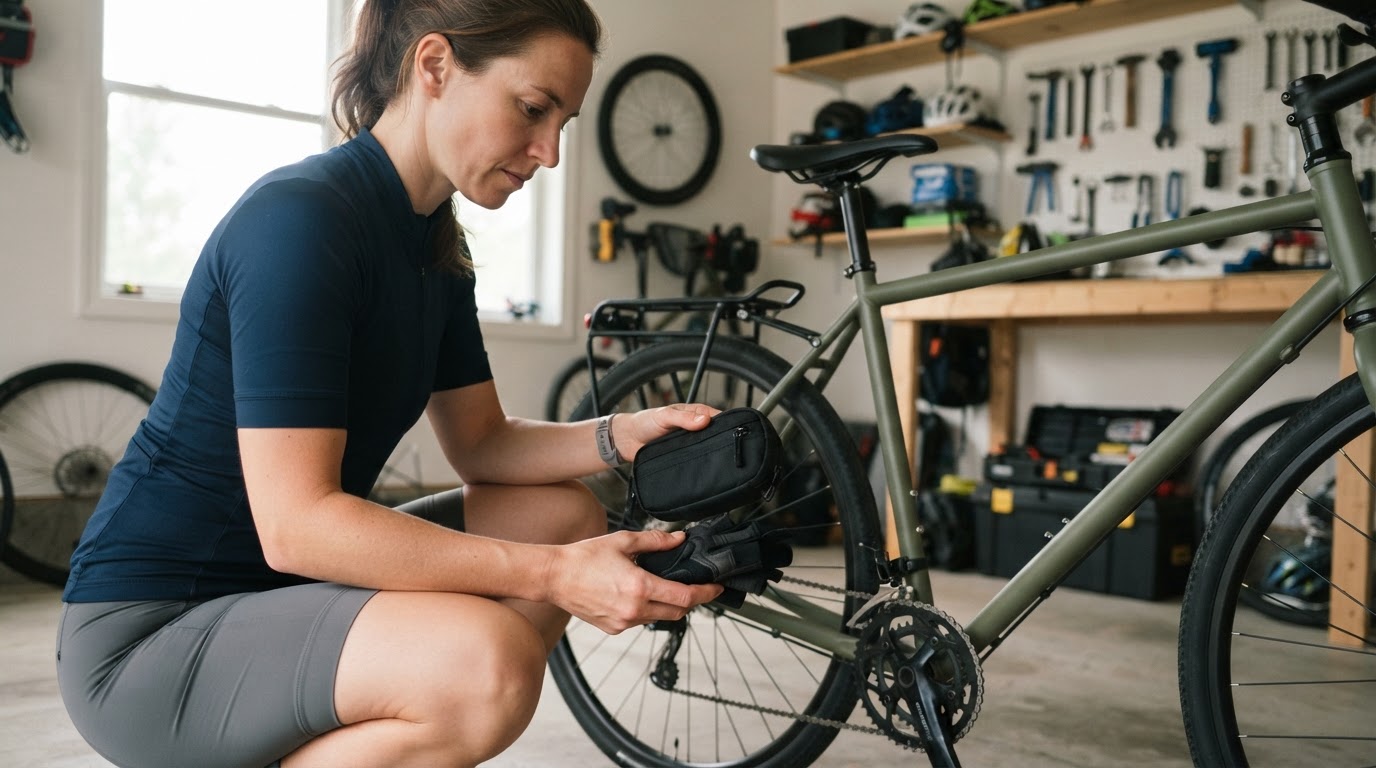
Past the legal minimum, a short list covers real safety and breakdown risk, the kind of thing that turns a ten-minute inconvenience into a long walk home if you skip it.
- A puncture repair kit or spare inner tube, matched to your wheel size
- Tyre levers, to actually get the tyre off the rim
- A mini-pump or a multitool that includes a CO2 inflator
- A basic multitool with Allen keys, for a loose bolt or a rubbing brake
- Cycling gloves, which protect your palms in a low-speed fall as much as they add comfort
- A bottle and cage, or a small hydration pack for longer rides
A commuter riding three times a week to work, four miles each way, genuinely needs all six of these before the first wet Tuesday morning: a slow puncture on the way in with no repair kit means walking the bike the rest of the way, then repeating the walk to a shop at lunch.
A weekend leisure rider doing one 15 to 20 mile loop a fortnight has more slack, but a spare tube still turns a roadside fifteen-minute fix into the difference between finishing the ride and calling for a lift.
Building a UK weather layering system, not a shopping list
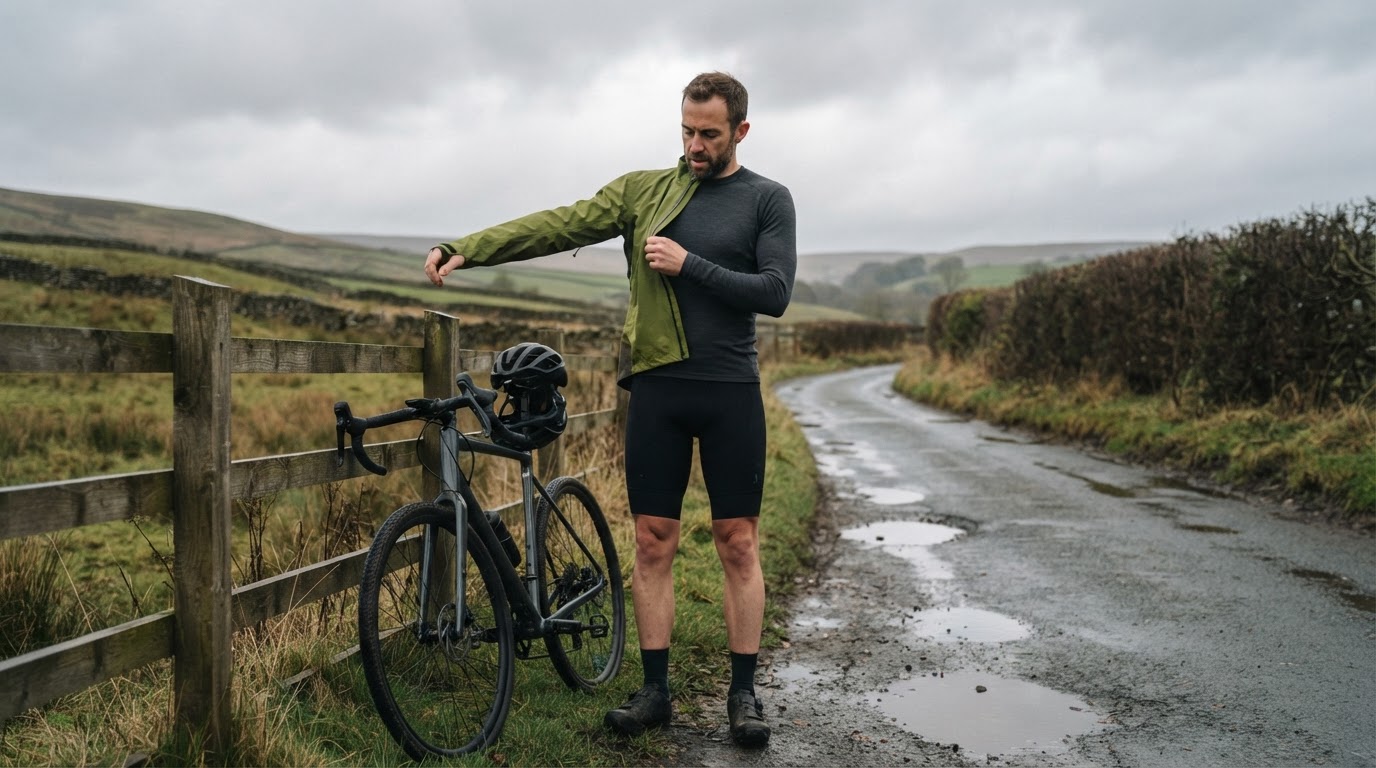
Most competitor checklists treat clothing as a flat list of items to buy. In the UK, where the same ride can start dry and end in drizzle, the more useful mental model is a three-layer system.
A base layer sits against the skin and wicks sweat away. A mid layer traps warmth while staying breathable. An outer layer blocks wind and rain.
Avoid cotton for the base layer. It holds sweat against the skin and gets cold fast once you stop pedalling, which is exactly when a beginner is most likely to be waiting at a junction or fixing a puncture. A synthetic or merino wool base layer stays warmer even when damp.
For genuinely wet UK weather, the outer layer matters more than anything else on this list. A waterproof jacket with taped seams, rather than just a water-resistant one, keeps rain from soaking through at the shoulders and back where a rucksack strap or riding position puts the most pressure. Water-resistant gloves and overshoes matter too, since wet hands and feet are usually what actually cuts a ride short, not a wet jersey.
On a forum thread for new UK cyclists, one experienced member summed up the priority simply: keep your feet and your hands warm, and get a couple of buffs for your head, neck and face, because staying warm in bad weather is as much about morale as it is about the cold itself.
Cold weather makes people forget to drink. Even mild dehydration, in the range of 2 to 3% of body weight, can make a ride feel noticeably harder, and it creeps up just as easily on a cold, dry winter commute as on a hot summer one.
A realistic starter budget by how you actually ride
Prices below are drawn from current UK retailer ranges for entry-level gear, not premium brands, and grouped by the two riding types most beginners fall into.
| Item | Typical UK price | Who needs it |
|---|---|---|
| Helmet | £20 to £40 | Everyone (strongly recommended) |
| Repair kit (tube, levers, pump or multitool) | £20 to £30 | Everyone |
| Gloves | £10 to £15 | Everyone |
| Bottle and cage | £10 to £15 | Everyone |
| Front and rear lights | £20 to £50 | Anyone riding before sunrise or after sunset (legally required then) |
| Mudguards and a lock | £35 to £50 | Commuters |
| Padded shorts | £35 to £40 | Leisure and fitness riders doing longer distances |
| Waterproof outer layer | £30 to £60 | Anyone riding through autumn and winter |
A beginner commuting on well-lit roads in summer, without the winter layer, is realistically looking at around £115 to £150. Add lights and a winter jacket for year-round commuting, and that rises to roughly £180 to £260.
Work out your realistic starter budget
What you can leave until later
A cycling computer is genuinely optional. It tracks distance and speed, but plenty of riders manage their first year with just a phone app or nothing at all.
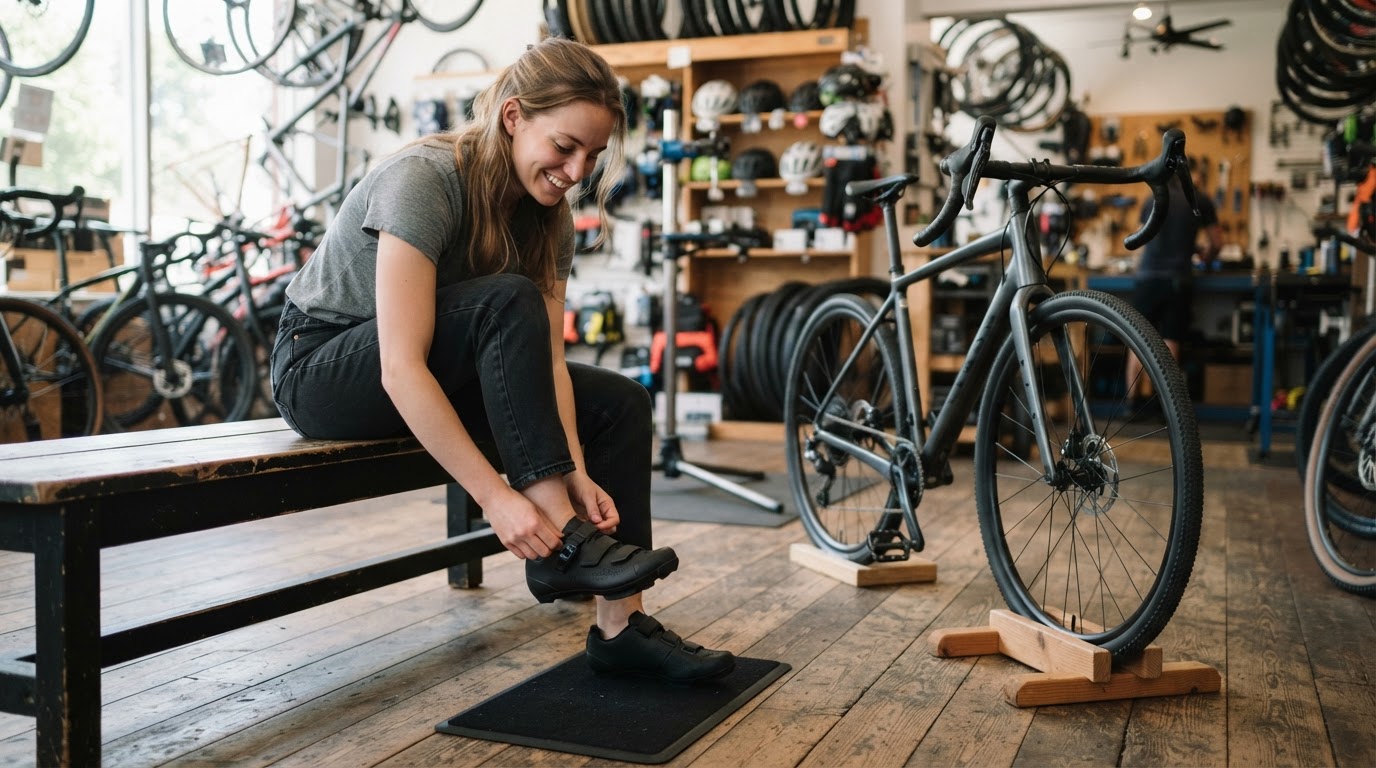
Clip-in pedals and dedicated cycling shoes make pedalling slightly more efficient, but they also add a real learning curve for unclipping at junctions. Most beginners are better off on flat pedals for the first few months.
A top-of-the-range jersey is another item worth delaying. A basic breathable top does the same job at a fraction of the price while you work out how often you will actually ride.
Before buying anything beyond the strict essentials, check your own wardrobe for comfortable, loose-fitting clothes that already work for a short ride. Several experienced UK cyclists on forums recommend this exact step to new riders, rather than buying a full cycling wardrobe before knowing how much you will actually ride.
A member of a UK cycling forum thread answering a beginner’s question about essential gear put it plainly: start with the basics, shorts or tights, a jersey or two, a base layer, helmet, gloves and a lightweight windproof jacket, and see how that goes before spending more.
In Summary
Two things are non-negotiable in the UK: a plan for lights if you ever ride in the dark, and a way to fix a flat tyre roadside. Everything else scales with how often you actually ride and what the UK weather does that week.
Start with the strict-essentials list, add the layer or accessory your specific riding type genuinely needs, and leave the rest until you know your own habits.
Common Questions
Do I legally need a helmet to cycle in the UK?
No. A cycling helmet is not a legal requirement for adults or children anywhere in the UK. It is still strongly recommended, since a low-speed fall onto a kerb or road surface is enough to cause a head injury a helmet would reduce.
Can I start cycling in gym or running clothes before buying cycling-specific gear?
Yes, for short rides. Comfortable, loose-fitting clothes you already own are enough to find out how often you will actually ride, before spending on padded shorts or a dedicated jersey. Several experienced cyclists on UK forums recommend exactly this to beginners.
Are mudguards worth the cost for a UK commute?
For regular commuting, yes. Mudguards keep road spray and mud off your back and legs on wet days, which matters if you are arriving somewhere you cannot easily change clothes. For occasional weekend rides where you can shower and change straight after, they matter less.
What exactly does the law require for cycling after dark in the UK?
Under Highway Code Rule 60, a cycle ridden between sunset and sunrise must have a white front light and a red rear light lit, and a red rear reflector fitted. Flashing lights are permitted, though a steady front light is recommended on unlit roads.
Do padded shorts make a real difference on short beginner rides?
On rides under 20 to 30 minutes, most beginners barely notice the difference. On longer or more frequent rides, the padding reduces saddle soreness enough that it is usually the first clothing upgrade worth making once you know you will keep riding regularly.