
At a Glance
Choosing the best hiking boots for UK weather is mostly a question of water, mud and fit.
Rain is not a rare event on British hills, so a boot that only copes with dry paths will let you down quickly.
This guide sorts recent tested boots by price, explains what grip and waterproofing really do, and ends with a cost per walk calculator.
Why does UK weather change what makes a good hiking boot?
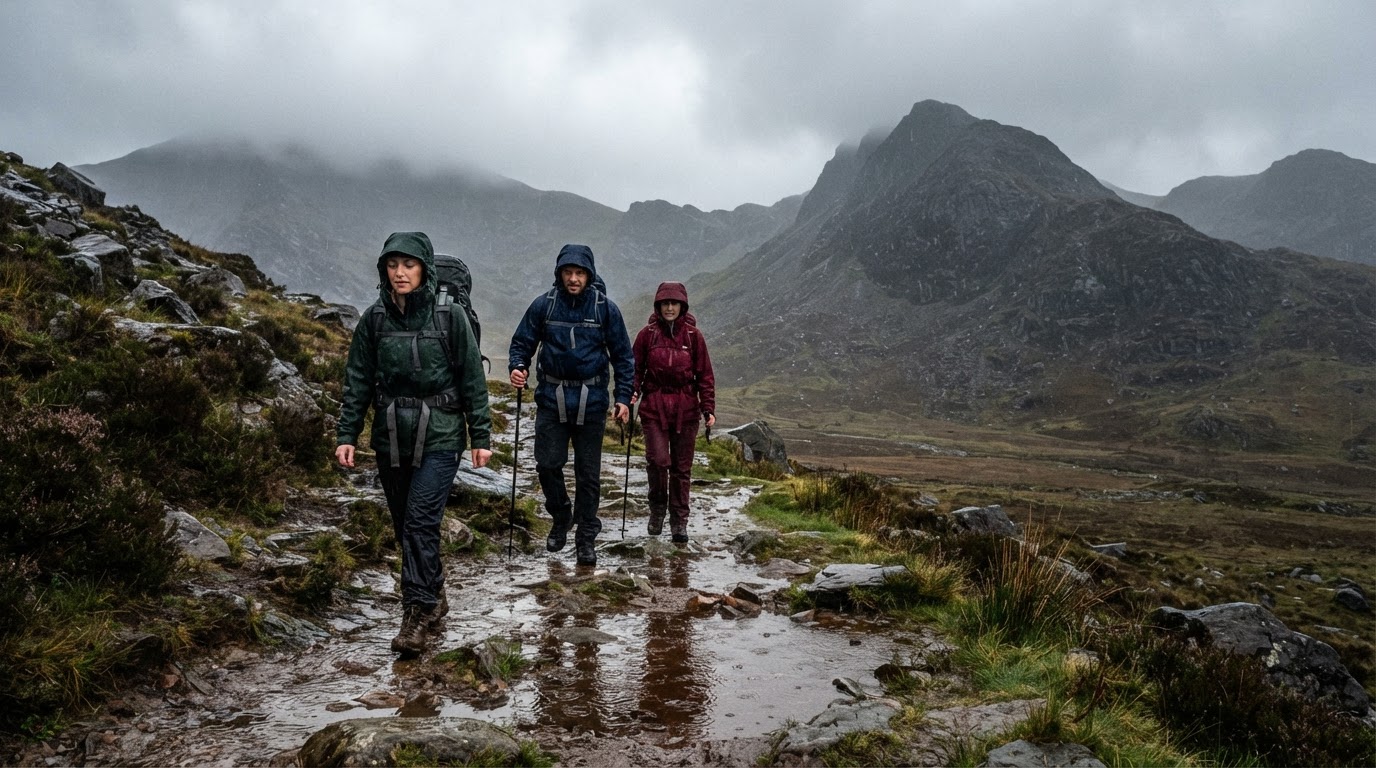
The Lake District gets more than 2,000 mm of rain a year in places. Snowdonia averages between 3,000 mm in Blaenau Ffestiniog and about 5,000 mm on the summit (Climate of Wales, Wikipedia, accessed October 2026).
The Met Office defines a rain day as 1 mm or more, and upland areas collect far more of them than the lowlands.
That means wet grass, bog and mud are normal conditions, not exceptions.
The Outdoors Magic guide, last updated in May 2026, tested 16 boots in locations including the Cairngorms, Glencoe, the Lake District and Snowdonia. It names light but protective, grippy and waterproof as the key qualities for three-season walking.
A rain-proof boot does not make every walk comfortable. In summer heat the same membrane that blocks rain can trap sweat, so a boot suited to a wet October fell day may feel too warm in July.
Which waterproof hiking boots suit British conditions best?
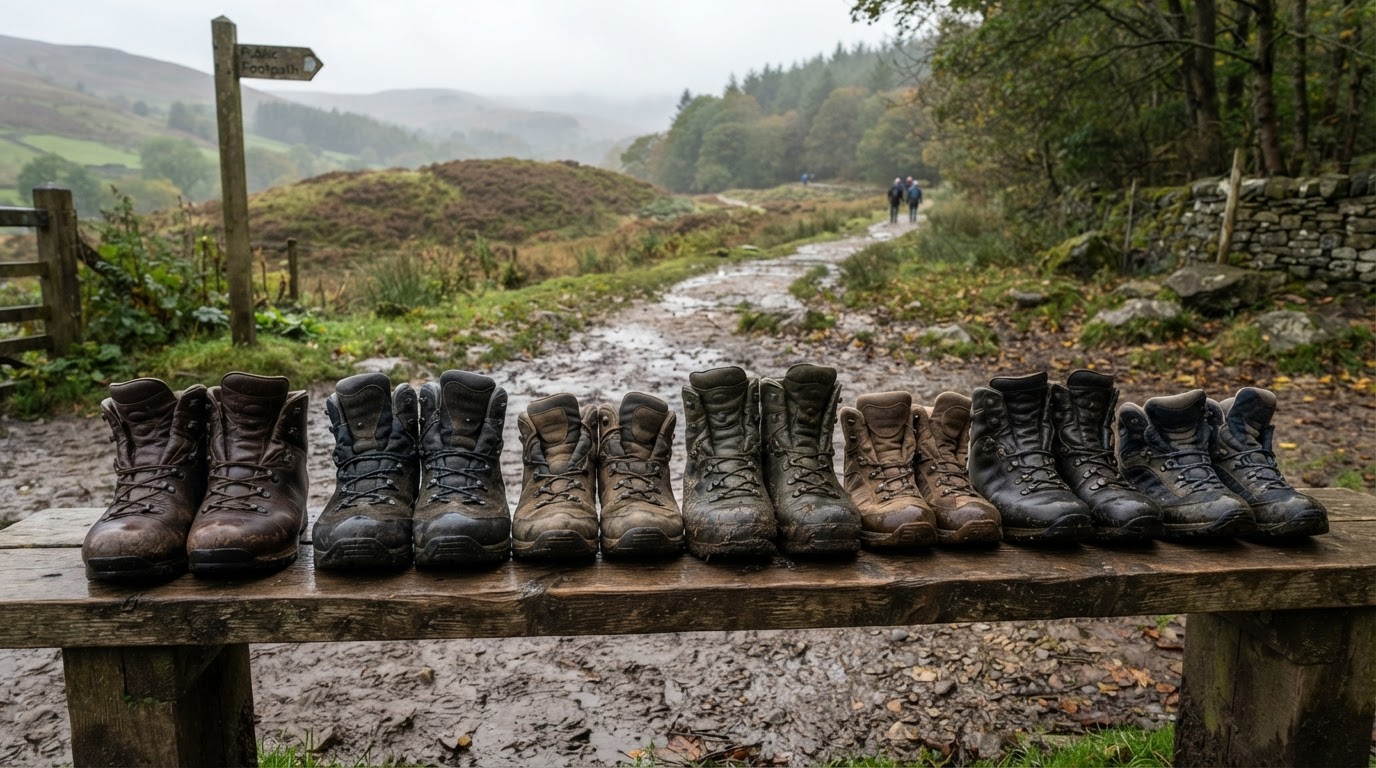
The table combines two recent UK reviews. Prices are the guide prices quoted by each source at the time of writing and change often, so check the retailer before buying.
The first five come from the Outdoors Magic test (updated May 2026), and the last three from the MoreSports budget guide (29 July 2026).
| Boot | Guide price | Reviewer verdict | Fits best |
|---|---|---|---|
| Scarpa Terra GTX | £210 | Best overall in the Outdoors Magic test | Mixed upland walking, wet and dry |
| AKU Trekker Lite III | £200 | Close runner-up | Long days on mixed paths |
| Helly Hansen Ascender Mid HT | £180 | Best lightweight pick | Easier hills and lowland trails |
| Mammut Sertig III Mid GTX | £143.99 | Best value in the test | Walkers wanting a membrane boot for less |
| Altberg Dalesway | £240 | Best vegan-friendly option | Walkers avoiding leather |
| Berghaus Hillwalker II GTX | £90 to £120 | Budget guide pick | Occasional wet-weather walks |
| Merrell Moab 3 Mid GTX | £95 to £125 | Budget guide pick | Regular walkers on a budget |
| Regatta Holcombe III | £45 to £60 | Lowest price of the three budget picks | Short, low-risk walks |
Price alone is a poor guide. The five tested picks above sit between £144 and £240, and the same review put its full tested range at £125 to £330.
Budget boots still do the job on short, local walks, but a thinner outsole and less support can show up faster on long, rocky routes.
- Block rain and wet grass for hours
- Lighter than most lined leather boots
- Easier to clean and dry
- Warmer and sweatier on mild days
- Outer fabric soaks up water once the coating fades
- Cannot be resoled as often as stitched leather
Typical case: a walker doing two or three muddy lowland walks a month does not need a technical mountain boot. A mid-priced membrane boot with a good outsole covers it.
Typical case: a walker heading up Snowdon or the Cairngorms every few weeks is better served by a stiffer, more supportive boot. The extra weight and price are justified by steeper, wetter ground.
Try boots on in the afternoon, when feet are slightly swollen, and bring the thickest socks you plan to wear. A boot that feels snug in a shop can be tight after three hours.
How much grip does a boot need for UK mud?
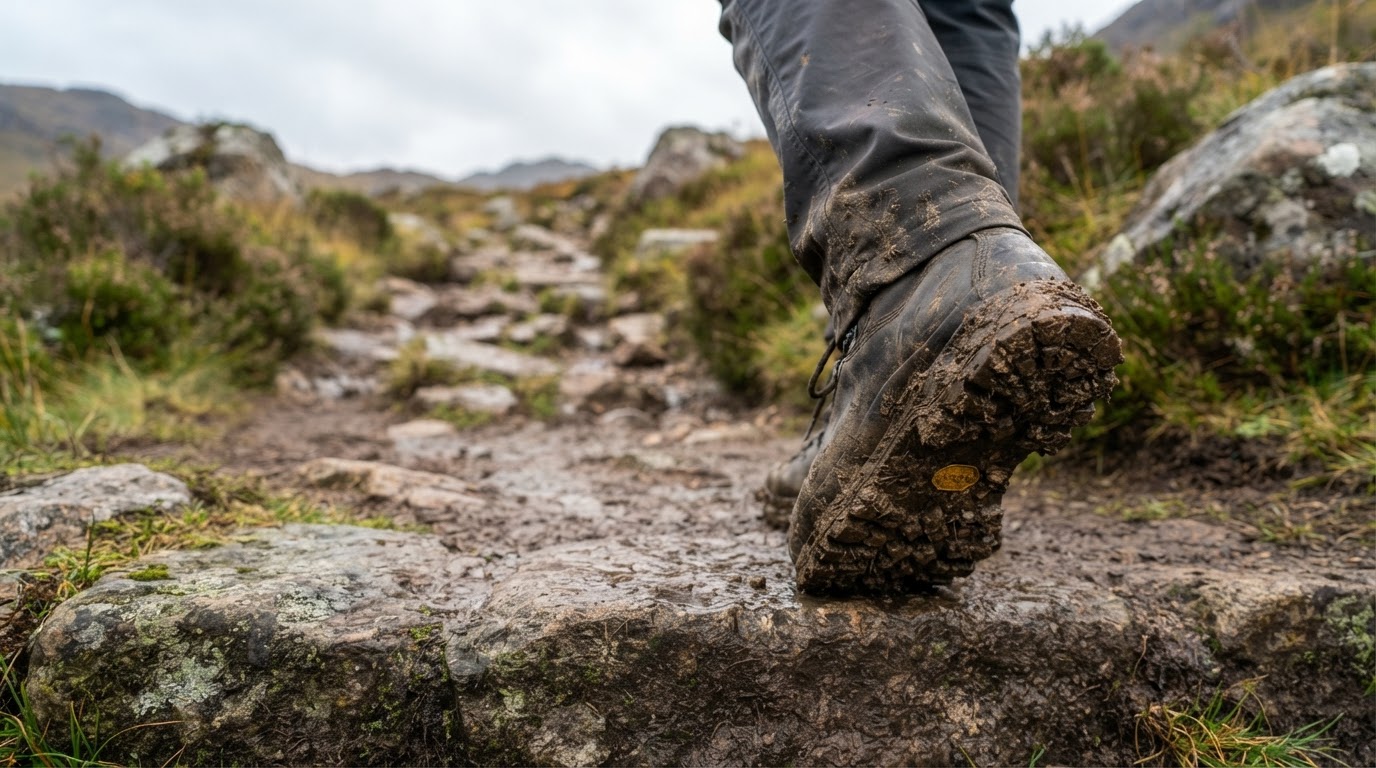
Lug depth is the first thing to check. Outsole guides commonly describe lugs of around 3 mm as fine for packed, dry ground, while around 5 mm or more suits mud and loose soil.
Spacing matters as much as depth. Wide-spaced lugs shed mud as you walk, while tight patterns can clog on clay.
For wet rock, softer rubber compounds such as Vibram Megagrip are generally described as grippier, though they wear faster than harder compounds.
A deep sole does not guarantee grip on every surface. Worn lugs, wet slate and greasy limestone can still slide, so slow down and place the foot flat on steep wet rock.
Why do waterproof boots still end up wet inside?
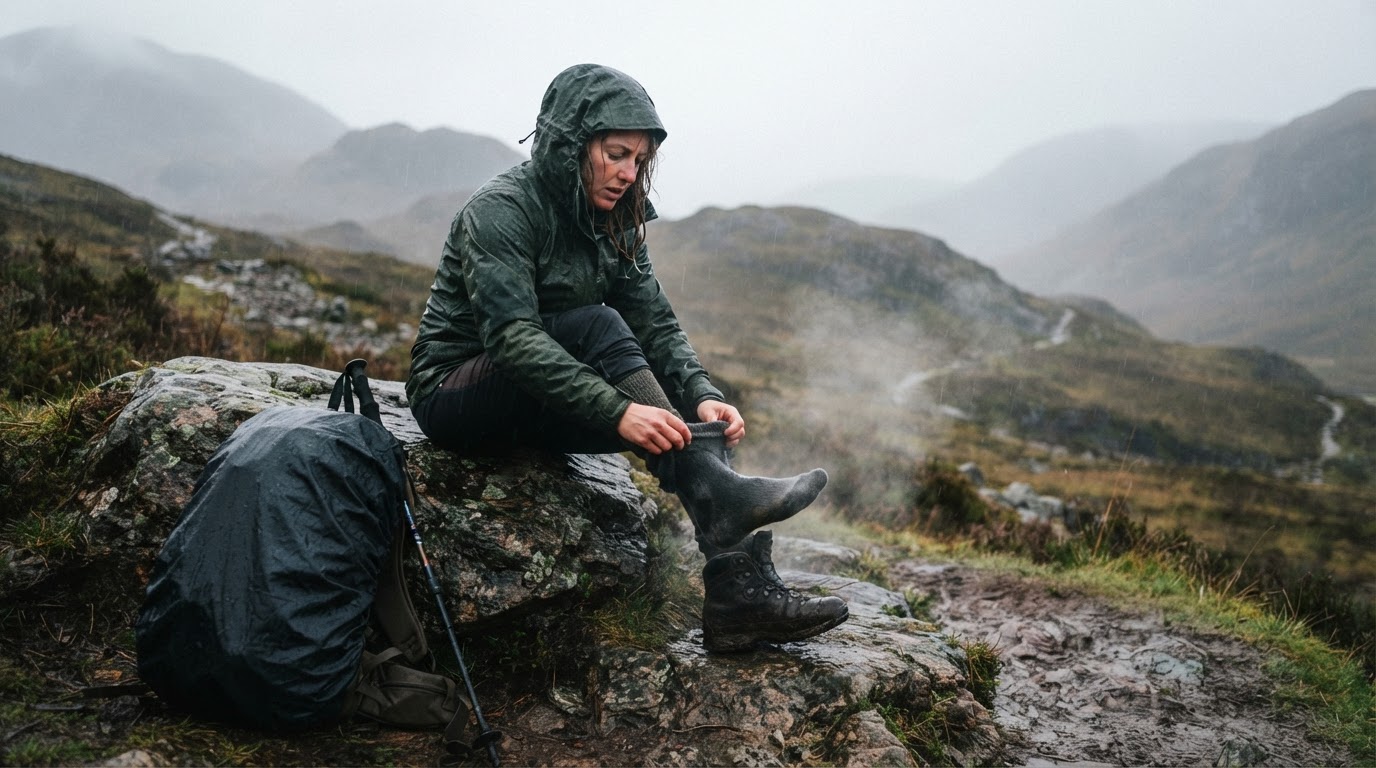
People often confuse two causes. One is a true leak through a split seam or a worn membrane. The other is sweat and water coming in over the top of the cuff.
Once the outer fabric or leather soaks up water, it can block the vapour from escaping, so feet can get damp even though the membrane is intact.
Waterproofing products do not stop sweat building up inside. That is why gaiters, merino socks and a regular reproof matter as much as the boot itself.
When feet feel wet, check the three possibilities in order: water over the cuff, a soaked outer layer, then a real leak. Only the last one needs a repair or a replacement.
How often should boots be cleaned and reproofed?
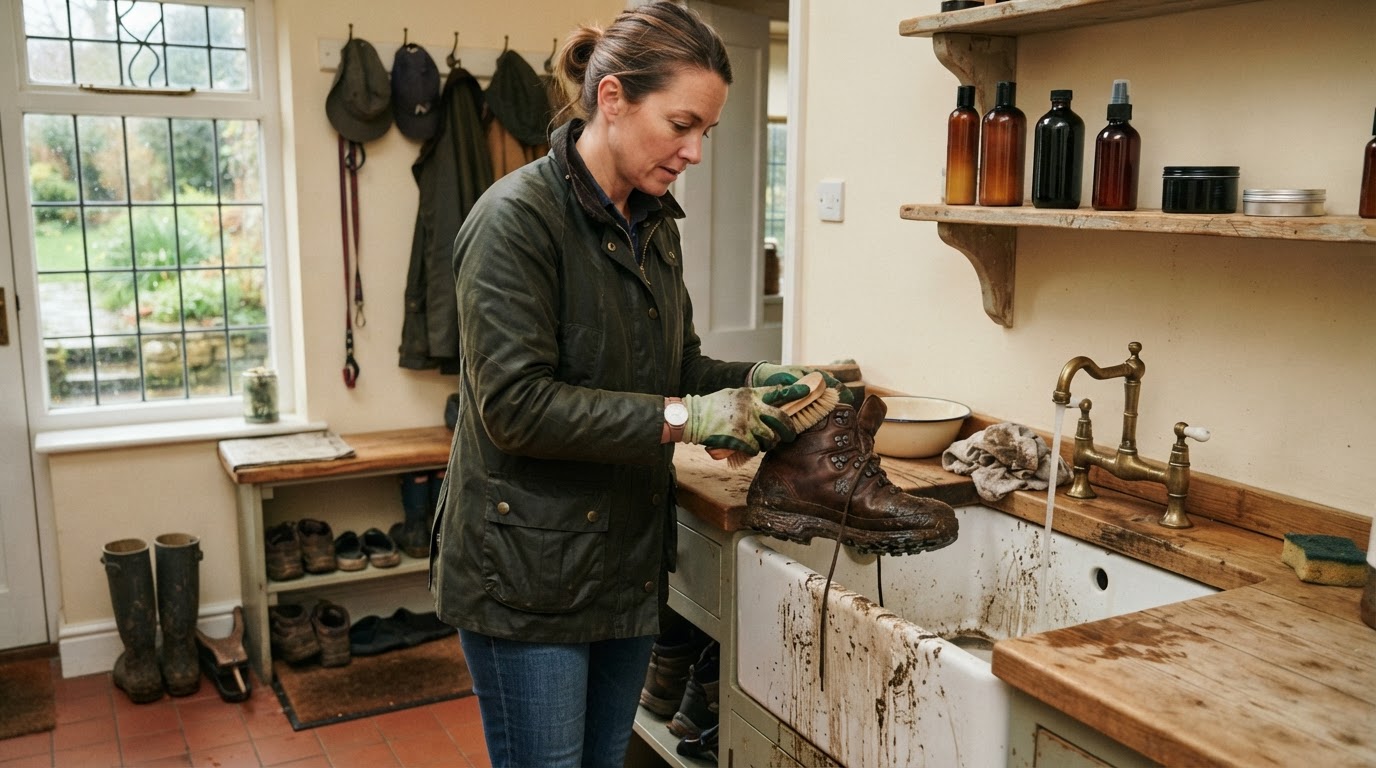
The MoreSports guide (29 July 2026) suggests reproofing roughly every 10 to 15 wears, or sooner in heavy rain, and cleaning boots straight after use.
Air-dry them away from direct heat, since heat can damage membranes, glue and leather. Stuffing them with newspaper helps draw out moisture.
Nikwax advises cleaning first, because dirt can block the water-repellent finish, and re-treating only when cleaning no longer restores it.
Nikwax publishes its full footwear care steps on its UK footwear care page.
What do waterproof boots really cost per walk?
Cost per walk calculator
This tool divides the purchase price and a yearly reproofing spend by the number of walks, so a £210 boot used often can beat a £45 boot used rarely.
In Summary
The best hiking boots for UK weather are waterproof, three-season boots with deep, well-spaced lugs and a fit you have actually tested.
Spend more only if your walks are long, steep or very wet. Keep the boots clean and reproofed, and use the cost per walk figure to judge value rather than the shelf price.
Common Questions
Can I use winter hiking boots in the summer?
Yes, but they can feel hot. Stiffer, warmer boots are built for cold, rough ground, so on a mild UK day a lighter boot with a breathable upper is usually more comfortable. Fit and grip matter more than the season label.
Is a waterproof boot worth it for dry-weather walks?
Often yes in the UK, because dewy grass and sudden showers wet feet even on dry days. If every walk is on dry paths in summer, a non-membrane boot or shoe can be cooler and cheaper.
Is leather or synthetic better for muddy ground?
Leather lasts longer and can be resoled, but needs more care. Synthetic boots dry faster and weigh less. Mud itself is handled by the outsole, so lug depth and spacing matter more than the upper.
How should new boots be broken in before a long walk?
Wear them around the house and on short local walks first. Check for heel slip and toe pressure, and wear the socks planned for the real walk.