
At a Glance
Searching for a budget smartwatch in the UK turns up dozens of “best of” lists, most of which name the same handful of models without saying what actually changes as the price climbs.
This guide sorts the current UK market into three honest price bands, under £50, £50-£100 and £100-£200, and explains what a buyer genuinely gains (or loses) by stepping up a tier, rather than just listing watches side by side.
It also covers the one question most buying guides skip: whether the ultra-cheap smartwatches sold on marketplaces for under £20 are worth the risk.
What counts as a “budget” smartwatch in the UK?
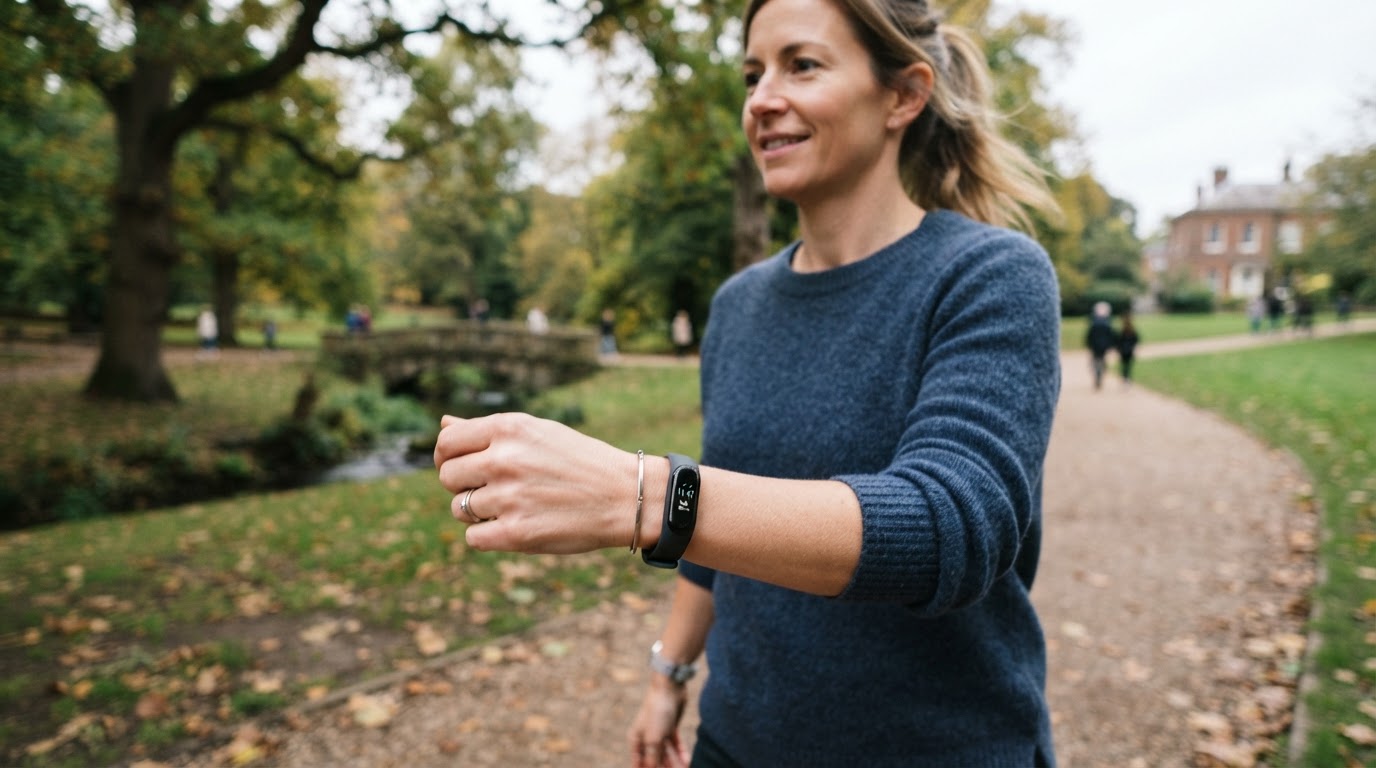
Most UK retailers and reviewers treat anything under £200 as budget territory, with a further split around the £100 mark that most guides gloss over.
Above £200, pricing shifts toward flagship watches from Apple, Samsung and Garmin, where the extra cost buys cellular connectivity, advanced sensors and premium materials rather than core functionality.
Below £200, though, the picture is less consistent. Consumer group Which? notes that under £100 it can be difficult to find a genuinely well-rated model without waiting for a sale, while the range widens considerably once the budget stretches to £200 (source: Which?, 2026).
“Budget” does not mean “identical”. A £30 watch, a £79 watch and a £150 watch differ in screen type, sensor accuracy and software support, not just branding, even when their spec sheets look similar at a glance.
The best budget smartwatches in the UK right now
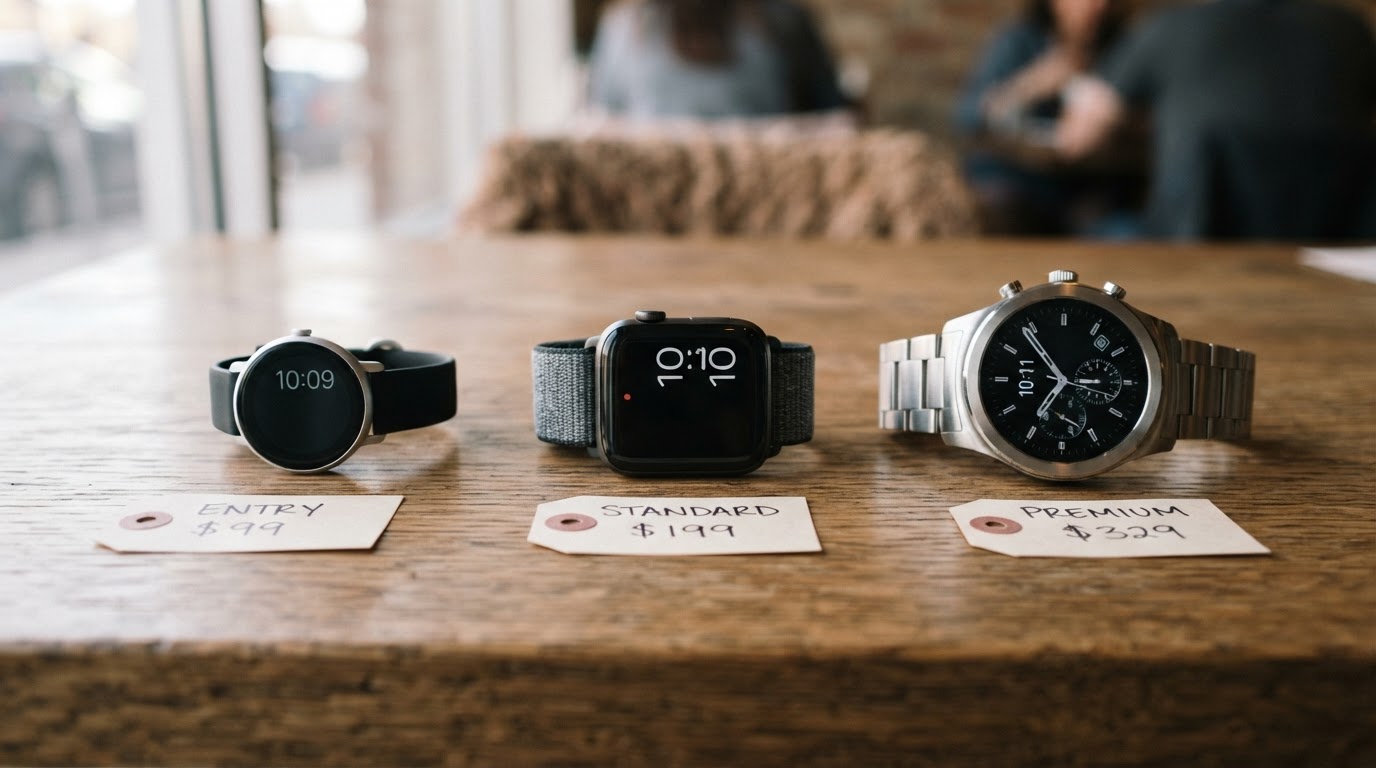
These three picks each represent the strongest option currently available in their price band, based on official UK retail pricing at the time of writing.
| Price band | Pick | Price | Battery life |
|---|---|---|---|
| Under £50 | Huawei Band 10 | From £27.99 | Up to 14 days |
| £50-£100 | Amazfit Bip 6 | £79.90 | Up to 14 days |
| £100-£200 | Huawei Watch Fit 4 | £149.99 | Up to 10 days |
(sources: Huawei UK, Amazfit UK, TechRadar, 2026)
Under £50: fitness bands, not full smartwatches
This is the tier most buying guides quietly skip, because there is very little genuine choice in it. The Huawei Band 10, from £27.99, is a capable fitness tracker with a slim AMOLED strip display, heart-rate and sleep monitoring, and up to 14 days of battery life.
What it does not have is a full circular or square touchscreen watch face, built-in GPS, or the range of apps a proper smartwatch runs. Anyone expecting a “real” smartwatch experience under £50 should adjust that expectation before buying.
£50-£100: the real sweet spot
The Amazfit Bip 6, at £79.90, is the strongest all-round pick here. It packs a 1.97-inch AMOLED display, GPS, and up to 14 days of battery life on a single charge, figures that matched flagship watches a few years ago (source: TechRadar, 2026).
The CMF Watch 3 Pro, priced at £99 direct from Nothing’s UK store, is a strong alternative if dual-band GPS accuracy for outdoor tracking matters more than screen size, at the cost of a slightly shorter always-on display battery life of around four days (source: Nothing, 2026).
£100-£200: sturdier builds and better accuracy
The Huawei Watch Fit 4, at £149.99 on Huawei’s UK store, adds a metal-and-glass build, more accurate GPS positioning, and Bluetooth calling with noise reduction.
Its battery drops to around 10 days versus the 14 days of the cheaper Amazfit Bip 6, a trade-off for the brighter, larger display and sturdier casing.
Buyers on iPhone should also weigh the Apple Watch SE 3, from £219, which sits just above this band but delivers deeper iOS integration than any Android-first budget watch can match.
What do you actually lose at each price tier?
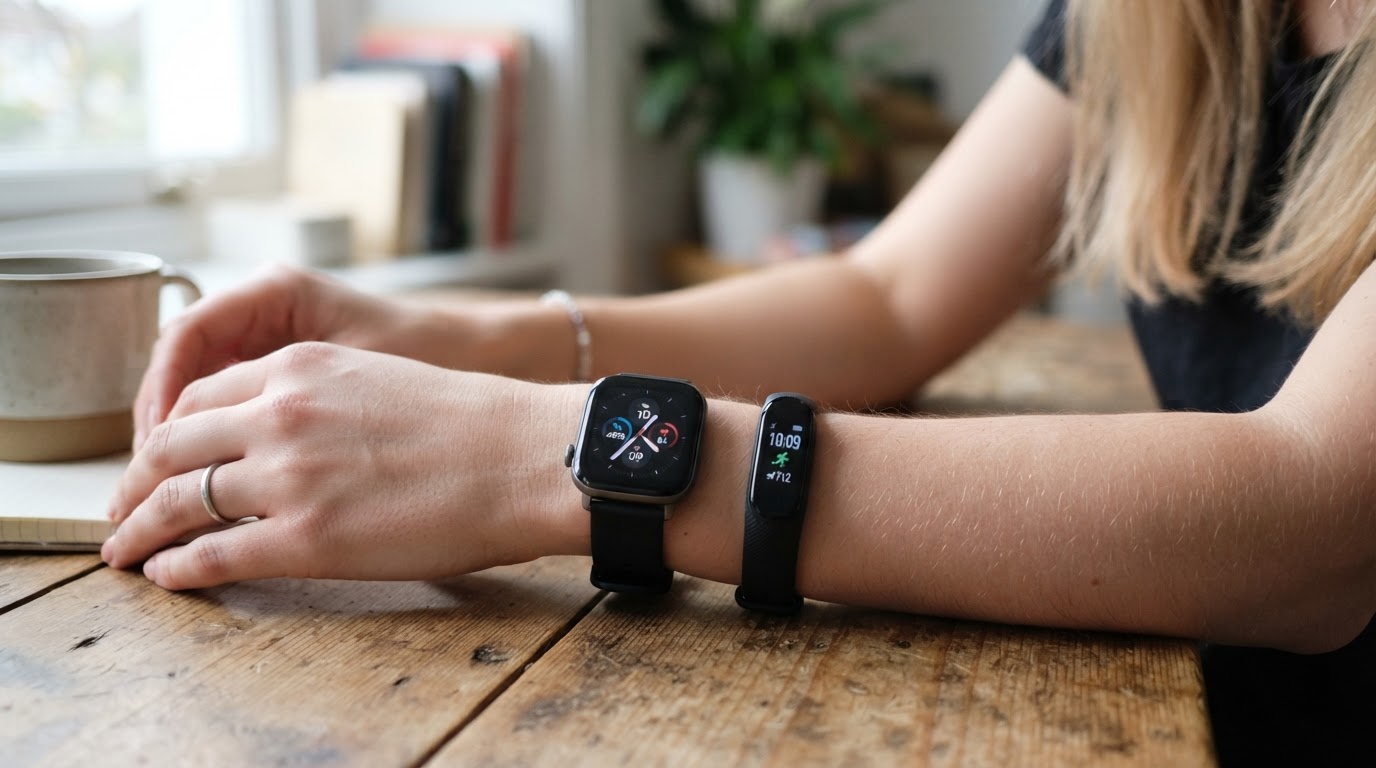
Stepping down a price band rarely removes a headline feature outright. Instead, it usually degrades one of four things: sensor accuracy, build durability, battery life under heavy use, or software polish.
- Step and sleep tracking
- Smartphone notifications
- A multi-day battery, typically 7 to 14 days
- GPS accuracy in built-up areas
- Water resistance ratings above 5 ATM
- Third-party app support
Advertised battery life figures also need context. A “14-day” claim usually assumes typical use with the always-on display switched off; enabling GPS tracking for a run or leaving the screen always visible can cut that figure by half or more, whichever tier the watch sits in.
Does iPhone or Android change which budget smartwatch you should buy?

Yes, more than most spec sheets suggest. Amazfit, Huawei and CMF watches all pair with both iOS and Android, but the depth of that pairing differs: Android users typically get richer notification replies and app shortcuts, while iPhone users are limited to viewing alerts and basic controls.
An iPhone owner who wants message replies from the wrist, not just to see them, is generally better served by the Apple Watch SE 3 despite its higher price, since no budget Android-first watch replicates that level of iOS integration.
Is an ultra-cheap smartwatch from a marketplace worth the risk?

Marketplaces such as AliExpress and eBay list unbranded smartwatches for under £20, well below any of the tiers covered above.
Which? specifically flags these as a risk area, citing concerns over data security, inaccurate health readings and an absence of any real warranty or software support (source: Which?, 2026).
Before buying an unfamiliar budget smartwatch brand, check that the listing names a UK-registered seller or an official brand storefront, rather than a generic marketplace account with no verifiable return address.
A £27.99 Huawei Band 10 from an authorised UK retailer carries a manufacturer warranty and regular software updates. A £12 unbranded watch from an anonymous seller typically carries neither, even though both sit in the same “budget” bracket by price alone.
How to choose the right budget smartwatch for you?
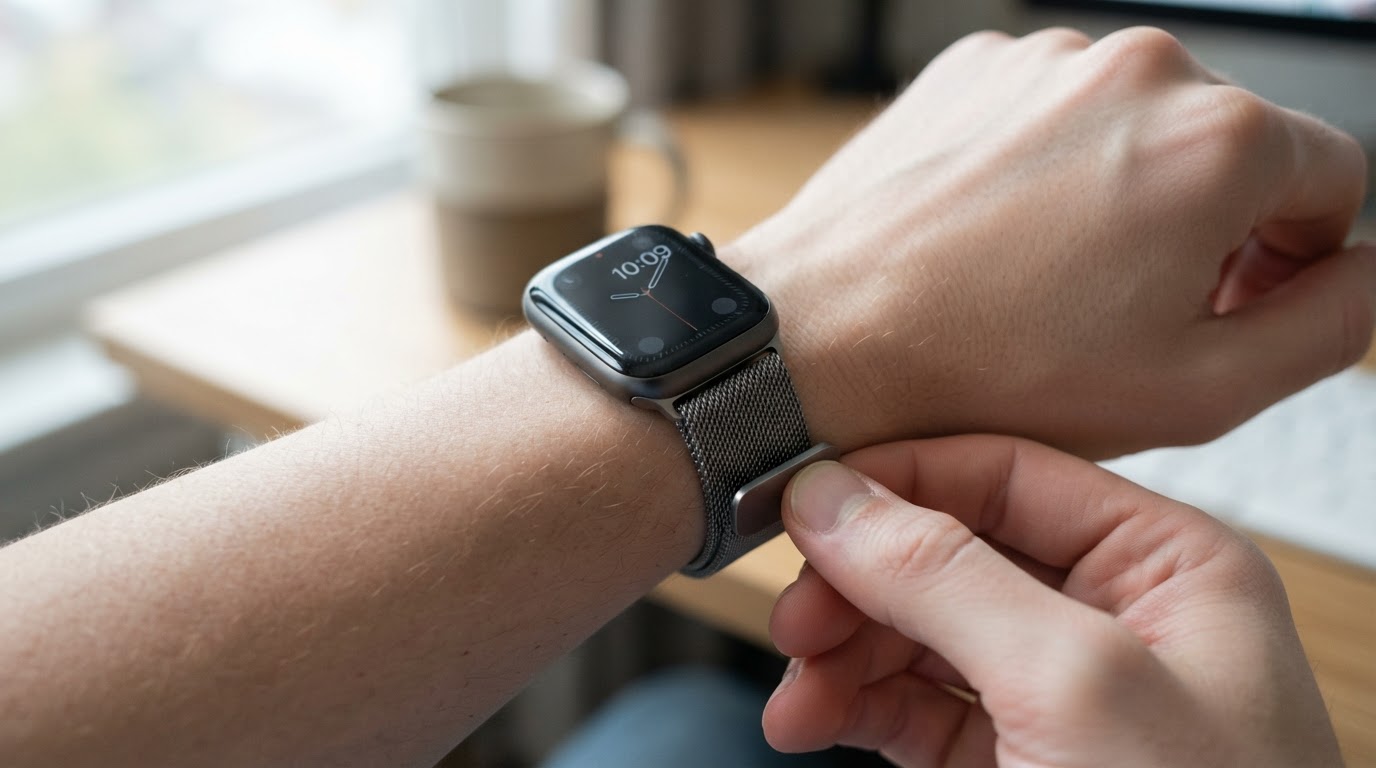
Once the price band is set, narrow the choice with a short checklist:
- Confirm GPS is built-in, not phone-connected only, if you plan to track runs or walks without carrying a phone
- Check the water resistance rating (5 ATM or higher for swimming, lower ratings are shower-safe only)
- Match the strap size and case shape to your wrist, square faces suit some wrists better than circular ones
- Look for a listed software update history, a sign the brand still supports the model
Which budget tier actually fits you?
Answer three quick questions to get a price-band recommendation.
A slightly higher budget can materially improve build quality, GPS availability and app support, the jump from £50 to £100 tends to matter more than the jump from £100 to £200.
In Summary
A genuine smartwatch under £50 is rare in the UK market, so buyers with a strict budget are usually better served by a fitness band such as the Huawei Band 10.
The £50-£100 band, led by the Amazfit Bip 6, is where GPS, AMOLED screens and multi-day battery life become realistic without a big spend.
Past £100, the Huawei Watch Fit 4 and similar watches trade a little battery life for sturdier builds and more accurate sensors, while iPhone owners weighing deeper software integration may still find the Apple Watch SE 3 worth the extra cost.
Whatever the budget, an unbranded sub-£20 marketplace watch is rarely the real saving it first appears to be.
Common Questions
What is a good inexpensive smartwatch in the UK?
For most buyers, the Amazfit Bip 6 at £79.90 gives the best balance of AMOLED display, GPS and 14-day battery life for the price, while the Huawei Band 10 covers basic tracking under £50.
Which budget smartwatch offers the best value for money?
Value depends on what is actually used. A runner who needs accurate outdoor GPS gets more value from the CMF Watch 3 Pro’s dual-band GPS than from a cheaper watch with phone-only tracking.
Why are some people giving up on smartwatches?
A minority of owners cite notification fatigue and short-lived novelty, but this trend is more common among owners of premium models bought for features they end up not using, not budget watches bought for specific tracking needs.
Do cheap smartwatches work with both iPhone and Android?
Most budget models, including the Amazfit Bip 6, CMF Watch 3 Pro and Huawei Watch Fit 4, pair with both, but Android users generally get fuller notification and reply features than iPhone users.
Is it safe to buy an unbranded smartwatch from a marketplace?
Consumer group Which? advises caution with ultra-cheap unbranded marketplace watches, citing risks around data security, inaccurate health readings and a lack of warranty or software support (source: Which?, 2026).