
At a Glance
Most “best waterproof running jacket UK” roundups rank products by star ratings and stop there. They rarely ask the more useful question first: how much rain does the reader actually run in, and does that match the jacket they’re about to buy?
A runner training on quiet lanes in Surrey and one doing hill reps above Fort William aren’t shopping for the same jacket, even if both type the same search. This guide starts from that gap, then breaks the market into budget, all-rounder and race-grade tiers, with real UK prices and specifications for each.
What does “waterproof” actually mean on a running jacket’s label?
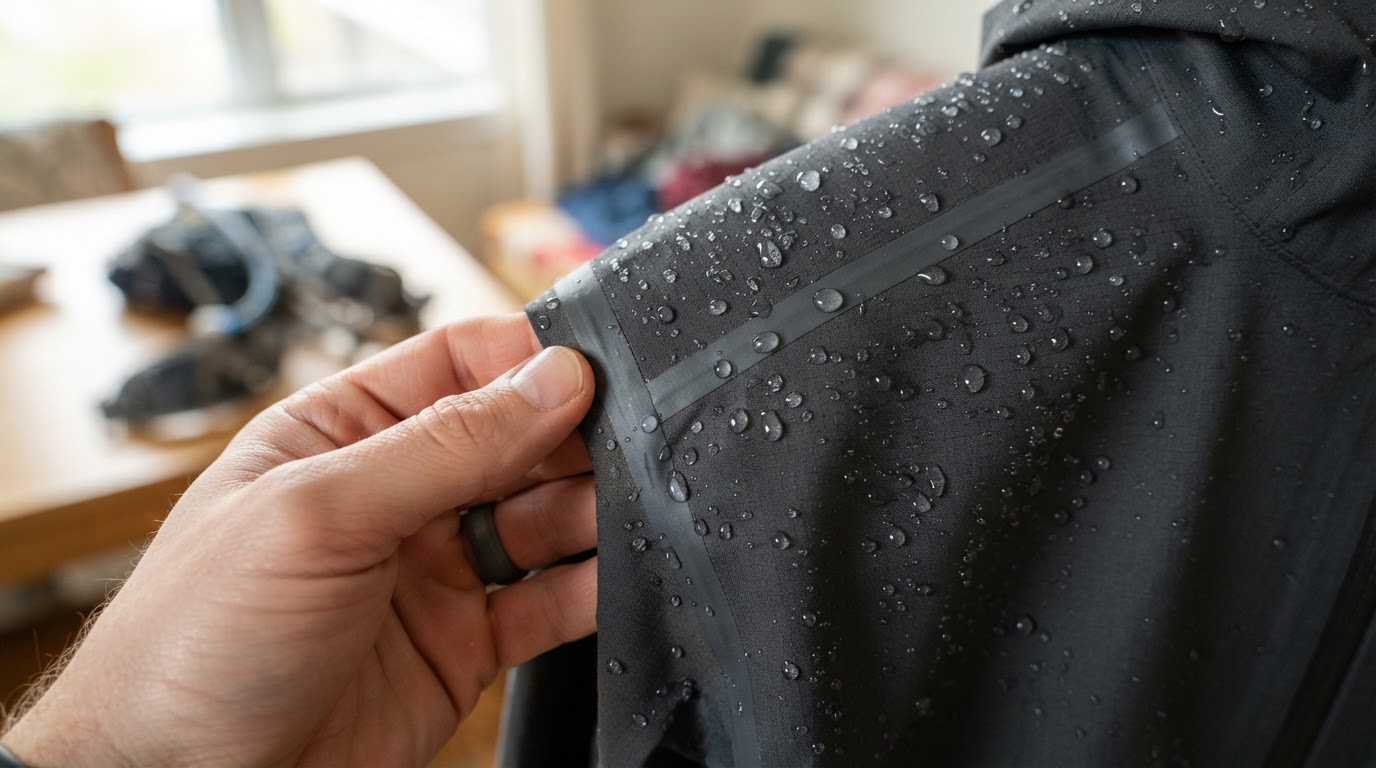
Every genuinely waterproof running jacket carries a hydrostatic head (HH) rating, measured in millimetres. It’s the height of a column of water the fabric can resist before it seeps through. A jacket rated 10,000mm holds back light-to-moderate rain reasonably well; 20,000mm and above copes with sustained, driving rain.
Waterproof and water-resistant are not the same claim. A water-resistant or windproof shell (the kind sold as a lightweight “wind jacket”) sheds a shower for a few minutes but soaks through in sustained rain, because it has no true membrane and unsealed seams. Only a jacket with taped seams and a rated membrane counts as genuinely waterproof.
Breathability, usually quoted as a g/m²/24h figure, matters just as much once you’re running hard rather than walking. A high HH rating with poor breathability traps sweat inside the jacket, so on a hard effort you can end up feeling just as wet from sweat as from rain.
A higher HH number doesn’t automatically mean a more comfortable jacket. The Salomon Bonatti, rated at only 10,000mm, is prized by testers precisely because it stays breathable on hard efforts in light-to-moderate rain, while some 20,000mm shells feel clammy at the same pace.
How much rain protection do you actually need in the UK?
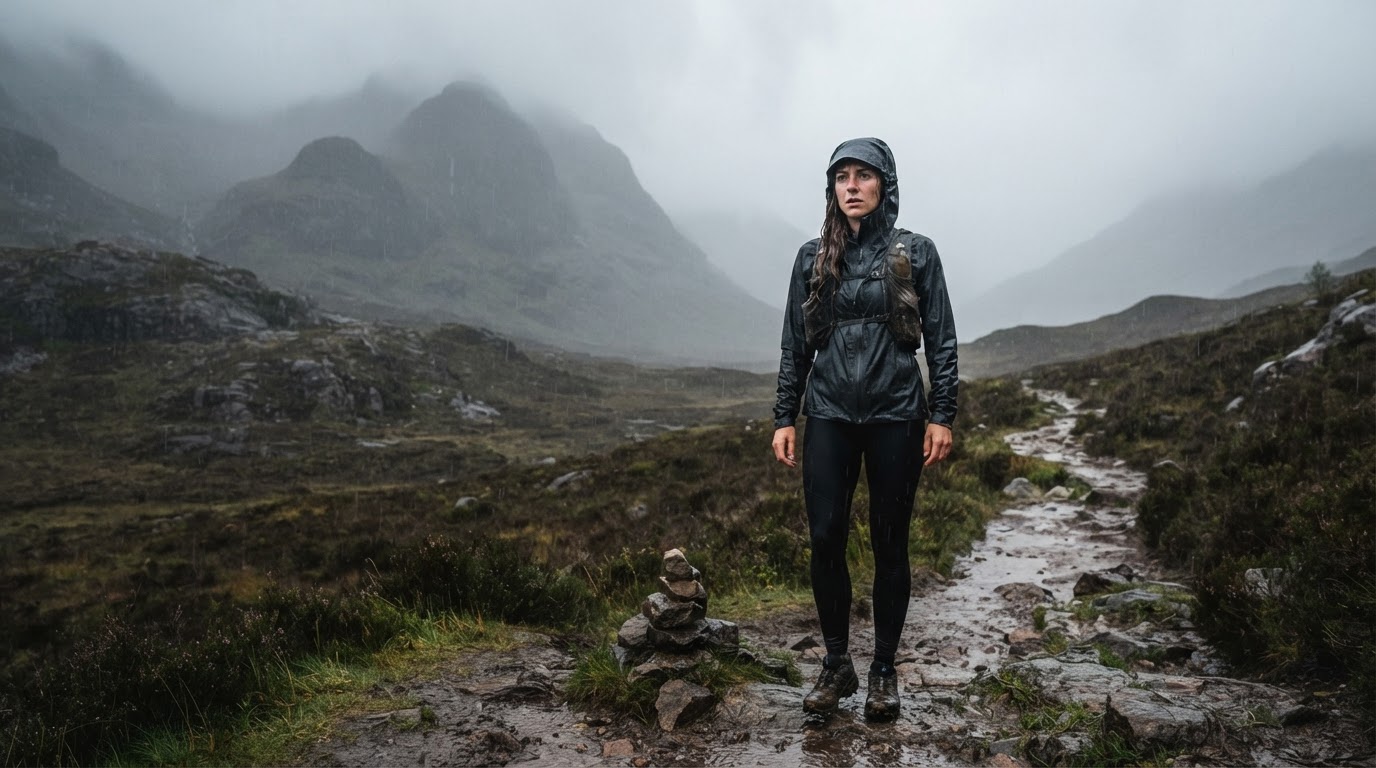
According to the Met Office’s 1991 to 2020 climate averages, the UK as a whole sees around 159 days of rain or snow a year, totalling roughly 1,163mm. That national figure hides a big regional split.
Southern England is the driest end: London and the south coast average somewhere between 106 and 149 rain days a year, with annual totals from about 563mm to 1,038mm depending on the exact spot. Wales and Scotland sit at the wetter end, with totals above 1,100mm and 150 to over 200 rain days a year in the wettest western and highland areas.
That gap is the practical case for matching HH rating to where you actually run, rather than buying whichever jacket ranks first on a generic list. A runner training around London for a handful of wet weeks a year has genuinely different needs from someone based in the Highlands or the Lake District, where rain is closer to a daily possibility.
Which waterproof rating do you actually need?
Answer three quick questions to get a starting HH range.
Prices below were checked against UK retailer and brand listings in September 2026 and can move with stock and seasonal sales, so treat them as a guide to price bracket rather than an exact quote on the day you buy.
| Jacket | Price | HH rating | Weight | Best for |
|---|---|---|---|---|
| Kiprun Run 900 (Decathlon) | £79.99 | 20,000mm | 182g | Budget, everyday training |
| Harrier Exmoor | £95 to £110 | 15,000mm | around 275g | Budget, regular wet-weather runs |
| Inov-8 Stormshell FZ V2 | £99.50 | 20,000mm | 150g | All-rounder, best value at this rating |
| Montane Minimus Lite | £125 | 20,000mm | 215g | All-rounder, minimalist race-ready shell |
| Rab Phantom Mountain | £143.99 | 20,000mm | 222g | All-rounder, hand pockets and durability |
| Salomon Bonatti | £160 | 10,000mm | 146g | Breathability over maximum waterproofing |
| Rab Phantom Pull-On | £180.65 | 20,000mm | from 70g | Race-grade, ultralight packability |
| Compressport Thunderstorm | £284.95 | 25,000mm | 126g | Race-grade, highest waterproofing |
Best budget waterproof running jackets (under £100)

The Decathlon Kiprun Run 900 costs £79.99 and weighs just 182g, with a 20,000mm HH rating, taped seams and a windproof outer layer. That combination at this price is rare: most brands charge £100 or more for the same rating.
220 Triathlon’s review of the jacket called it a “great value waterproof run layer that strikes a difficult balance” between price and real weather protection, which matches what the specification sheet suggests on paper.
If budget is the main constraint, pair a cheaper 15,000 to 20,000mm shell with a thin merino or synthetic base layer rather than upgrading to a pricier jacket. The base layer does more for comfort in the cold than a marginally higher HH figure does.
The Harrier Exmoor sits in a similar price bracket, typically £95 to £110 at full price, with a lower 15,000mm HH rating and a slightly heavier build at around 275g. It’s a fair pick for a runner who wants a genuinely waterproof jacket for regular wet training but doesn’t need race-grade weight savings.
Best all-rounder waterproof running jackets (£100 to £180)

The Inov-8 Stormshell FZ V2, at £99.50, matches the Kiprun’s 20,000mm HH rating in a lighter 150g package, and is widely cited as the best value option once you move past the entry-level tier.
The Montane Minimus Lite, at £125, packs the same 20,000mm HH rating into a minimalist 215g shell originally built for ultra racing, making it a lighter, race-capable option that still sits inside the all-rounder price bracket rather than the priciest tier.
The Rab Phantom Mountain, at £143.99, won running jacket of the year at the 2026 LFTO Gear Awards. It uses a tougher 30D Pertex Shield fabric than most jackets in this range, weighs 222g, and adds proper hand pockets with hood and hem adjustment.
The Salomon Bonatti, at £160, is the outlier in this tier: its 10,000mm HH rating is lower than everything else here, but testers consistently note it as the most breathable option for hard sessions in typical UK drizzle rather than sustained downpours.
Best ultralight and race-grade waterproof running jackets (£180 and up)

This tier exists for a specific reason: many trail races and ultras mandate a waterproof jacket meeting a minimum HH rating, with taped seams, as part of their compulsory kit list. Weight matters here because the jacket has to be carried the whole race, not just worn when it rains.
The Rab Phantom Pull-On, at £180.65, is built for exactly that scenario, dropping to just 70g in its lightest size and packing down small enough to fit in a hand or a race vest pocket without adding noticeable bulk.
The Compressport Thunderstorm, at £284.95, carries the highest HH rating in this guide at 25,000mm, still at a relatively light 126g. It’s the option for someone who genuinely runs in the worst weather the UK throws at them and wants the most weatherproofing available, rather than the lightest possible shell.
- Meets mandatory kit list requirements for most UK trail races and ultras
- Packs small enough to disappear into a race vest pocket
- High HH ratings cope with sustained mountain and moorland rain
- Costs £180 or more, well above the budget and all-rounder tiers
- Thinner fabric is less durable against branches, gorse and repeated stuffing into a pack
- Minimal cut and features compared with jackets built for everyday training
Road versus trail running jackets, what actually differs?
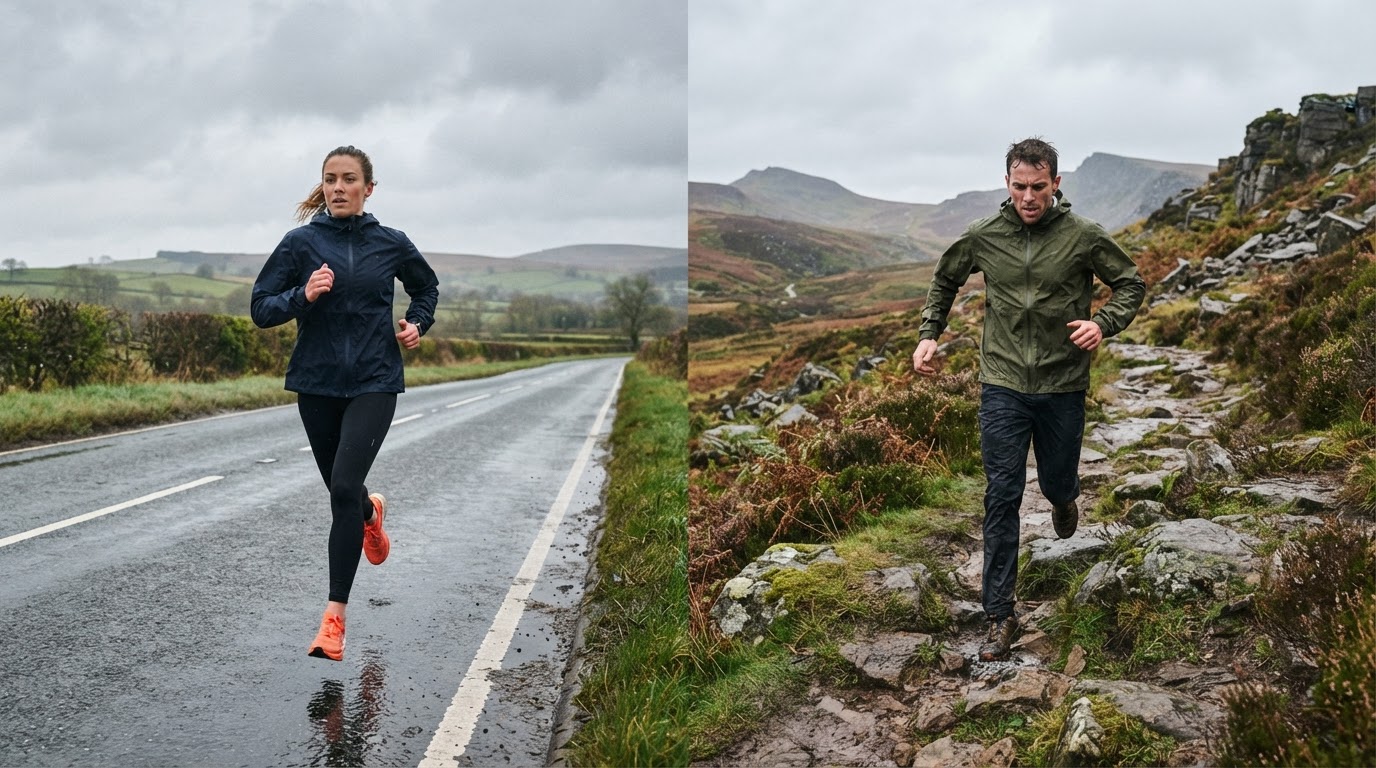
Road-focused waterproof jackets, such as the Kiprun Run 900 or Inov-8 Stormshell, prioritise a close, low-flap cut and simple venting, since road runners rarely need a hood large enough to fit over a helmet or a pack strap.
Trail running jackets and mountain running jackets, such as the Rab Phantom Mountain or Montane Minimus Lite, add a helmet-compatible hood, a slightly longer hem for scrambling and a more durable face fabric, because branches and rock abrasion wear through a lightweight shell faster than tarmac does.
Before buying a jacket for a specific race, check that event’s compulsory kit list for its exact HH minimum and seam-taping requirement. Some UK trail races reject jackets below 10,000mm or without taped seams at kit check, regardless of brand or price.
Fit and features that matter more than the price tag
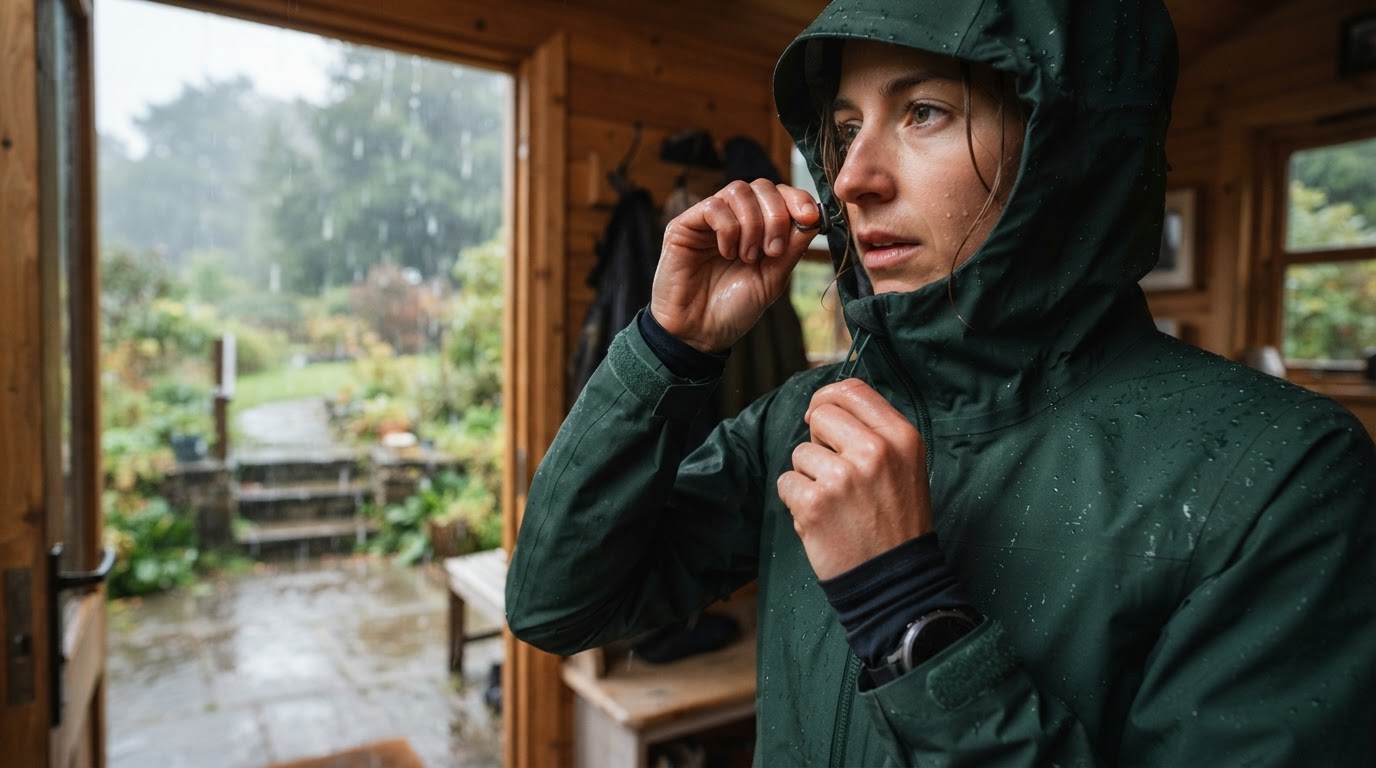
A jacket that fits badly undermines even a high HH rating, because gaps at the wrists, hood or hem let water in around the membrane rather than through it.
- Taped seams at the shoulders and hood, the two spots most exposed to driving rain
- An adjustable hood with a stiffened peak, so it stays out of your eyes without needing to be held
- Elasticated or velcro cuffs that seal without restricting an arm swing
- A stuff sack or dedicated pocket built into the jacket itself, so it actually gets carried on runs where rain is only a possibility
Pit zips or mesh-lined vents help most on jackets rated above 15,000mm HH, where breathability drops off faster. Below that rating, the fabric itself usually breathes well enough that vents add weight without much practical benefit.
Several of these jackets, including the Harrier Exmoor and the Rab Phantom Mountain, come in separate men’s and women’s cuts rather than a single unisex shape, so check the specific fit before buying rather than assuming one size range covers both.
In Summary
There’s no single best waterproof running jacket for the UK, because the country itself doesn’t have one climate. A runner in the driest parts of southern England can get away with a 10,000 to 15,000mm jacket for most of the year, while someone training regularly in Wales, the Lake District or Scotland is better served by 20,000mm or above.
Budget shells like the Kiprun Run 900 and Harrier Exmoor cover genuine everyday wet-weather training for under £100. All-rounders in the £100 to £180 range, including the Montane Minimus Lite, add durability, breathability or race-ready weight depending on the model, and the priciest tier exists mainly for race compliance and packed weight, not for better rain protection on a normal training run.
Is a waterproof running jacket worth it?
For anyone running regularly through a UK autumn or winter, yes. A genuinely waterproof jacket with taped seams keeps core temperature stable in sustained rain, which a water-resistant or windproof layer can’t do once it soaks through.
Is anything better than Gore-Tex for running jackets?
Several running-specific membranes, such as Pertex Shield or the membrane-free fabrics used in some race-grade shells, are lighter and more breathable than classic Gore-Tex for the low-abrasion, high-output demands of running, even where Gore-Tex still holds an edge on outright durability for hiking use.
What’s the difference between waterproof and water-resistant running jackets?
A waterproof jacket carries a tested HH rating and taped seams, so it keeps out sustained rain. A water-resistant or windproof jacket has no rated membrane and unsealed seams, so it only holds off a short, light shower before soaking through.
Do I need a jacket with taped seams for trail races?
Many UK trail races and ultras require it explicitly on their compulsory kit list, along with a minimum HH rating, and check for it at kit inspection. Always check the specific event’s rules rather than assuming any waterproof jacket qualifies.
How do I keep a waterproof jacket breathable during a hard run?
Use pit zips or vents where the jacket has them, unzip the front collar slightly on climbs, and choose a lower HH rating such as 10,000mm if most of your running is in light rain rather than sustained downpours, since breathability generally trades off against maximum waterproofing.