
At a Glance
Most beginner running guides read like shopping lists written by a retailer.
They name ten items, put a price tag on none of them, and leave you guessing which ones actually matter in the first few weeks.
This checklist works differently. It splits gear into what you need before your first run, what helps once you are running three times a week, and what can wait until you know you will stick with it.
It also deals with the one thing most checklists skip entirely: UK weather, and what that actually changes about what you wear.
What do you actually need before your first run?

Strip away the marketing and the honest answer is short: a pair of running shoes that fit properly, and socks that will not blister your feet after 20 minutes.
Everything else on a typical beginner running gear checklist is either comfort, convenience, or motivation, not a requirement.
Before spending on anything else, check whether the NHS Couch to 5K plan suits your starting point. It is a free 9-week programme, three runs a week, designed for people who have never run before.
That structure matters for gear decisions too. Nine weeks is long enough to know whether your kit needs replacing, but short enough that overspending upfront rarely pays off.
Nick Harris-Fry, who has been running for a decade and writes for Tom’s Guide, still puts durable running socks near the top of his beginner recommendations, since cheap ones are one of the most common causes of blisters for people new to running.
That is the pattern worth avoiding: buying for the runner you hope to become, instead of the one starting out this week.
Running shoes: the one item worth getting right
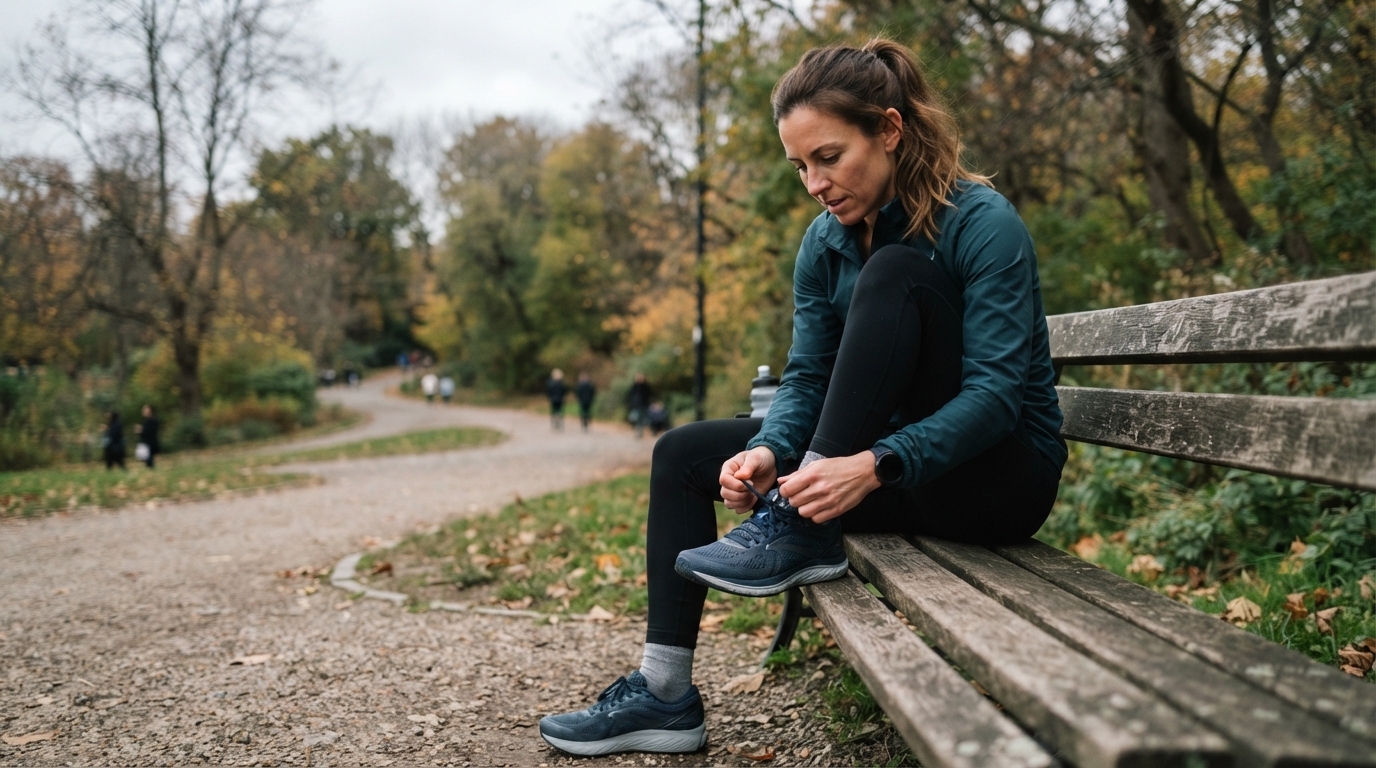
If you get one thing properly fitted, make it your shoes.
Running repeats the same impact through your feet, knees and hips thousands of times per session, and the wrong shoe shape can turn a minor foot quirk into a recurring injury within weeks.
Most independent UK running shops offer a free gait analysis on an in-store treadmill. It takes ten minutes and tells you whether you land on the outside, middle or inside of your foot, which narrows down the shoe shapes worth trying.
You don’t need whatever shoe a marathon runner recommends on YouTube. You need one that matches how your foot moves, in a size that leaves a thumb’s width of space at the toe.
A budget pair from a proper running brand will usually outperform an expensive lifestyle sneaker, because the sole and upper are actually built for repeated impact.
Clothing and layering for UK weather
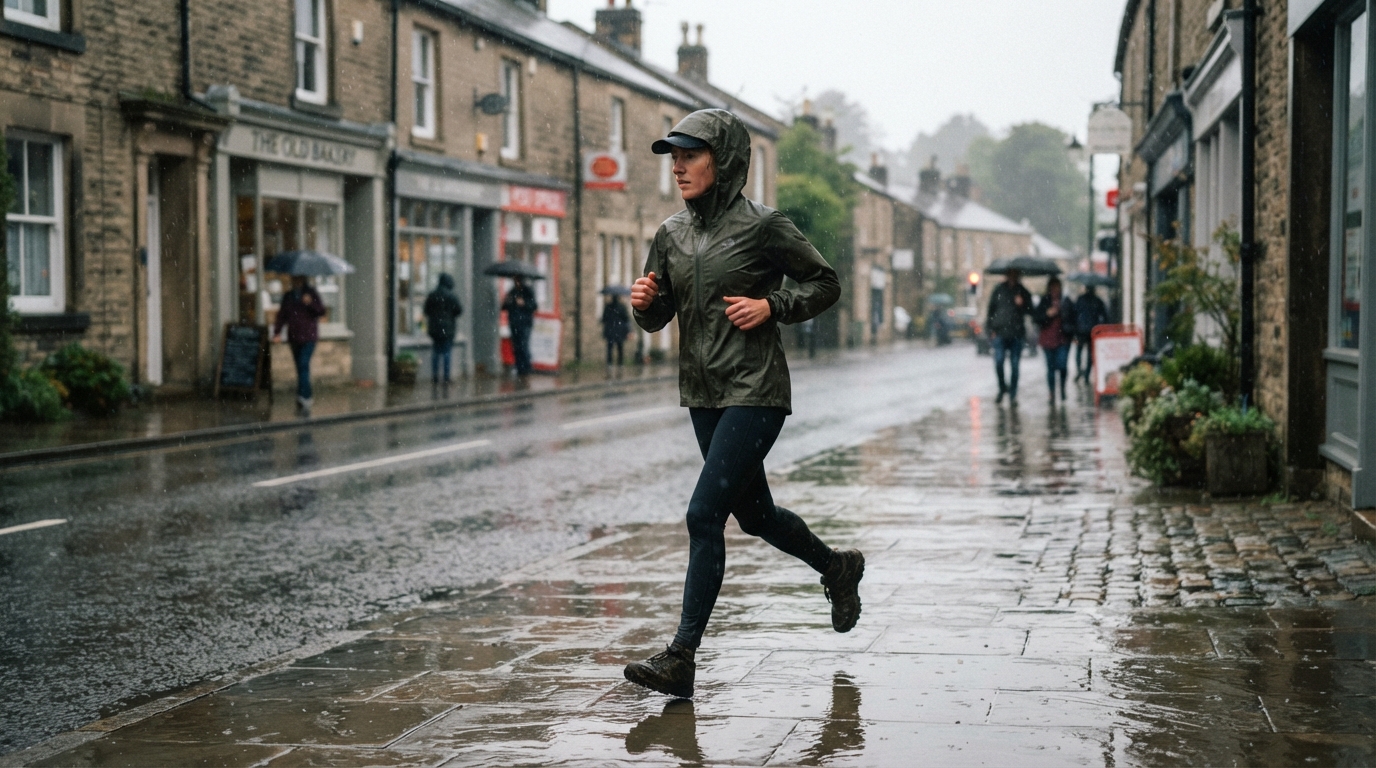
Generic checklists tell you to wear “breathable, moisture-wicking clothing” and stop there.
That advice is fine in July. It falls apart the rest of the year, because the UK gets rain or snow on roughly 159 days a year on average, according to Met Office data compiled by Statista, which works out to around 13 days a month.
That single figure is the reason a UK beginner running gear checklist needs its own weather section, not a copy-paste of advice written for a drier climate.
How to layer by season?
- Spring and autumn (mixed, unpredictable): a moisture-wicking base layer plus a packable lightweight running jacket you can tie around your waist if the rain stops.
- Summer: a single breathable layer is usually enough, but a cap and sunglasses matter more than most checklists admit, since UK summer sun at midday is stronger than the temperature suggests.
- Winter: a thermal base layer, a windproof (not just water-resistant) outer layer, and thin gloves. Hands and ears lose heat fastest and are the main reason beginners cut winter runs short.
Cotton clothing gets heavier and colder as it absorbs sweat or rain, which is the opposite of what you want on a UK winter run. Technical fabrics cost more per item but stay lighter wet than cotton stays dry.
You do not need a full wardrobe for each season on day one. One good mid-layer jacket and one thermal base layer cover most of the UK’s unpredictable spring and autumn stretches, which make up much of the year.
Socks, anti-chafing and the other boring essentials
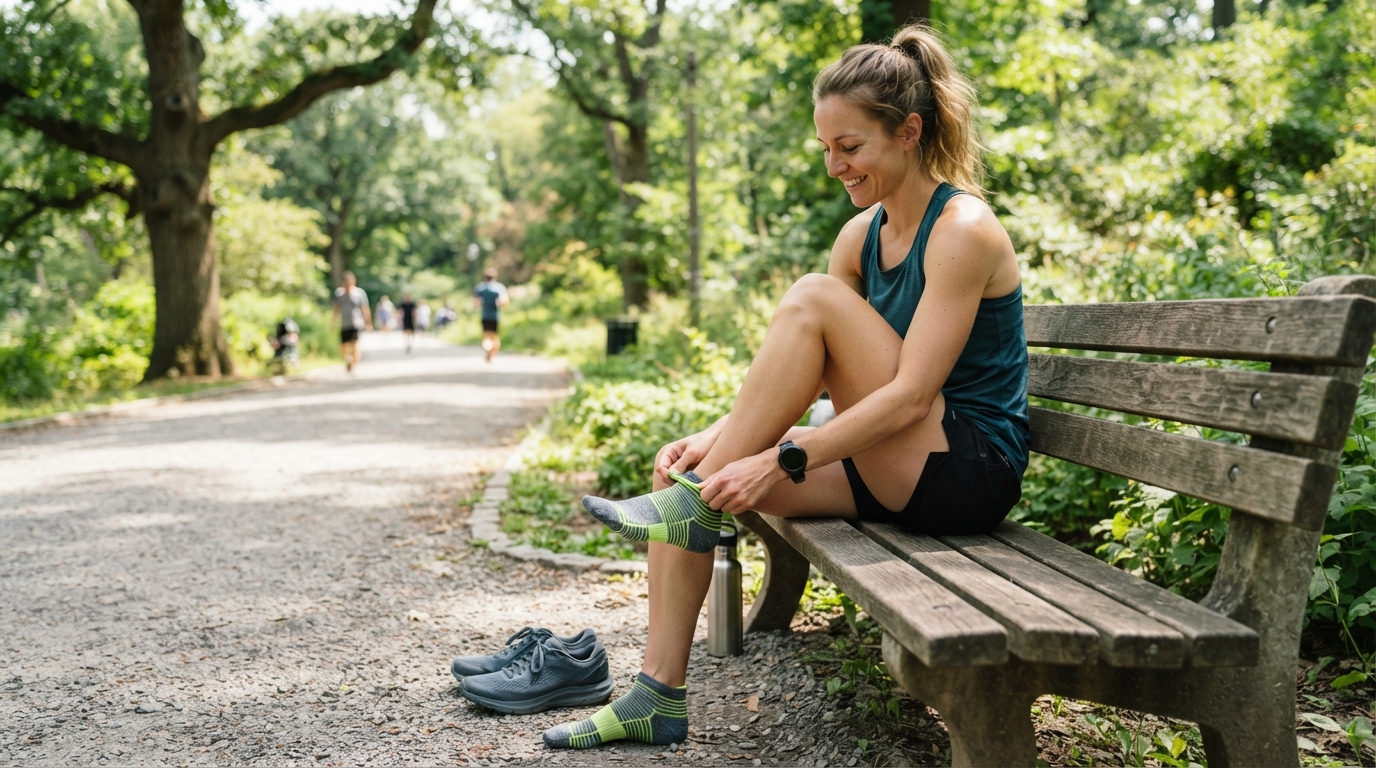
These items get skipped in most gear roundups because they are not exciting to photograph, yet they cause a disproportionate share of the discomfort that makes beginners quit.
Cotton socks bunch up and hold moisture, which is exactly how blisters form on longer runs. Technical running socks, usually a blend of synthetic fibres, are cut to reduce seams at friction points and cost only slightly more.
Buy two or three pairs of technical socks before your first run, not after your first blister. It is a small cost that removes one of the most common reasons beginners dread their next session.
Anti-chafing balm solves a problem nobody mentions until it happens: skin-on-skin or skin-on-fabric friction on the inner thighs, underarms or sports bra line, especially on warmer or longer runs. A small tin lasts months and is one of the cheapest items on any beginner running gear checklist.
For women, a properly fitted sports bra matters as much as the shoes. An ill-fitting bra is one of the most common reasons new runners describe their first weeks as uncomfortable rather than just tiring.
Watches, phone carriers and hydration: what can wait
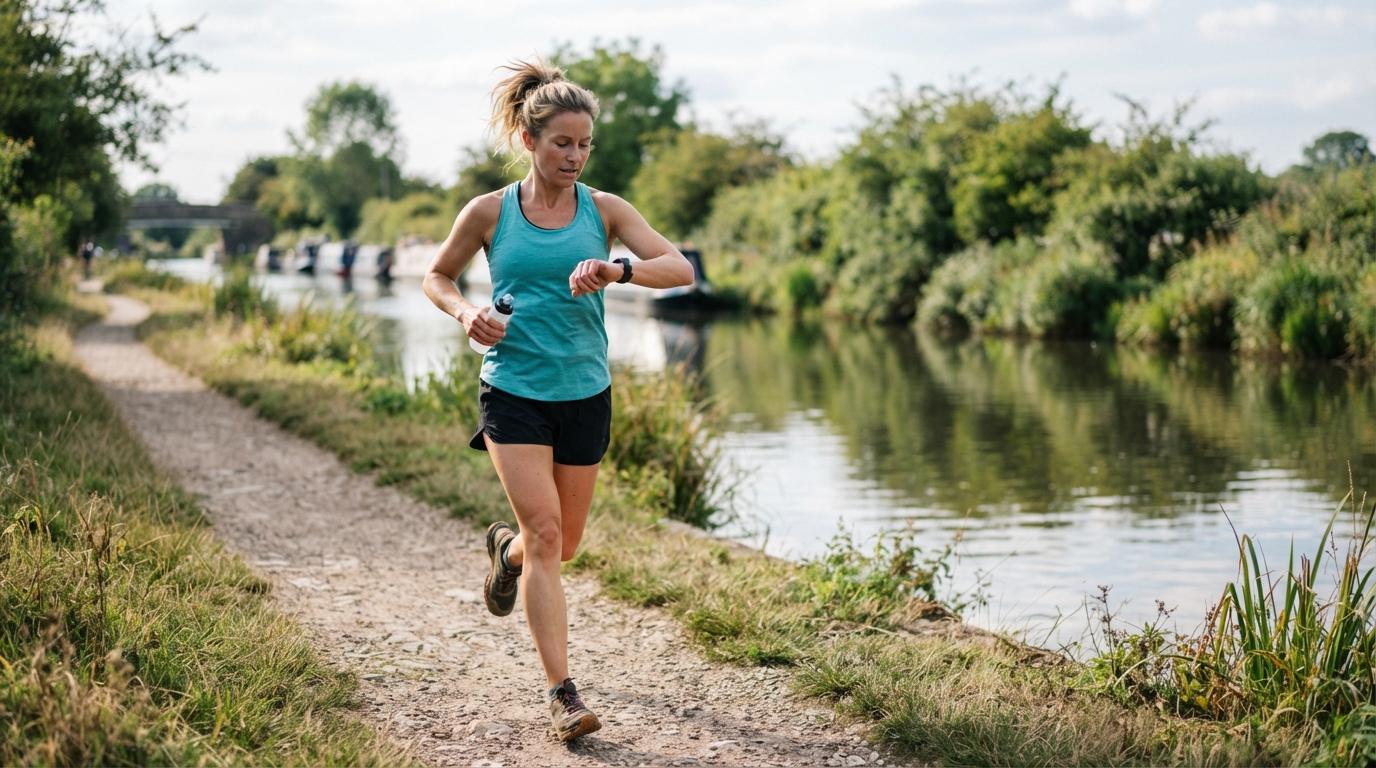
This is where most beginner spending goes, and where most of it is optional.
- Tracks pace, distance and time without needing your phone
- Motivating during a structured plan like Couch to 5K, since you see progress week to week
- Useful long after the beginner phase, so it is not wasted money
- Adds a meaningful cost on top of shoes and clothing
- Not necessary for the first few weeks, when effort and breathing matter more than pace data
- Can turn early runs into a numbers-chasing exercise instead of a habit-building one
A basic phone running app covers pace and distance tracking for free, which is enough for the first couple of months. A dedicated watch becomes worth it once you are running consistently and want data your phone cannot easily give you mid-run.
For carrying your phone, a simple running belt or armband avoids the common mistake of holding it, which changes your arm swing and posture over a run. For hydration, most beginner runs under 45 minutes do not need a bottle at all. Past that, a small handheld bottle or a lightweight belt is enough. Hydration vests and packs are built for much longer distances than a beginner typically runs.
What to skip when you are just starting out?
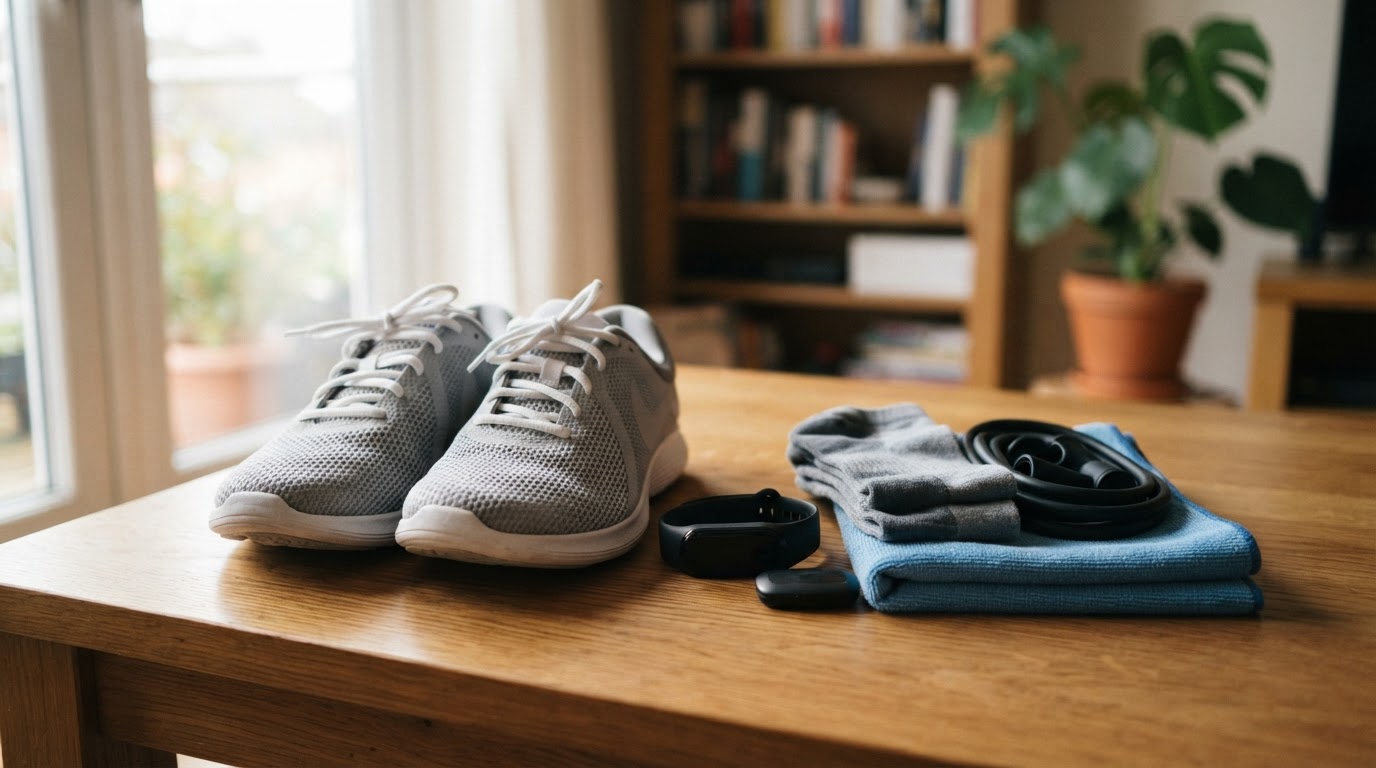
Skipping the wrong items is as important as buying the right ones, because unused gear is money that did not go toward shoes or socks that actually get used.
- Carbon-plated race shoes: built for racing at speed, not for building a running habit. They also tend to fit differently from a standard training shoe.
- A full running wardrobe in every season’s colours: one mid-layer and one base layer, described above, cover most weeks.
- Recovery tools (foam rollers, massage guns): useful once training volume increases, not during the first few weeks of easy running.
- A premium hydration vest: designed for runs well beyond an hour, which is rare for a genuine beginner.
- Multiple pairs of shoes “for different runs”: one well-fitted pair, replaced roughly every 300 to 500 miles, is enough until you are training seriously.
A realistic starter budget: two tiers

Because a beginner running gear checklist is only useful if it tells you what things actually cost, here is a rough two-tier breakdown for a UK beginner.
| Item | Starter tier | Serious-runner tier |
|---|---|---|
| Running shoes | £45–£70 | £100–£150 |
| Technical socks (x3) | £10–£15 | £20–£30 |
| Top and bottoms | £25–£35 | £50–£80 |
| Lightweight jacket | £25–£40 | £70–£120 |
| Anti-chafe balm | £6–£9 | £6–£9 |
| Phone belt or armband | £10–£15 | £15–£25 |
| GPS running watch | skip for now | £90–£220 |
Add up the ranges above and the starter tier comes to roughly £120–£185 in total. The serious-runner tier assumes you already know you are sticking with it and adds a watch and higher-durability pieces.
Prices above are typical UK retail ranges, not fixed quotes. Sales, last season’s colours and own-brand ranges from sports retailers regularly bring the starter tier in well below these figures.
Work out your own starter budget
Tick the items you still need to buy to see a rough starter budget in pounds.
Estimated total: £106
In Summary
A genuine beginner running gear checklist for the UK comes down to three decisions: get the shoes right, plan for the weather you will actually run in, and resist buying for the runner you hope to become instead of the one starting this week.
Everything past shoes, socks and one weatherproof layer is optional until you know running is sticking, at which point a watch or better fabrics become worth the money rather than a gamble on motivation.
Common Questions
Can I start running in gym trainers I already own?
You can run a first session or two in them, but gym trainers are built for lateral, stop-start movement, not the repeated forward impact of running. If you plan to keep running past the first couple of weeks, a proper running shoe fitted to your foot shape reduces the injury risk considerably.
Do I need a GPS running watch as a beginner?
No. A free phone app covers pace and distance tracking for the first few months. A watch becomes more useful once you are training consistently and want data mid-run without your phone.
How much rain should I expect to run in across the UK?
The UK sees rain or snow on roughly 159 days a year on average, close to 13 days a month. That is why a packable lightweight jacket, not just a breathable top, belongs on any realistic UK running checklist.
What is the 3-3-3 rule for running?
It is an informal pacing approach some beginners use: run for 3 minutes, then walk for 3 minutes, repeated across a session, before gradually shifting the balance toward more running. It pairs well with structured plans like Couch to 5K and does not require any extra gear.
How much does a beginner running kit cost in the UK?
A sensible starter kit, shoes, socks, clothing and a jacket, typically comes to roughly £120–£185. Adding a GPS watch and higher-durability pieces for a serious-runner tier can push the total closer to £350–£650, depending on the watch chosen.