
At a Glance
A bathroom accessories set promises a matching basin in a single purchase.
The match is what rarely lasts: a glossy pump gets streaked, a glass tumbler turns cloudy and a gold finish dulls.
This guide treats the set as something to plan rather than a shelf photo to copy.
It covers what a set contains, how each material behaves, how to match finishes, and what hard water changes.
What does a bathroom accessories set actually include?
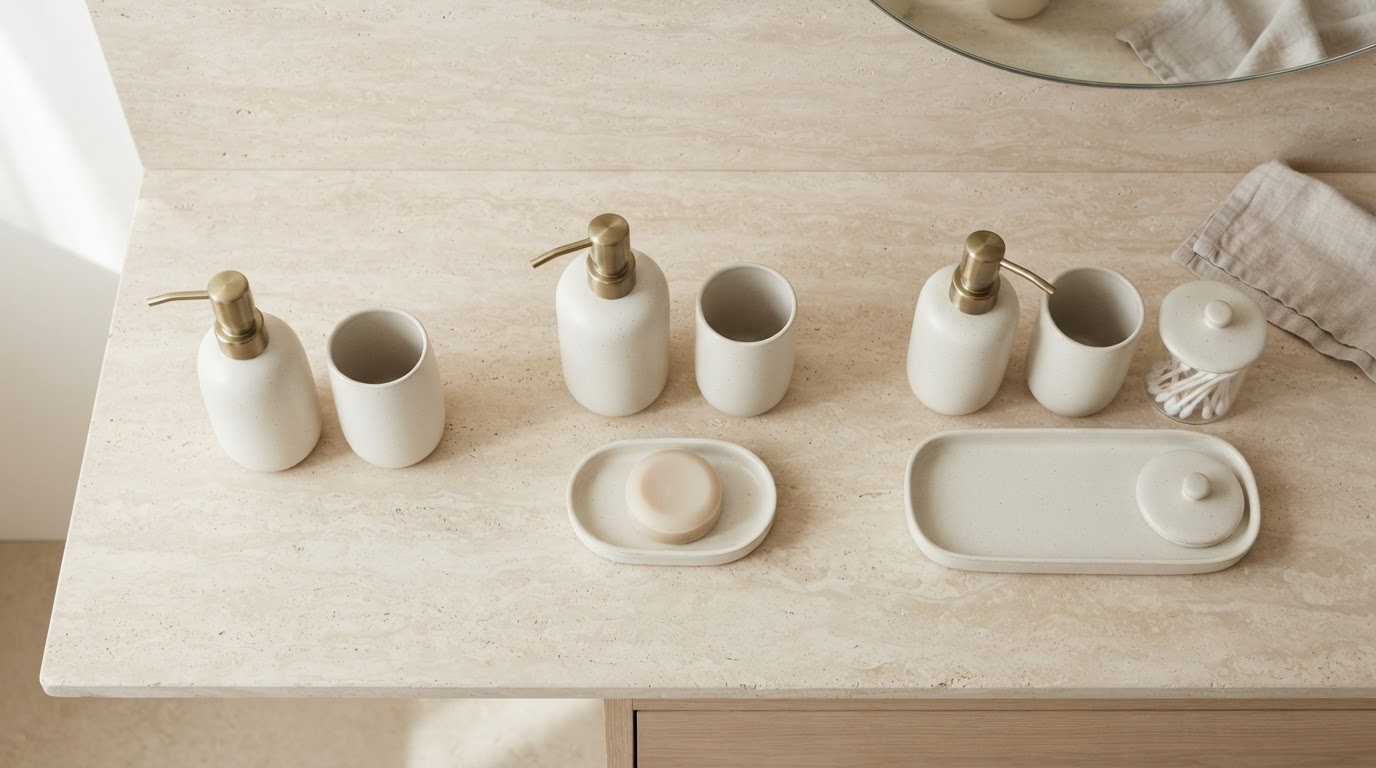
A set is a group of small items made to sit together around the basin.
Retailers sell them by piece count, and the contents vary by brand, so the listing matters more than the label.
| Set size | Usual contents | Suits |
|---|---|---|
| 2 pieces | Soap dispenser and tumbler | Cloakrooms and guest bathrooms |
| 3 pieces | Dispenser, tumbler and tray or toothbrush holder | One-person or couple bathrooms |
| 4 pieces or more | The above plus a cotton jar or a second tumbler | Family bathrooms with a wide basin |
One UK bathroom supplier, ITFitz, suggests thinking in zones (basin, bath or shower, toilet) rather than in single products (ITFitz, accessed October 2026).
That framing explains why a set rarely covers the whole room: it serves the basin zone, and the toilet and shower zones usually need separate pieces.
A "complete" set does not always mean a complete bathroom. Read the list of pieces for a toilet brush or bin before assuming they are included.
Typical case (illustrative): a rented one-bathroom flat with a single small basin.
A 3-piece set clears the clutter there, while a larger set would only crowd the surface.
Which material holds up best: ceramic, glass, steel or resin?
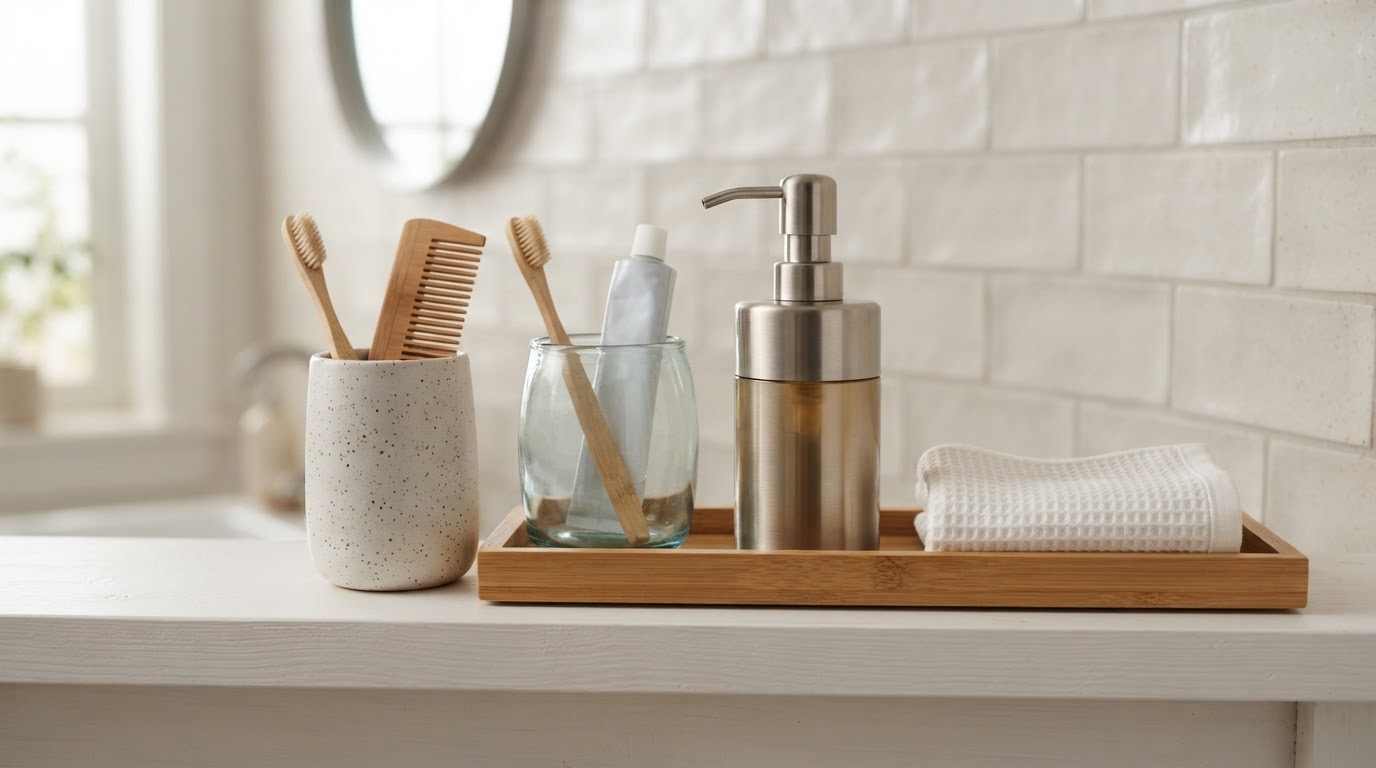
Water resistance is the first filter, because every piece lives next to a tap.
Deluxe Bathrooms, an Irish retailer whose advice is general rather than UK-specific, points to stainless steel, ceramic and tempered glass for longevity (Deluxe Bathrooms, accessed October 2026).
It calls plastic affordable and durable but possibly lacking the appeal of higher-end materials.
It also calls chrome-plated steel a cost-effective alternative to stainless steel that is potentially less durable.
In day-to-day use the trade-offs tend to look like this:
- Ceramic is heavy and stable, so a pump does not tip when pressed, but it can chip if knocked.
- Glass looks light and clean, yet it can show fingerprints and water marks and breaks on a tiled floor.
- Stainless steel, especially brushed, tends to hide marks well, though it may need frequent cleaning to keep its lustre and the quality of the finish varies between makers.
- Resin is light and forgiving in a bathroom shared with children, but a thin cheap piece can feel less solid.
- Bamboo suits a tray away from splashes, as it needs to dry between uses.
Pick up the dispenser if you can. A heavy base keeps one-handed pumping steady, and a light one slides across the basin.
How do you match finishes without a showroom look?
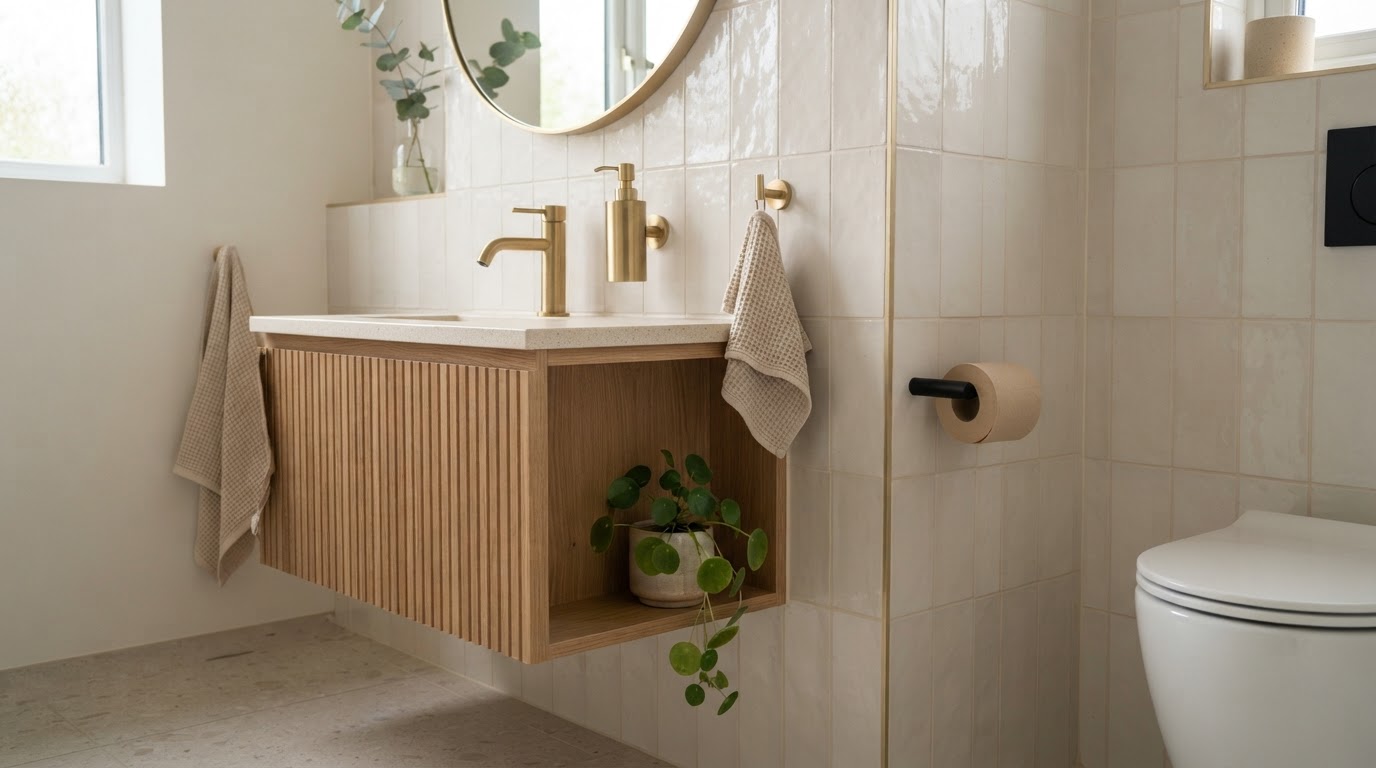
Haddon, a UK bathroom supplier, lists the common finishes as brushed gold, matte black, chrome, brushed stainless and matte white (Haddon, accessed October 2026).
It also advises matching these smaller fittings to the brassware, so the room reads as one scheme.
ITFitz makes a useful distinction: finish coordination matters more than matching everything exactly, and the wider hardware such as door ironmongery belongs in the palette.
A workable rule of thumb is one dominant finish, taken from the taps, and one supporting finish repeated no more than twice.
That is a styling habit rather than a standard, but it stops a set from looking pasted onto the room.
Typical case (illustrative): a bathroom with chrome taps and white tiles.
A white ceramic set with chrome-coloured pump heads blends in, while one matte black towel hook echoes a black shower screen frame without turning the basin into a mismatch.
If the taps are an uncommon colour, chasing an exact match across a mass-market set is rarely realistic. A neutral white or steel set often looks better than a near miss.
What does hard water do to the finish you pick?
Thames Water states that "most of the water in the South-East of England is hard in nature" (Thames Water, accessed October 2026).
On the same Thames Water scale, 200 to 300 mg/l of calcium carbonate counts as hard and anything above 300 as very hard.
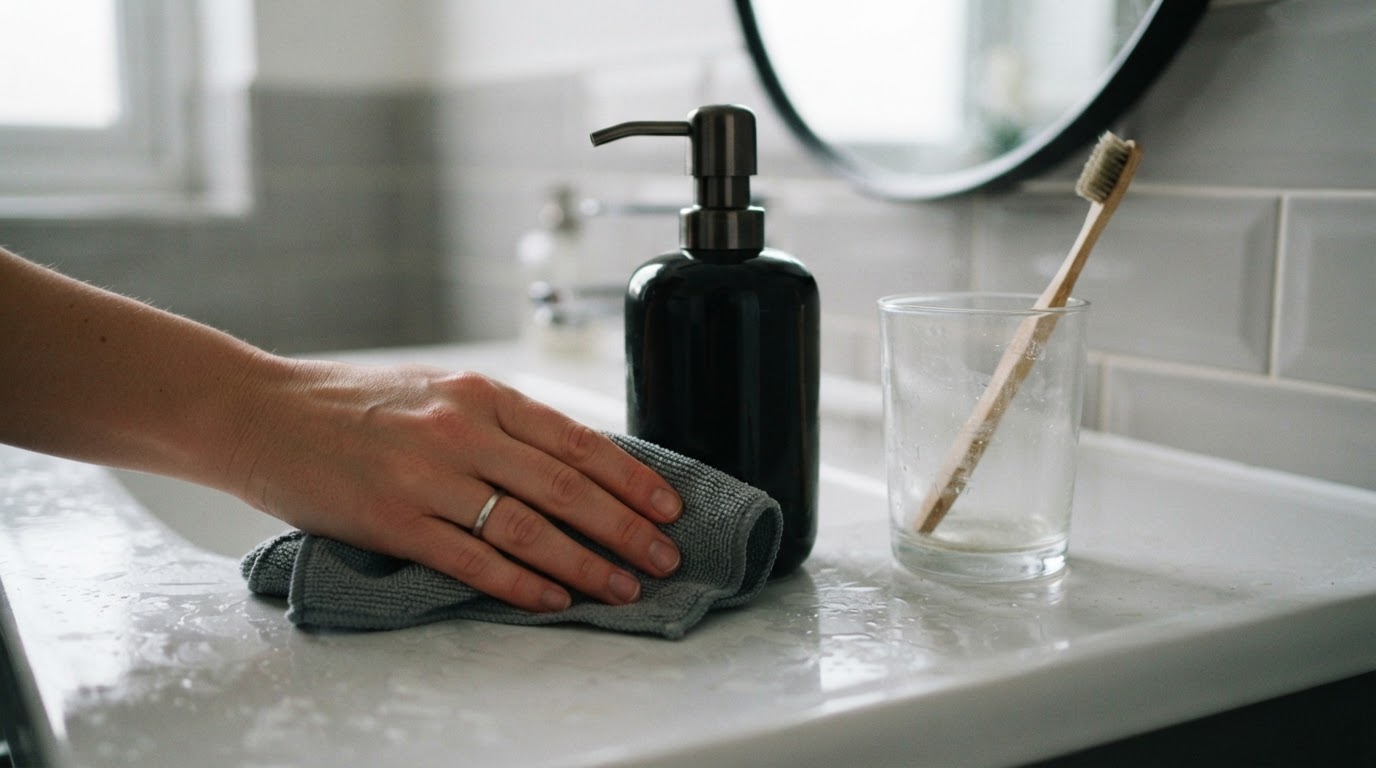
Hard water leaves limescale as dried white marks, and some finishes hide them better than others.
As a general pattern, glossy black plastic and clear glass tend to show marks fastest, while matte white, speckled ceramic and brushed steel often hide them longer.
Metal finishes add a second question: is the coating protected?
Ideal Home explains that lacquered brass has a protective coating to prevent tarnishing, whereas unlacquered brass develops a natural patina (Ideal Home, November 2024).
Acidic descaling products can damage a coating, so test any cleaner on a hidden spot and follow the care label.
In a soft water area the marks matter far less, so a glossy finish becomes a realistic choice. Your water company can tell you how hard the supply is at your postcode.
Find your shortlist in four questions
This short tool turns your water, household and cleaning habits into a suggested material and finish, using the rules of thumb above.
1. How hard is your tap water?
2. Who uses the bathroom?
3. How often do you wipe the basin area?
4. Which look do you prefer?
Is a coordinated set better than mixing single pieces?
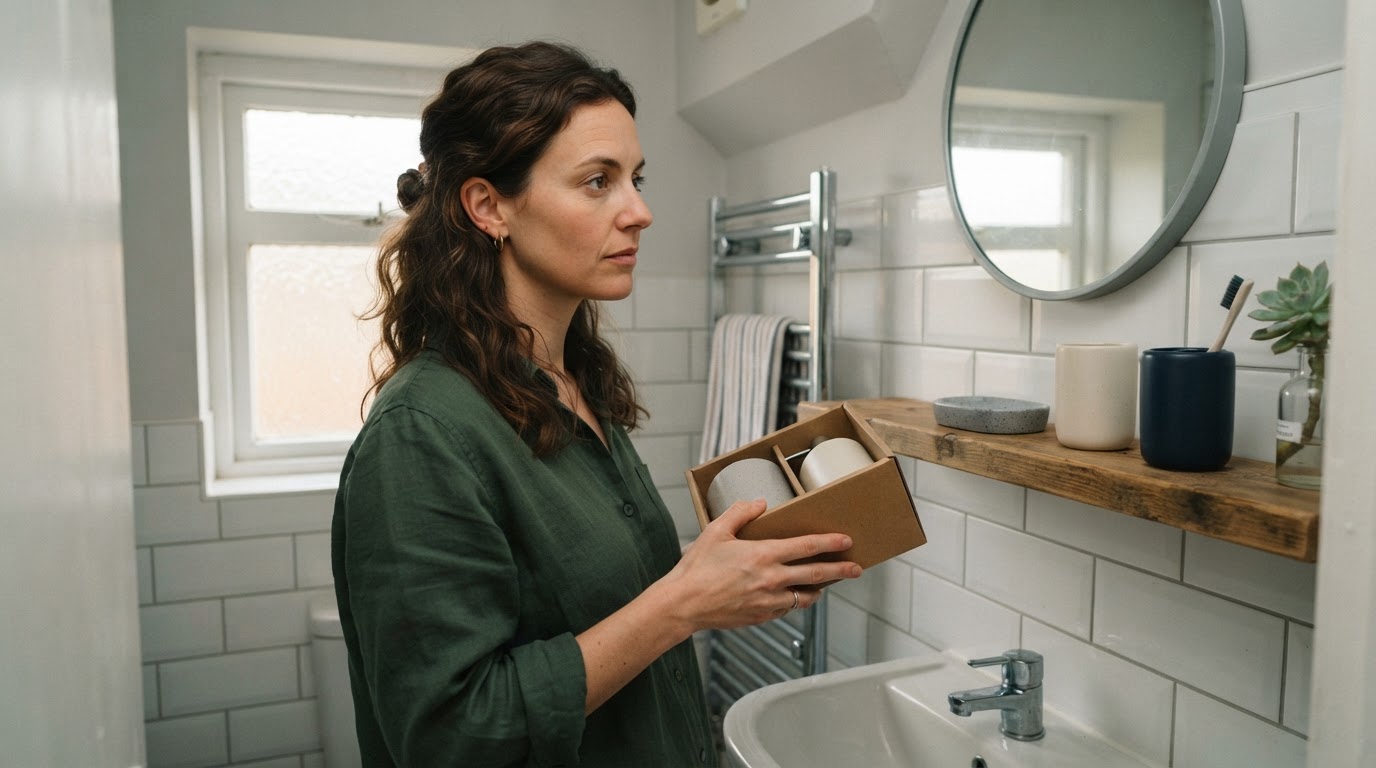
A set wins on convenience, and a mix wins on fit.
- One purchase gives a ready-made match
- The price per piece can be lower
- Finish and shape stay consistent
- One broken piece is hard to replace
- You may pay for a tray or jar you never use
- Every piece shares the same weakness, such as marking easily
The price argument is real but modest.
The IKEA ÅLTJÄRN 3-piece set was priced at £12 in October 2026, reduced from £15, which works out at £4 a piece (IKEA UK, accessed October 2026).
The same page shows a rating of 3.4 out of 5 across 19 reviews, a reminder that a low price does not settle quality either way.
Write down the three items you touch every day at the basin. If a set does not include them, mixing single pieces is the better route.
What should you check before paying for a set?
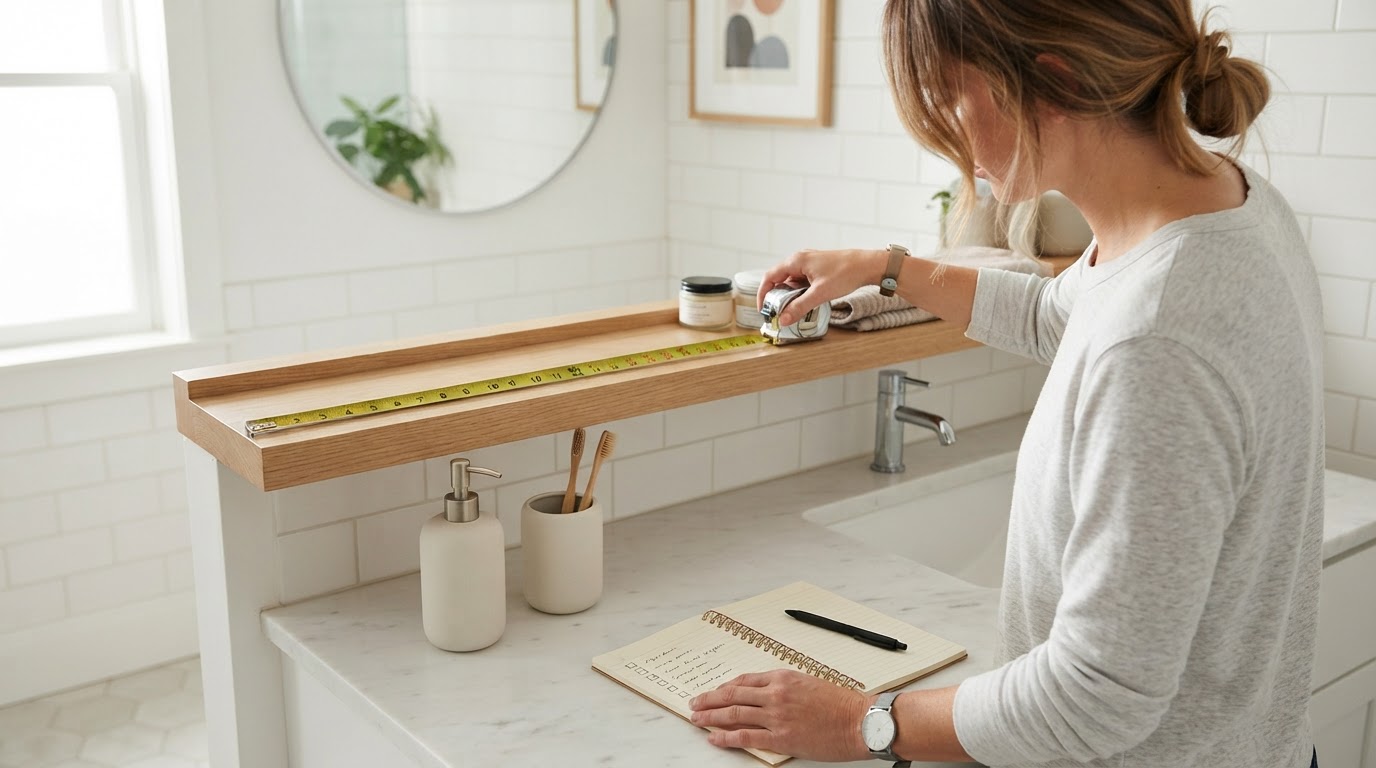
Most disappointments come from fit and care rather than looks, so a short check helps:
- Measure the width and depth of the shelf or basin edge and compare them with the set’s footprint.
- Check the refill opening of the pump, since a narrow neck makes refilling messy.
- Look at the tray for raised ridges or drainage, so soap does not sit in water.
- Find out what the pump head and base are made of, as they can differ from the body.
- Read the care label for cleaners and dishwasher use.
- Confirm the return policy before opening the box.
A matching set is only worth keeping if each piece fits the space and is easy to clean.
In Summary
A good bathroom accessories set is one that suits your water, your fittings and your daily routine, not just the shelf photo.
Choose the material for how it ages, match one dominant finish to the taps, and check the fit before the price.
Common Questions
What are the most useful bathroom accessories beyond the basin?
A toilet brush with a holder, a lidded bin and a couple of towel hooks cover most daily needs. A shower caddy or soap dish only earns its place if you actually keep products there.
Are trendy finishes worth following?
A finish is worth following only if it suits your taps and door handles, because a trend that clashes with them looks dated faster than a neutral one. White, chrome and brushed steel tend to blend with the widest range of fittings.
Can I use a bathroom accessories set in a rented flat without drilling?
Yes, because countertop sets sit on a surface and need no fixing. Check your tenancy agreement before using adhesive or suction fittings, since some leave marks.
Can ceramic or glass pieces go in the dishwasher?
It depends on the maker. Read the care label first, because metal parts, pump heads and coatings are often not dishwasher safe even when the body is.