At a Glance
Noise cancelling headphones under £100 in the UK now come with features that used to sit on much dearer pairs.
The catch is that the right pair depends on where the noise comes from.
A model that mutes a bus engine can still let a jet drone through, and the reverse is just as possible.
This guide compares five over-ear models between £60 and £90, then sorts them by commute and by flight.
Which five pairs are worth a look under £100 in the UK?
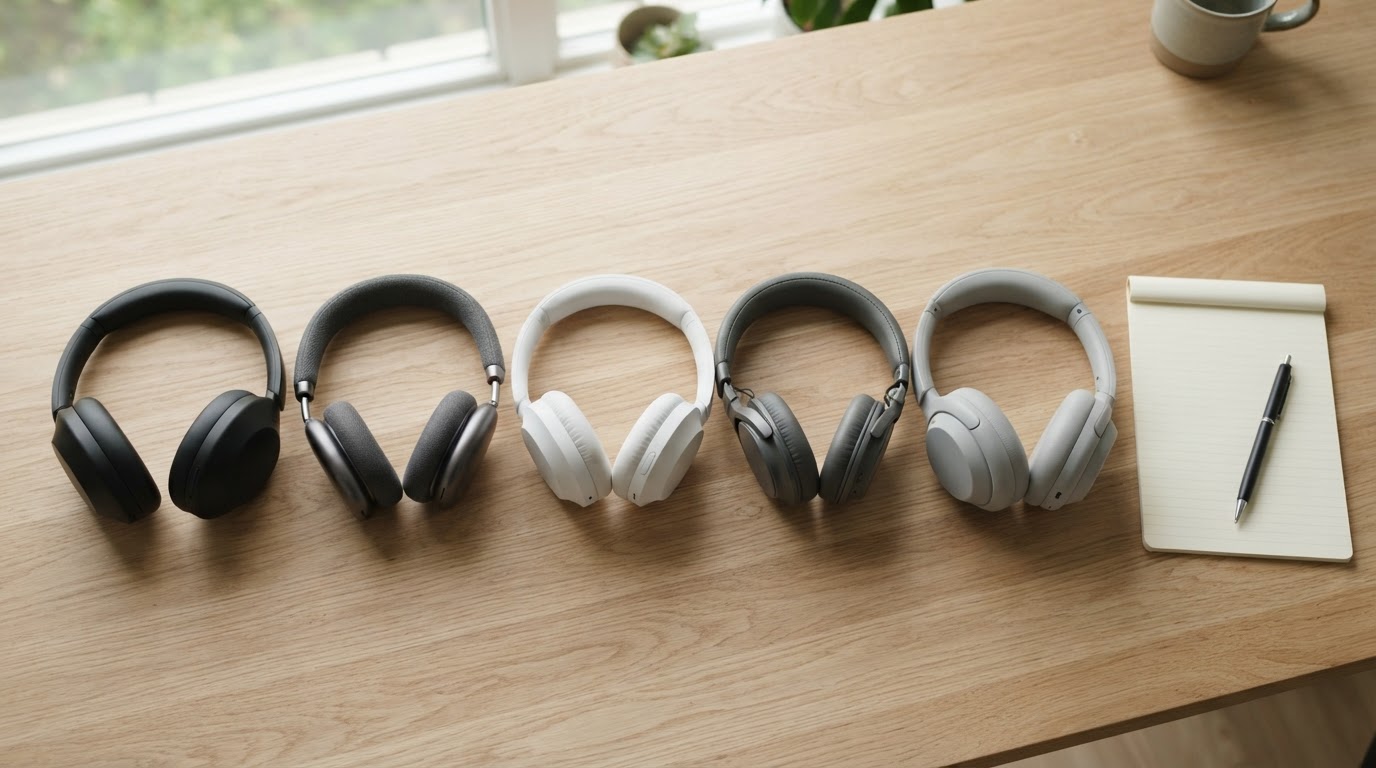
The five pairs below come up again and again in UK buying guides at this price.
The figures come from a single UK roundup (Cartiq, updated July 2026), so they are listed prices and manufacturer claims, not lab results.
| Model | Price | Weight | Battery claimed, ANC on | Noted strength or weakness |
|---|---|---|---|---|
| Sony WH-CH720N | £89.99 | 192 g | 35 h | Class-leading ANC per Cartiq, bass-heavy tuning |
| Soundcore Space One | £79.99 | 265 g | 40 h | Effective on traffic and café chatter, a touch less aggressive on engine drone |
| JBL Tune 770NC | £69.99 | 232 g | 44 h | Only partly tames aeroplane cabin noise |
| Edifier W820NB Plus | £59.99 | 220 g | 49 h (one figure given) | Cuts train and bus noise, aeroplane rumble gets through |
| 1MORE SonoFlow SE-H31 | £64.99 | 250 g | 50 h | Good in offices, weaker on public transport |
The weight spread is wider than it looks: the lightest pair is 73 g lighter than the heaviest.
Street prices move quickly. A UK roundup from CoolCuration (1 May 2026) listed the Space One at £89 list price but often around £69, so a live price check matters more than the figure above.
Why do a Tube carriage and a plane cabin ask different things of the same pair?
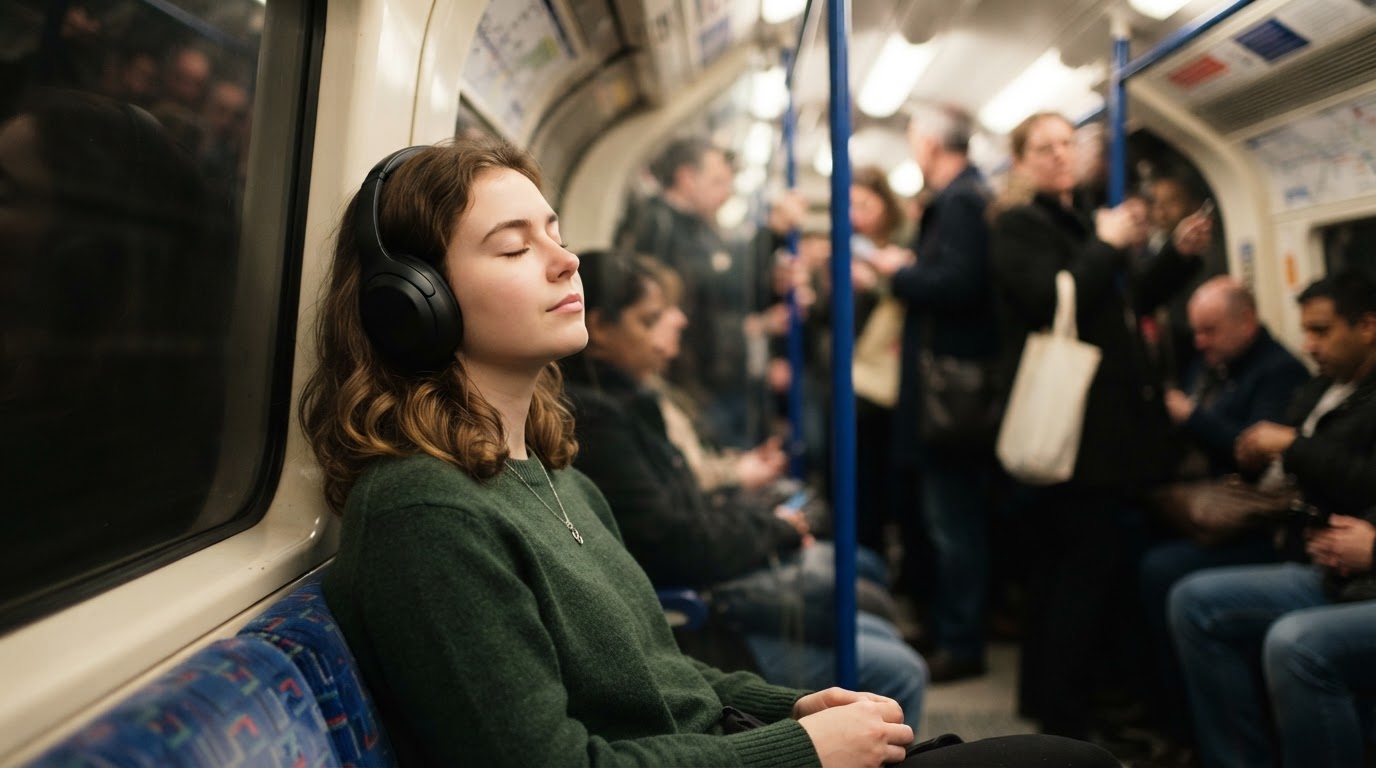
Both places are loud, which is why people buy noise cancelling headphones for them.
Researchers measured moving carriages on stretches of the Northern and Victoria lines and found passengers were routinely exposed to more than 80 dBA, with peaks above 100 dBA (Singh and colleagues, The Laryngoscope, 2020).
A 2006 measurement study on one commercial jet recorded continuous cabin noise of 80-85 dB(A) in flight and 75-80 dB(A) on landing, with short peaks of 81-88 dB(A) (Ozcan and Nemlioglu, Canadian Acoustics, December 2006).
Here dBA and dB(A) are decibels weighted to match human hearing, and both studies measured the noise around the passenger, not what any headphones let through.
The average level is therefore similar, but the character is not.
A cabin is a long, steady drone, whereas a carriage mixes screech, announcements and doors that open and close.
As a general rule, noise cancelling works best on steady, low-pitched sound, and the ear cushion seal handles the sudden, high-pitched part.
That split explains the notes in the table: the Edifier cuts train and bus noise yet lets aeroplane rumble through, while Cartiq found the 1MORE copes better in an office than on public transport.
A pair that mutes more of the carriage removes the urge to turn the volume up, which matters when the background already sits above 80 dBA.
One gap is worth knowing about: Expert Reviews (updated March 2024) tested cheap noise cancelling pairs at home, on London streets, on the Tube and in an office, and its stated test settings did not include air travel.
The Which? summer headphones test (6 July 2024) discussed flights mainly through battery life.
Flight performance under £100 is therefore the least independently tested part of this price band.
Which pair suits a commute and which suits a flight?
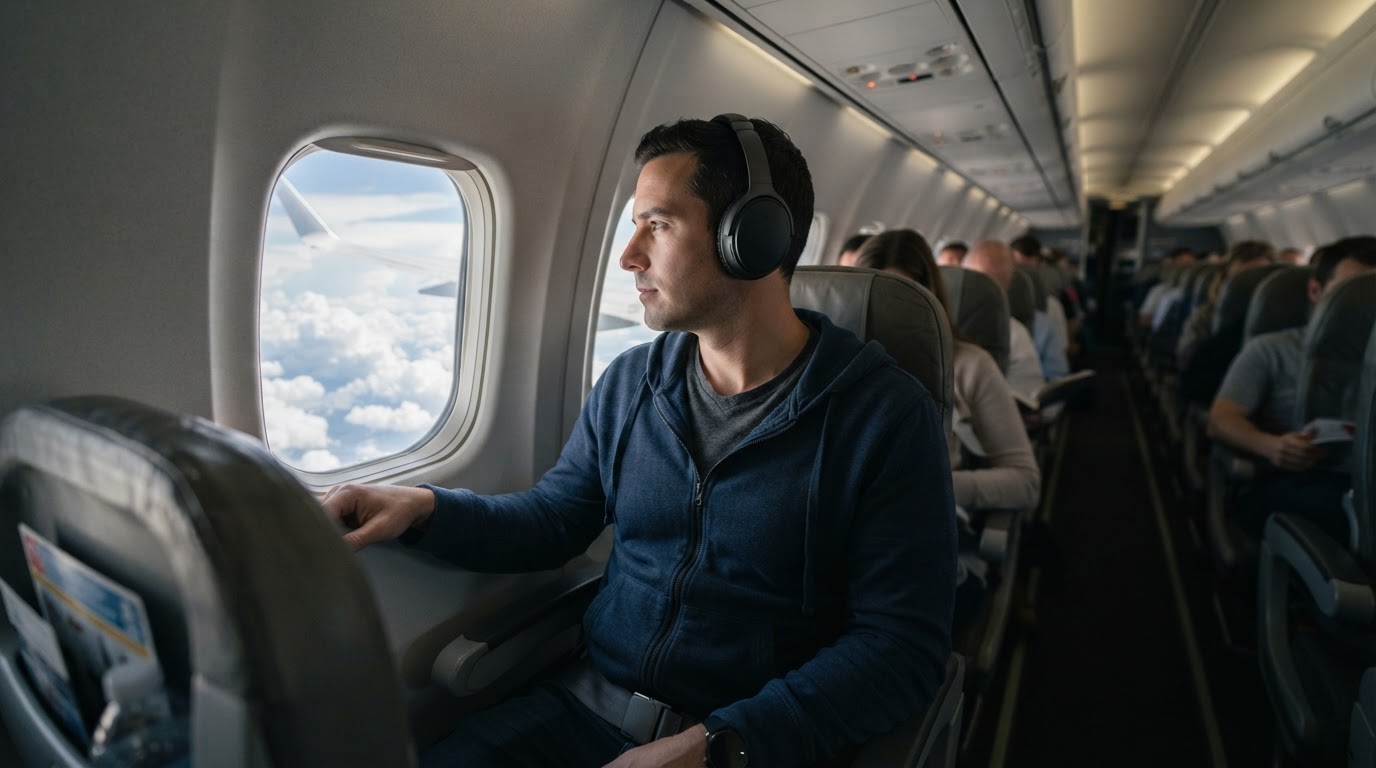
The two examples below are illustrative cases built from the figures above, not real buyers.
For a daily commute
Typical case: a 40-minute rail and bus commute, headphones worn for a short time but every day.
The Sony is the lightest at 192 g and has what Cartiq calls class-leading noise cancelling.
The Edifier is the cheaper route at £59.99, and it is described as cutting train and bus noise.
The 1MORE is the one to avoid for this job, since Cartiq finds it weaker on public transport.
For a long flight
Typical case: a 10-hour flight, headphones worn for most of it with the cabin drone running throughout.
Battery is rarely the limit here, because all five claim 35 hours or more with noise cancelling on.
The Sony again leads on engine drone, with the Space One slightly behind it.
The Edifier and the JBL are the weaker choices for cabin rumble, according to the same roundup.
A spare charge for the phone is a separate matter, covered in the portable chargers for travel guide.
At 265 g the Space One is 38% heavier than the 192 g Sony, which is easy to ignore for 40 minutes and harder to ignore for ten hours.
A short picker for your own case
The picker below applies the notes from the table to the noise you face, your top priority and your budget cap.
It reflects the Cartiq notes only, not tests of our own.
Match a pair to your journey
What should be checked before paying for any of them?
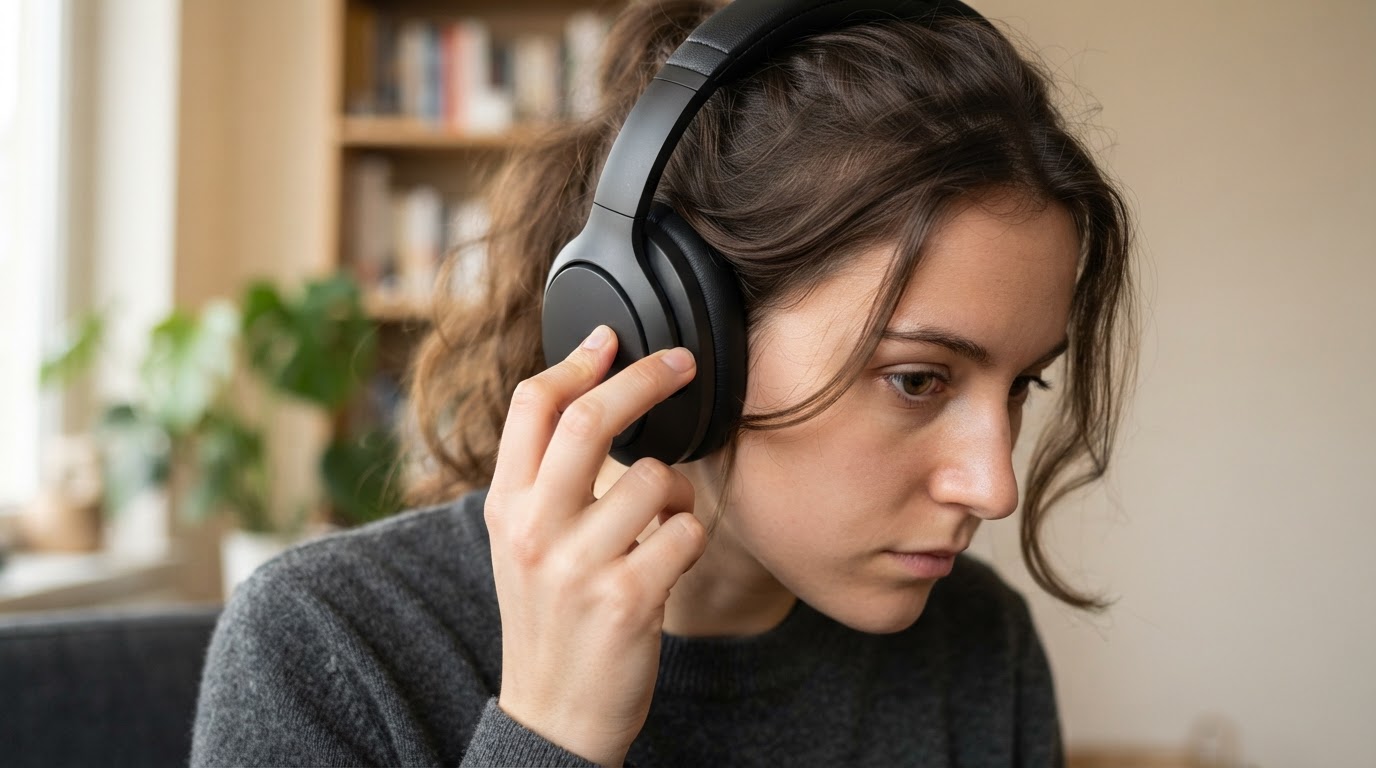
Price and noise cancelling are only half the decision at this level.
- Compare battery figures with noise cancelling switched on, not the longer figure with it off.
- Check the weight against how long the headphones will stay on.
- Check that the cushions seal around the ears, since a poor seal lets the noise in however good the electronics are.
- Look for a 3.5 mm cable in the box if a wired fallback matters, since not every pair includes one.
- Check today’s UK price, as the gap between list and street price can be £20, as the Space One example above shows.
Advertised battery life often quotes the noise-cancelling-off figure, such as 70 hours for the JBL and 1MORE, while the on figure is 44 and 50 hours.
Wireless earbuds are the other route under £100, though they behave differently.
A broader Bluetooth earbuds guide covers how the two styles differ.
The Which? test (6 July 2024) found the Soundcore Liberty 4NC lasted 7 hours 43 minutes with noise cancelling on, which its testers judged enough for a London to Dubai flight.
Over-ear pairs trade that portability for far longer battery life and a bigger ear seal.
In Summary
No single pair wins every journey. The Sony WH-CH720N has class-leading noise cancelling according to Cartiq, and the lowest weight, while the Edifier W820NB Plus is the cheapest of the five.
For a commute, favour a pair noted for train and bus noise. For a flight, favour one noted for engine drone and look at weight.
Whichever pair is chosen, check the current UK price and the battery figure with noise cancelling on.
Common Questions
Can noise cancelling headphones help protect hearing on the Tube?
They can help indirectly. With less carriage noise reaching the ear, there is less reason to raise the volume, and the study of stretches of the Northern and Victoria lines found levels above 80 dBA were routine.
Is an on-ear pair such as the JBL Tune 670NC a fair alternative?
It can be. Which? (6 July 2024) priced it at £90, found it blocked a good amount of background noise and leaked little sound, but noted it came without a travel case.
Will a cheap pair still work if the battery runs flat?
Only if a cable is supplied and the model supports wired listening. Which? (6 July 2024) found the Goji GTCBTNC24 kept its noise cancelling on a wired connection, so check the box contents of the exact pair.