
At a Glance
Search for small bedroom storage ideas for renters UK and you’ll usually find the same generic furniture lists, but fitting a wardrobe, a desk and somewhere for shoes into a rented bedroom that barely holds a double bed takes more than inspiration photos.
Landlords rarely allow drilling, and end-of-tenancy deposit disputes over wall damage are common enough that most renters would rather avoid the risk altogether.
The good news is that the storage gap in a small bedroom is almost always a wasted-space problem, not a missing-furniture one. Under the bed, behind the door and up the walls are the three zones renters overlook most.
What UK tenancy rules actually say about drilling and wall damage?

Before buying anything, it helps to know where the actual risk sits. Deposit protection schemes distinguish between fair wear and tear, which cannot be deducted from a deposit, and damage, which can.
Unauthorised drill holes are generally treated as damage rather than wear and tear, because they alter the property rather than simply showing the effects of normal daily use. mydeposits explains this distinction in detail, and it is worth reading before assuming a small hole will go unnoticed.
Even patched holes can trigger a deduction if the wall no longer looks uniform at check-out, since landlords can claim the cost of repainting to restore a matching finish. Adjudicators rely on the inventory, check-in and check-out reports and dated photos, so the safest approach is simply not to create the mark in the first place.
Even wall-friendly adhesive strips are not risk-free on every surface. They tend to fail on textured paint, wallpaper, or cold and slightly damp walls, common in older UK flats, and pulling them off too quickly can strip paint. Warming the strip gently before removal reduces that risk.
Measure before you buy: a five-minute clearance checklist
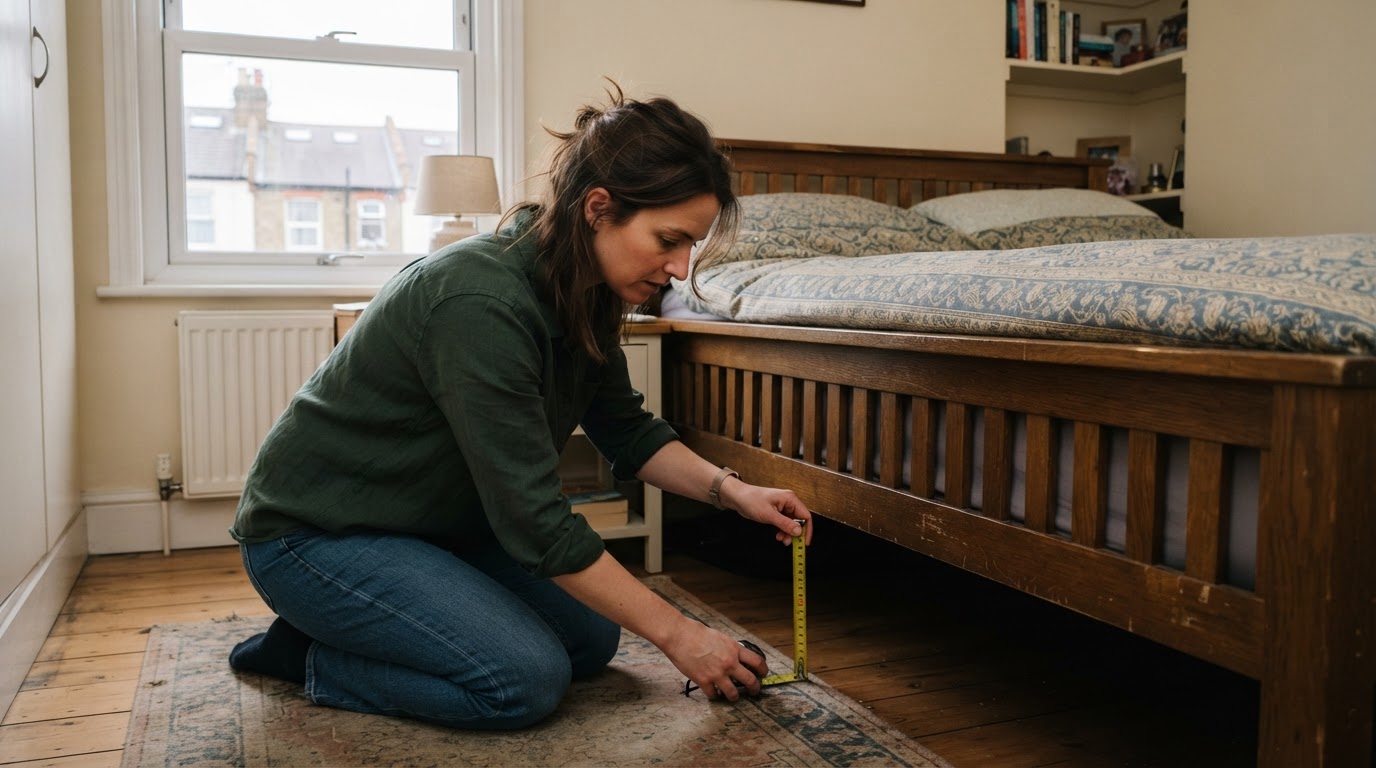
Most storage purchases that end up unused in a small bedroom fail for the same reason: nobody checked the numbers first.
- Wardrobe and door depth: standard UK internal doors are around 35mm thick, while fire doors common in flats and shared houses run closer to 44mm. Over-door organisers with shallow brackets can struggle to grip a fire door properly.
- Bed clearance: measure the gap under your bed frame before buying under-bed boxes. Divan beds often have almost no usable gap, while a bed on legs can clear 15-20cm once risers are added.
- Adhesive weight limits: Command-style hooks range from small hooks rated for a few hundred grams up to large utility hooks holding around 2.2kg, with some general-purpose ranges rated up to 6kg. 3M’s own UK weight guide is worth checking against the actual box before hanging anything heavier than a dressing gown.
- Walkway width: leave at least 60-70cm of clear floor between furniture pieces so the room stays usable day to day, not just tidy in photos.
Before ordering anything, tape the footprint of the piece you are considering onto the floor with masking tape and live with it for a day. It is the quickest way to catch a wardrobe or drawer tower that looks fine on a product page but blocks the door in real life.
Which storage type suits your room?
Answer three quick questions to see which combination of ideas fits your bedroom.
Under-bed storage that does not need a new bed frame
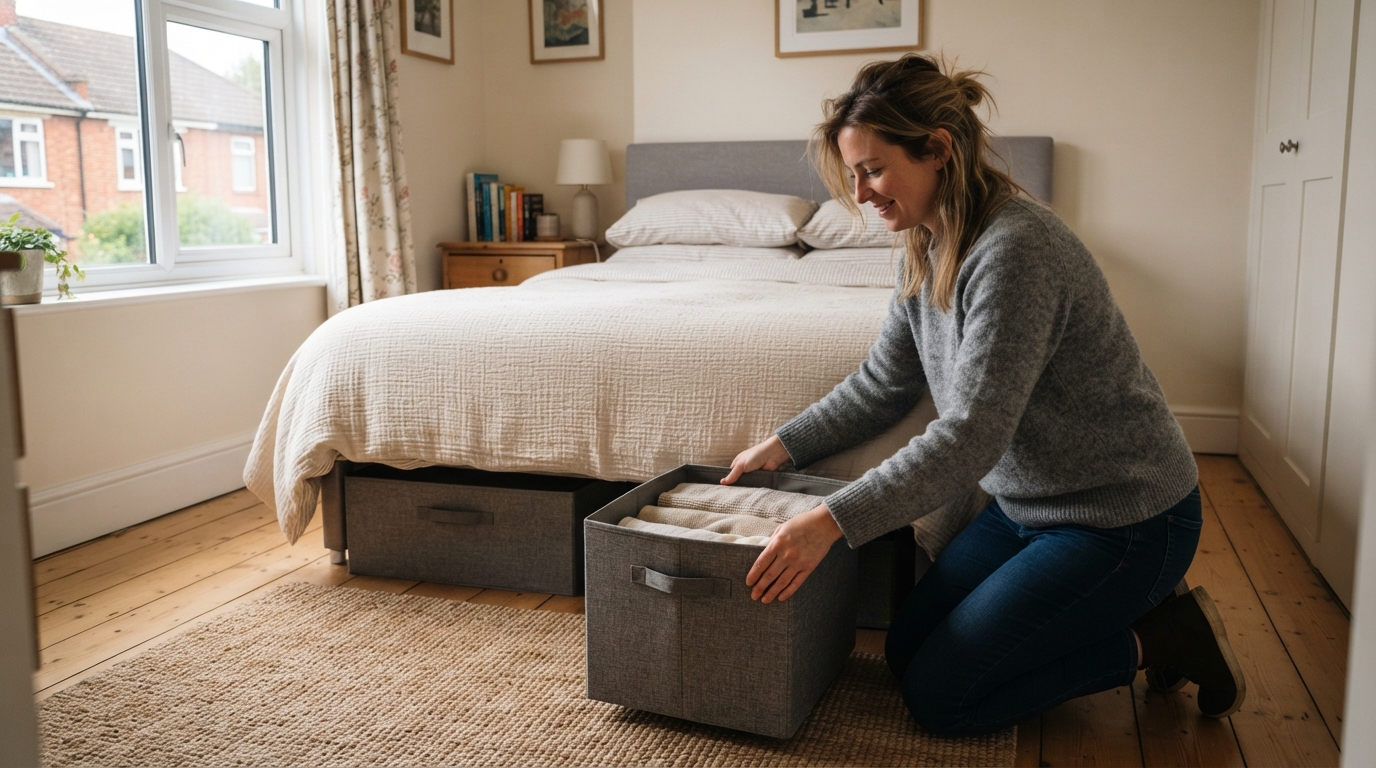
Under-bed storage is the single most wasted zone in a small rented bedroom, because most people assume it only works with a specific storage bed.
Flat fabric or vacuum-seal under-bed bags fit standard divan and slatted beds alike. Vacuum bags in particular can compress bulky items like a winter duvet or jumpers down to a fraction of their packed size, which matters when the gap under the bed is only a few centimetres.
If the bed sits on legs rather than a divan base, bed risers can lift the frame by roughly 12-15cm, turning a gap too shallow for anything into enough room for a shoe box or a set of narrow storage crates.
Using walls and doors without a single drill hole
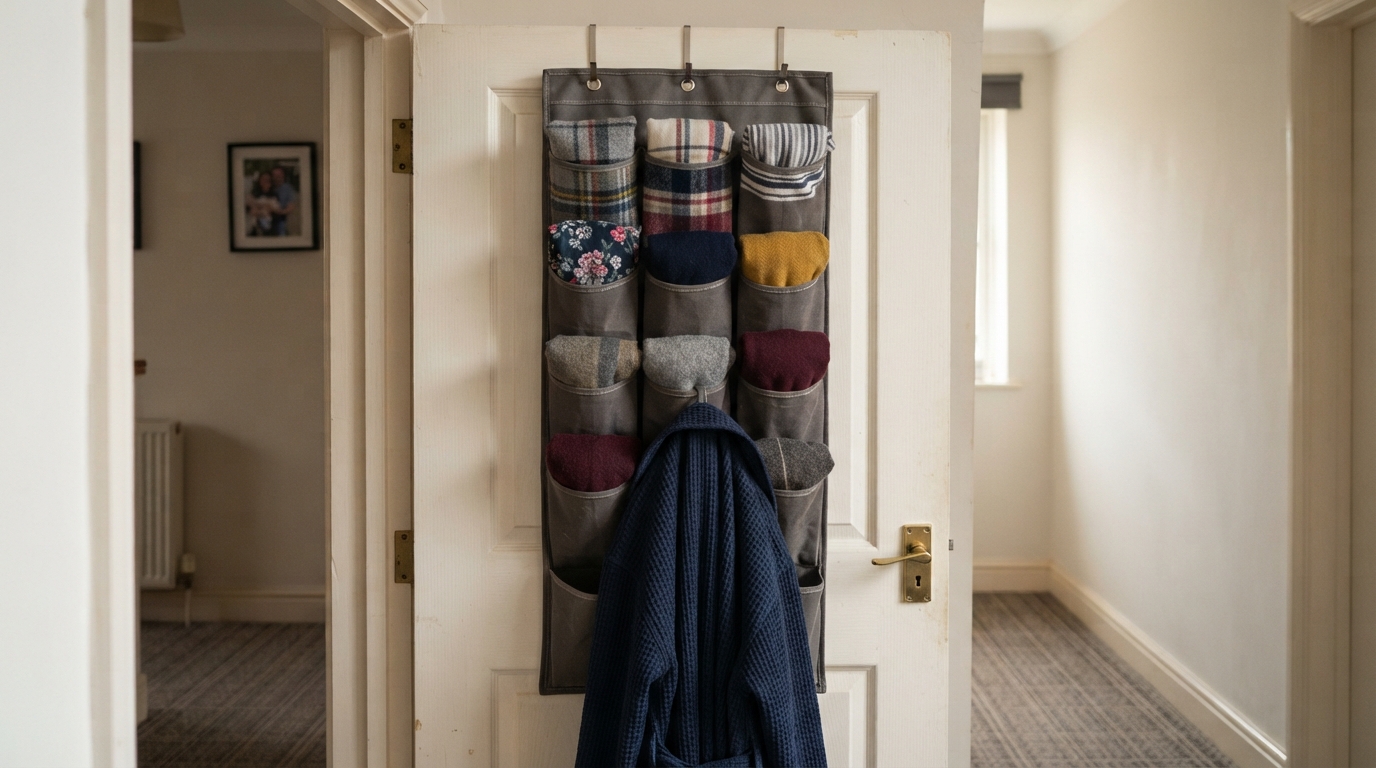
Vertical space is free in a way floor space is not, and it is an area most storage guides only mention in passing.
Adhesive strips and hooks are the obvious starting point, but tension rods deserve more attention than they get: they hold in place through friction against the wall rather than adhesive, which means no residue and no risk of pulling paint off on removal. A tension rod fitted inside an alcove or across the back of a deep cupboard can support a second hanging rail for clothes.
Over-door organisers are the other underused option. A shoe or accessory organiser hung over the bedroom or wardrobe door adds storage with zero wall contact, though it is worth checking the bracket depth against your door thickness first, as covered in the checklist above.
Reserve heavier adhesive hooks for lightweight, frequently-used items like a dressing gown or tote bag, and use command strips rather than hooks for flat items like a mirror or a small shelf, since strips distribute weight more evenly across the wall.
Freestanding furniture that earns its floor space
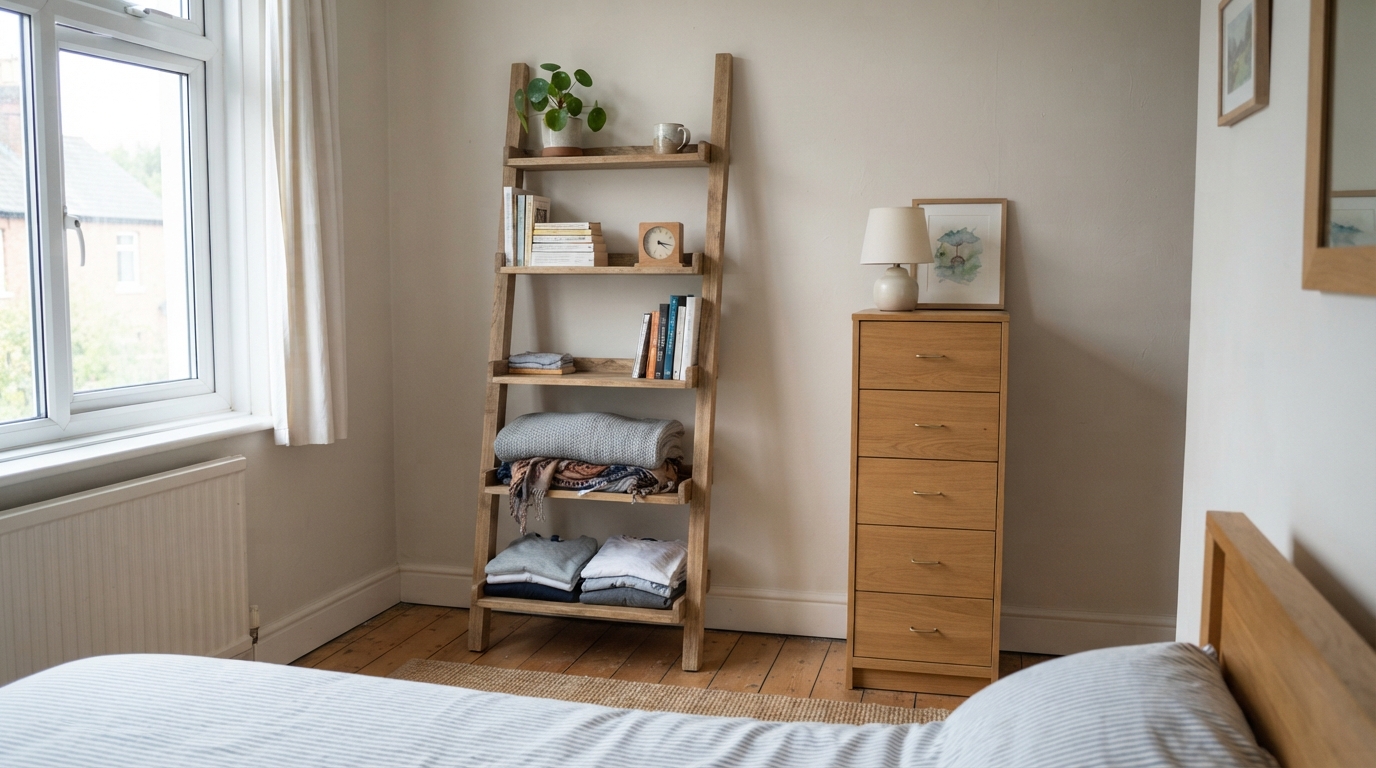
Every piece of freestanding furniture in a small bedroom should do at least two jobs. A tallboy chest of drawers around 40-45cm wide can hold as much as a bulkier unit, simply because it uses height rather than floor area.
A narrow ladder shelf leaned against a wall (rather than fixed to it) adds several tiers of open storage in a footprint smaller than a bedside table, and a storage ottoman or bench at the foot of the bed doubles as seating while hiding spare bedding out of sight.
Freestanding units taller than they are wide carry a genuine tip risk on carpeted or uneven floors, especially with drawers left open or a child or pet in the room. Anti-tip straps that anchor the unit to another piece of furniture (rather than the wall) solve this without breaking any tenancy rule.
Wardrobe interior tricks when there is little or no built-in storage
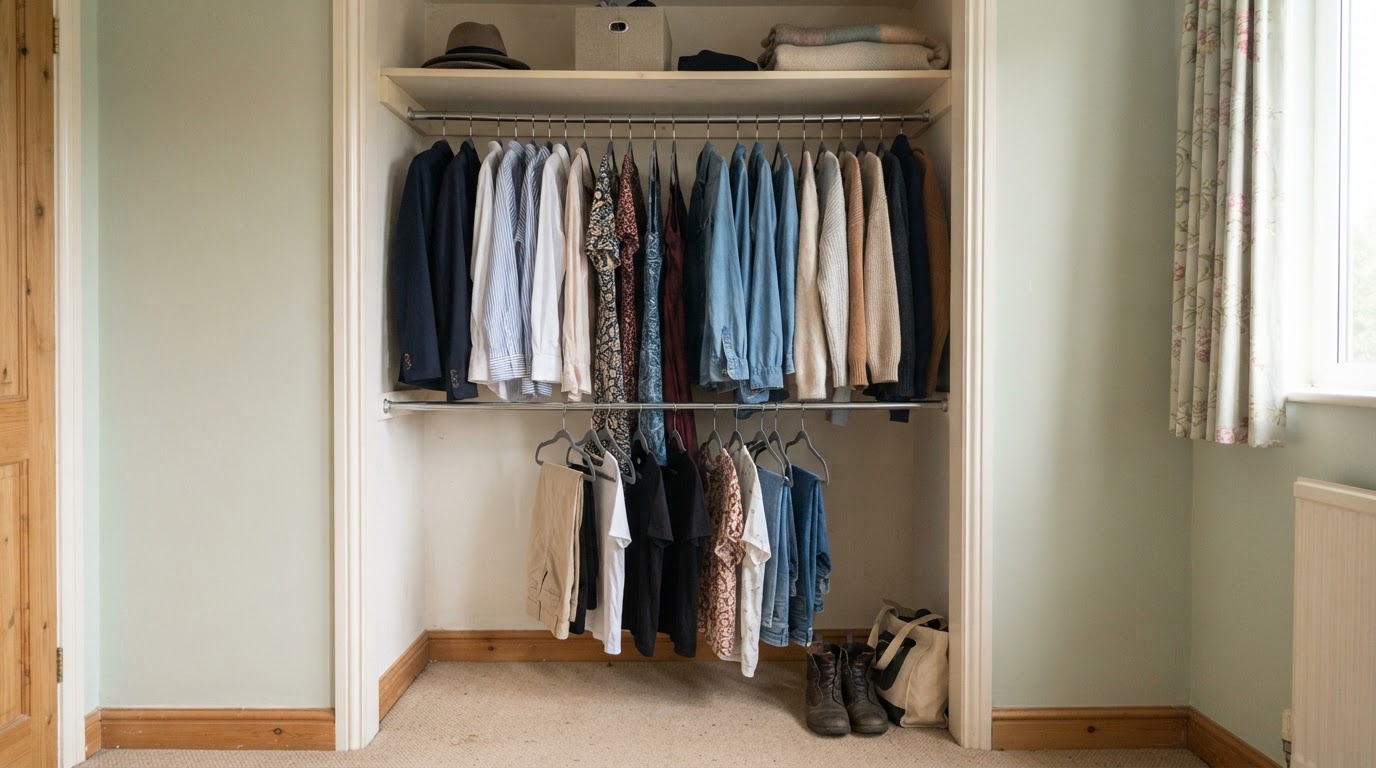
Many older or converted UK flats have box rooms with a shallow alcove instead of a proper wardrobe, so the inside of whatever hanging space exists needs to work harder.
Slim, non-slip hangers reclaim rail width that bulky wooden or plastic hangers waste, often fitting noticeably more clothes on the same rail.
A stacking hanging organiser with fabric shelves turns one rail into several horizontal compartments for jumpers or folded items.
A second tension rod fitted lower in the wardrobe adds a rail purely for shorter items like skirts or shirts.
If there is no wardrobe at all, a freestanding fabric or canvas wardrobe on a metal frame is a fully reversible option that assembles without tools and can be taken apart and moved at the end of a tenancy.
Two real layouts this works for
A single tenant in a 7-square-metre box room with a divan bed, a desk and no built-in wardrobe typically gets the most out of a fabric wardrobe against one wall, bed risers plus flat under-bed boxes, and a slim over-door organiser for shoes, without needing a single wall fixing.
A tenant sharing a 12-square-metre double bedroom in a house share, where wall space is limited by a second bed or shared furniture, tends to do better with a tension-rod rail added inside the existing wardrobe, vacuum bags for seasonal bedding under the bed, and a narrow freestanding drawer tower in place of a chest of drawers.
| Storage option | Typical cost | Drilling needed? | Best for |
|---|---|---|---|
| Under-bed boxes / vacuum bags | £10-£25 | No | Bedding, seasonal clothes, shoes |
| Command strips / hooks | £5-£15 | No | Light hanging items, mirrors, small shelves |
| Tension rod | £8-£20 | No | Extra hanging rail inside a wardrobe or alcove |
| Over-door organiser | £10-£20 | No | Shoes, accessories, toiletries |
| Freestanding drawer tower / ladder shelf | £20-£60 | No | Folded clothes, books, general clutter |
| Fabric/canvas wardrobe | £30-£70 | No | Rooms with no built-in wardrobe |
- Fully reversible, no deposit risk
- Moves with you to the next flat
- Usually cheaper than built-in solutions
- Lower weight limits than fixed shelving
- Freestanding units use some floor space
- Adhesive options do not suit every wall surface
In Summary
A small rented bedroom rarely needs more furniture, it needs the furniture and fixtures already there used properly, starting with the space under the bed, behind the door and up the wall.
Checking wear-and-tear rules, door thickness and adhesive weight limits before buying anything saves both money and a difficult conversation at the end of the tenancy.
Common Questions
What is the best storage item to buy first for a small rented bedroom?
Under-bed boxes or vacuum bags usually give the most storage for the lowest cost and the least risk, since they use space that is otherwise completely wasted and need no wall fixing at all.
How do you organise a small bedroom when you cannot buy new furniture?
Start by reclaiming space that is already there: slim hangers free up rail width, and clearing the floor under the bed or behind the door often creates more room than rearranging the existing furniture ever will.
Will using command hooks or strips affect my deposit when I move out?
Properly applied and removed adhesive strips rarely cause damage, but pulling them off too fast, especially on painted plaster, can strip paint and trigger a deduction, so always warm the strip and peel it slowly.
Do renters need permission from a landlord before adding shelves or hooks?
Most tenancy agreements only restrict permanent alterations like drilling, but freestanding or adhesive storage rarely needs sign-off. It is still worth checking the agreement, since some landlords list even adhesive hooks as requiring consent.
How much weight can adhesive strips safely hold in a bedroom?
It depends entirely on the product: small hooks are rated for a few hundred grams, while large utility hooks can hold around 2.2kg. Always check the weight rating printed on the packaging rather than guessing.