

At a Glance
The best thermal base layers for UK winter are rarely the ones with the biggest brand name. They are the ones whose weight suits how hard you move.
A commuter running for a train, a dog walker on a slow frosty loop and someone standing outdoors on a job all need different layers.
This guide sorts fabric, fabric weight in grams per square metre (gsm) and brand scores by those everyday situations, then ends with a short weight picker.
What does a base layer have to do on a British winter day?
A base layer has two jobs. It traps a thin layer of warm air, and it moves sweat away from the skin so you are not sitting in a damp film once you stop.
The second job matters more in Britain than the label suggests. Which? senior researcher Amy Axworthy notes that in the UK’s changing weather and humidity, sweat can make you feel cold whatever you are wearing (Which?, 3 November 2026).
That is why a thicker layer does not guarantee a warmer day. A heavy top worn for a brisk walk can leave you soaked and chilled ten minutes later.
A Mumsnet thread shows the same problem from the other side. A poster describing a one-hour cycle commute to central London wrote on 22 November 2021: “I thought layering would be good but realistically, I am not going to stop to remove layers” (Mumsnet cycling forum).
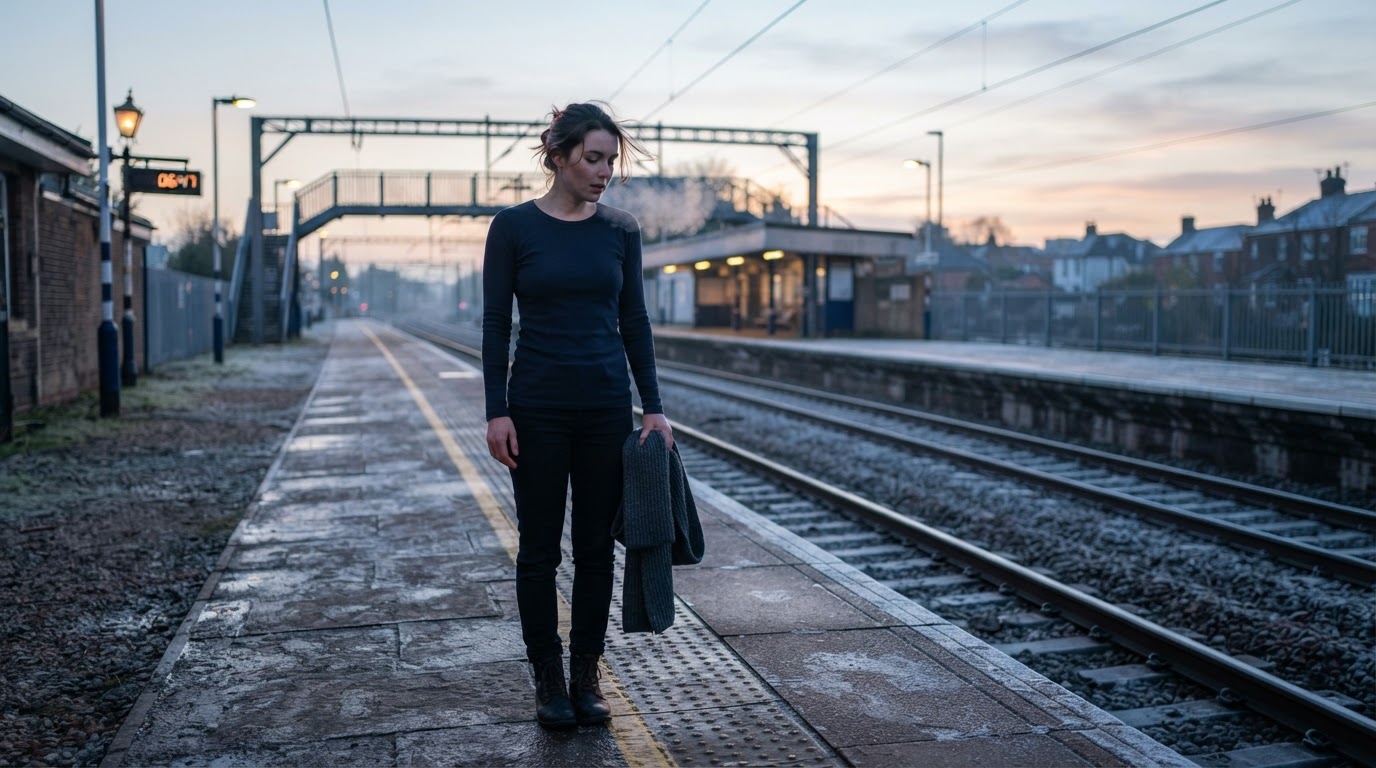
That point applies to anyone who cannot adjust clothing mid-journey. The base layer has to cope with both the cold platform and the warm carriage.
Cotton soaks up sweat and holds it against the skin, so it stops wicking and chills you once you stop moving (Coast & Fell, updated 20 September 2026). A cotton T-shirt is a poor base layer for anything active.
Is merino or synthetic the better fabric for a thermal base layer?
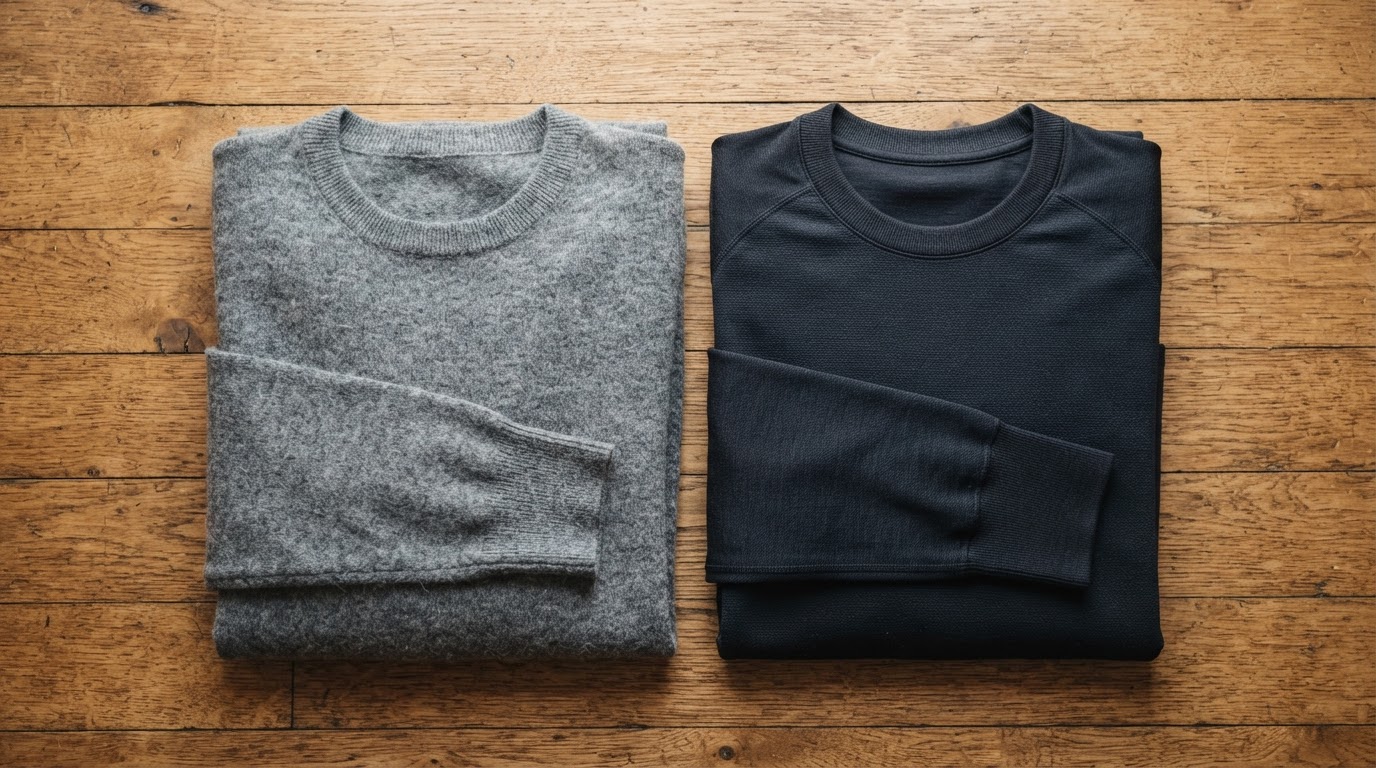
Neither wins outright. Merino has a slight edge on warmth for its weight, stays warmer when slightly damp and resists odour better than synthetics, according to the hiking guide from Coast & Fell (updated 20 September 2026).
Synthetic fibres such as polyester and polypropylene wick at least as well, dry faster and usually cost less. Their weakness is smell, which builds sooner than with wool.
- Stays warm when slightly damp
- Resists odour between washes
- Soft against the skin for most people
- Costs more than synthetic
- Less durable on its own, so blends are common
- A thick top itches some wearers
A forum post from a UK cyclist shows how personal this is. On CycleChat on 30 October 2015, a rider said merino vests were “unbearably itchy if I start to sweat”, so they wear a “dead cheap Lidl polyester vest” next to the skin (CycleChat thread, post dated 30 October 2015).
Blends and two-layer builds suit wearers like this. Some tops put merino on the outside and a synthetic face against the skin.
Which weight of base layer suits your day: light, mid or heavy?
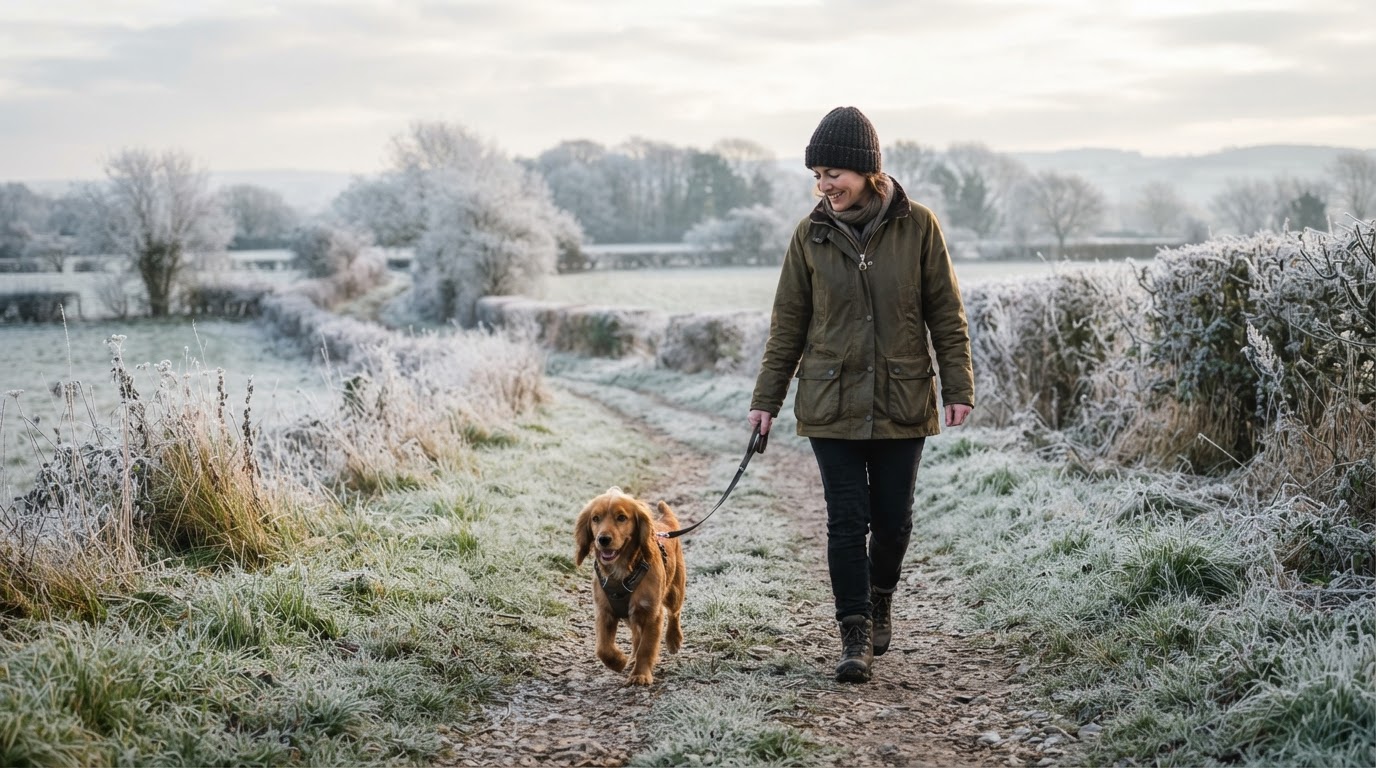
Base layers are sold by fabric weight in gsm, and that number says more about the job than the season on the label. The hiking guide from Coast & Fell groups them into light (around 125 to 175 gsm), mid (200 to 250 gsm) and heavy (250 to 320 gsm) bands (updated 20 September 2026).
Light layers suit hard effort, such as a beginner run, and milder days. Heavy ones are for standing still and run too hot when you work hard.
That guide is written for hikers. The table below applies the same bands to everyday winter situations, as editorial guidance rather than a tested ranking.
| Your day | Body heat made | Weight band | Fabric lean |
|---|---|---|---|
| Train or Tube commute | Low, with hot carriages | Light, 125 to 175 gsm | Thin merino or synthetic |
| Cycling or fast walk to work | High | Light, wicking first | Synthetic |
| Steady dog walk | Moderate | Mid, 200 to 250 gsm | Merino or blend |
| Standing outdoors for work | Low | Heavy, 250 to 320 gsm | Merino or brushed synthetic |
| Cold home or sleeping | Very low | Mid to heavy | Soft brushed or blend |
Typical case: a 40-minute train commute with ten minutes on a windy platform sits in the light band. The same person walking a dog for an hour at a slow pace moves into mid.
Typical case: someone standing outdoors on a site all morning makes little heat, so the heavy band suits that job. These are illustrative examples, not tested results.
Buy a light layer and a heavier one rather than one do-everything top. Most days the light layer plus a jumper covers it, and the heavy one stays for the coldest still days.
Weight picker for a UK winter day
This tool turns your activity level, the temperature you usually face and your tolerance of wool into a gsm range and a fabric lean. It follows the same bands as the table above.
How do thermal brands compare on price and customer score?
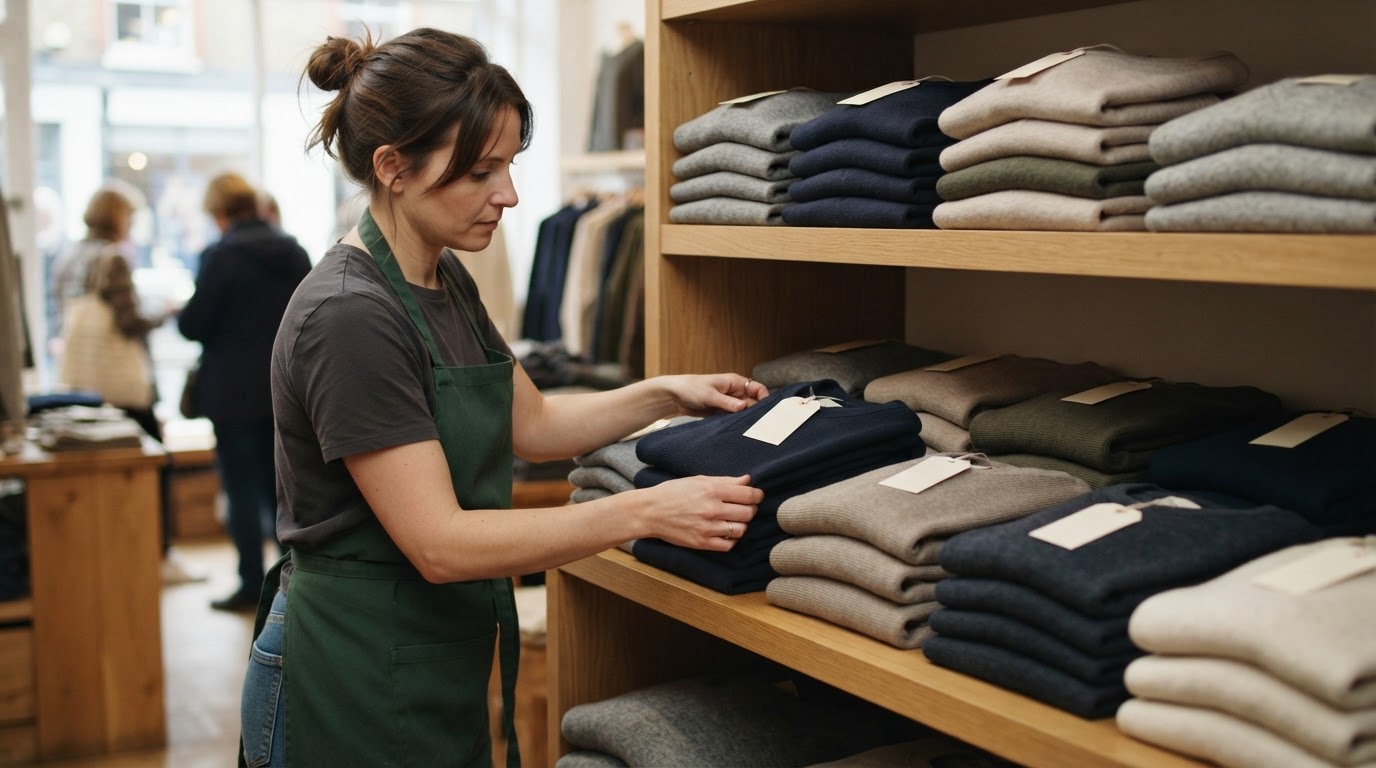
Which? surveyed 1,103 members about 1,436 thermal base layers bought over five years, with research carried out in July and August 2026 (Which?, published 3 November 2026). Scores and average prices paid from the survey, with sample sizes in brackets:
- Icebreaker (114): 92% customer score, £72 average price paid
- Rohan (92): 90%, £42
- Zerofit (46): 89%, £52
- Uniqlo (148): 88%, £18
- Helly Hansen (48): 85%, £40
- Marks & Spencer (416): 82%, £20
- Under Armour (41): 80%, £29
The same Which? thermal base layer survey names Icebreaker, Rohan and Helly Hansen as Recommended Brands.
Which? names Uniqlo as its cheaper pick, with a warmth rating of four stars out of five. M&S scored three stars for warmth, so it suits milder days better than deep cold.
Which? says its data was not weighted and may not represent everyone who buys thermals. Treat the scores as a guide to satisfaction, not a lab test of warmth.
The price gap matters for the weight picker above. Average prices paid differ widely, from £18 for Uniqlo to £72 for Icebreaker, so a cheaper light layer is not a downgrade for a train commute.
What fit, seams and washing keep a thermal layer working?
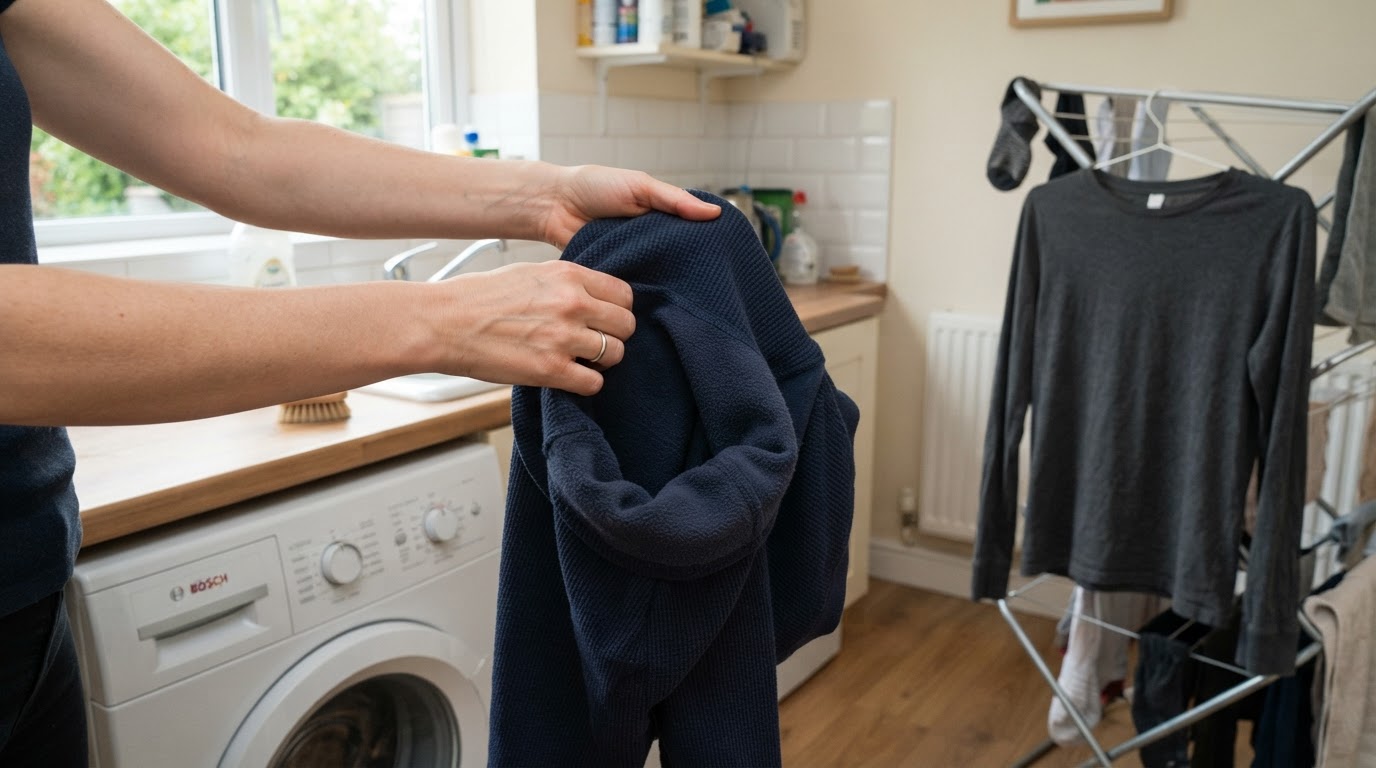
A base layer works by sitting close to the skin, so a baggy one wastes its fabric. Close does not have to mean compressive, and most people find a relaxed close fit easier over a full day (Coast & Fell, updated 20 September 2026).
Which? customers praised Rohan for generous sleeve and body lengths and useful thumb holes. Flat seams matter when a bag strap sits on the shoulder.
Washing is where a good layer is often ruined. Wash cool at around 30 degrees, turn it inside out, skip fabric softener and avoid the tumble dryer (Coast & Fell, updated 20 September 2026).
Softener coats the fibres and cuts both wool’s properties and synthetic wicking. Merino also needs washing less often than synthetic because it resists odour.
In Summary
Choose the weight first, then the fabric, then the brand. A light layer covers most commutes, a mid layer covers steady walks and a heavy one is for standing still in the cold.
If wool itches, a synthetic top is a sound alternative, and you can still wear merino on the legs. Thin light layers also work as the base of a winter capsule wardrobe. Which? survey scores point to Uniqlo for value and Icebreaker for durability and warmth, with prices checked before you buy.
Common Questions
Are M&S thermals good?
In the Which? member survey, M&S scored 82% with an average price paid of £20 and was the most-reviewed brand, with 416 respondents. It earned three stars for warmth and four for value, so it is a sensible budget layer for milder days (Which?, 3 November 2026).
What is the best merino base layer for men in the UK?
It depends on weight more than brand. In its hiking guide, Coast & Fell picks the Icebreaker 200 Oasis Crew, a 200 gsm 100% merino top at around £70, as its best overall merino pick (updated 20 September 2026). Check current prices, which move by size and colour.
Can a thermal base layer go under office clothes?
Yes, if it is thin. Shirt retailer T.M.Lewin suggests a merino base layer under a shirt, so you stay warm outside and cool indoors (accessed November 2026). Choose the light band so it does not bulk under tailoring.
Should a thermal base layer be tight?
It should be close to the skin but not gripping. Compression tops suit some people for hard exercise, but for long days a relaxed close fit is usually more comfortable (Coast & Fell, updated 20 September 2026).